Category: IVF

  • आईवीएफ प्रेगनेंसी में सफलता पाने के 10 ज़रूरी उपाय

    आईवीएफ प्रेगनेंसी में सफलता पाने के 10 ज़रूरी उपाय

    आईवीएफ यानी परखनली शिशु की प्रक्रिया – यह शब्द सुनते ही कितनी उम्मीदें जाग जाती हैं! निःसंतान दंपतियों के लिए यह वास्तव में आशा की एक किरण है। सच कहूं तो, आईवीएफ में शत-प्रतिशत गारंटी नहीं होती। यह बात मुझे भी पहले ठीक से समझ नहीं आई थी।

    वास्तव में, आईवीएफ की सफलता अनेक बातों पर निर्भर करती है – महिला की आयु, भ्रूण की गुणवत्ता, स्वास्थ्य की स्थिति, और कौन सा चिकित्सालय चुना गया है। आंकड़ों की बात करें तो 35 वर्ष से कम आयु की महिलाओं में प्रति चक्र सफलता दर लगभग 40-50% होती है। लेकिन 40 के बाद यह सिर्फ 5–10%  प्रतिशत रह जाती है – यह संख्या थोड़ी निराशाजनक लग सकती है।

    अच्छी बात यह है कि यदि एक से अधिक चक्र किए जाएं, तो समग्र सफलता दर काफी बढ़ जाती है। 35 से कम आयु में तीन आईवीएफ चक्रों के बाद लगभग 80 % तक सफलता मिल जाती है।

    मुफ़्त परामर्श लें

    आईवीएफ प्रेगनेंसी सफलता के 10 ज़रूरी टिप्स

    आईवीएफ प्रक्रिया हर दंपत्ति के लिए एक भावनात्मक और शारीरिक सफर होता है। सफलता की संभावना बढ़ाने के लिए केवल मेडिकल उपचार ही काफी नहीं होता, बल्कि जीवनशैली, आहार, मानसिक स्वास्थ्य और सही क्लिनिक का चुनाव भी उतना ही महत्वपूर्ण है। शोध बताते हैं कि संतुलित डाइट, तनाव नियंत्रण और डॉक्टर की सलाह का पालन करने से IVF परिणामों में सुधार देखा गया है। आइए जानते हैं वे 10 ज़रूरी टिप्स जो आपके IVF सफर को आसान और अधिक सफल बना सकते हैं।

    1. उचित आईवीएफ चिकित्सालय और चिकित्सक का चुनाव

    यह कदम सबसे महत्वपूर्ण है, सच में। एक भरोसेमंद और अनुभवी प्रजनन चिकित्सालय चुनना अत्यंत आवश्यक है। ऐसे चिकित्सालय में आधुनिक तकनीक, नवीन प्रयोगशाला सुविधाएं और उच्च सफलता दर वाले विशेषज्ञ चिकित्सक होते हैं।

    मैंने देखा है कि अनेक लोग केवल लागत देखकर चिकित्सालय चुनते हैं, परंतु यह गलत दृष्टिकोण है। एक कुशल चिकित्सालय आपके मामले का व्यक्तिगत मूल्यांकन करके उचित उपचार योजना बनाएगा।

    उदाहरण के तौर पर – रितु आईवीएफ जैसे प्रतिष्ठित केंद्रों में पैंतीस वर्ष से कम महिलाओं के लिए सफलता दर नब्बे प्रतिशत तक है, जो राष्ट्रीय औसत अड़सठ प्रतिशत से कहीं अधिक है। यह श्रेय वहां के अनुभवी विशेषज्ञों, अत्याधुनिक भ्रूण प्रयोगशाला, और चौबीसों घंटे देखभाल को जाता है।

    इसलिए आईवीएफ शुरू करने से पहले विभिन्न केंद्रों की सफलता दर, सुविधाओं और चिकित्सकों के अनुभव की तुलना अवश्य करें।

    2. संतुलित आहार – यह वास्तव में अत्यंत महत्वपूर्ण है!

    सफल गर्भधारण के लिए पोषक आहार की भूमिका अत्यधिक महत्वपूर्ण है। अनुसंधान से पता चला है कि कुछ आहार पद्धतियां जैसे भूमध्यसागरीय आहार या प्रजनन-सहायक आहार आईवीएफ के परिणामों को बेहतर बनाने में सहायक हो सकती हैं।

    अपने भोजन में भरपूर प्रोटीन, फाइबर, विटामिन और खनिज शामिल करें। यह शरीर को गर्भावस्था के लिए तैयार करता है।

    आईवीएफ के दौरान क्या खाएं:

    हरी सब्जियां और ताजे फल: पालक, हरी फूलगोभी, जामुन, संतरे जैसे फल-सब्जियां एंटीऑक्सीडेंट देते हैं जो अंडाणु और शुक्राणु को हानिकारक तत्वों से बचाते हैं। विटामिन सी, ई और फोलेट जैसे पोषक तत्व अंडाणु की गुणवत्ता सुधारने में सहायता करते हैं।

    दुबला प्रोटीन: दालें, राजमा, अंडे, सूखे मेवे, कम चर्बी वाला दूध या पनीर, और मछली (कम पारे वाली, जैसे सैल्मन) से भरपूर प्रोटीन लें। मछली से मिलने वाले ओमेगा-3 फैटी एसिड शरीर में सूजन कम करके अंडाणु की गुणवत्ता में सुधार ला सकते हैं।

    साबुत अनाज: भूरे चावल, क्विनोआ, जौ, जई जैसे अनाज लंबे समय तक ऊर्जा देते हैं और इनमें मौजूद विटामिन-बी व रेशा प्रजनन स्वास्थ्य के लिए लाभकारी हैं।

    स्वस्थ चर्बी: जैतून तेल, एवोकाडो, अलसी/चिया के बीज, अखरोट आदि से मिलने वाले ओमेगा-3 और एकल असंतृप्त चर्बी शरीर में हार्मोन संतुलन बनाए रखती हैं। अध्ययन बताते हैं कि ओमेगा-3 पूरक आहार लेने वाली महिलाओं में गर्भधारण की संभावना पचास प्रतिशत तक बढ़ सकती है।

    इन चीजों से बचें:

    प्रसंस्कृत और जंक फूड: अत्यधिक चीनी, नमक, हानिकारक चर्बी या परिरक्षकों वाले जंक फूड से दूर रहें। यह मोटापा बढ़ा सकता है और हार्मोन को असंतुलित कर सकता है।

    लाल मांस और संसाधित मांस: अधिक लाल मांस और संसाधित मांस संभावित रूप से प्रजनन क्षमता पर नकारात्मक प्रभाव डालते हैं। इनकी जगह मछली या वनस्पति प्रोटीन को प्राथमिकता दें।

    मदिरा: आईवीएफ के दौरान मदिरापान बिल्कुल टालें। अनुसंधान में पाया गया है कि जो महिलाएं आईवीएफ के समय मदिरा से दूर रहीं, उनमें सफलता दर दोगुनी देखी गई।

    पर्याप्त जल सेवन भी आवश्यक है – दिन में आठ से दस गिलास पानी पिएं।

    यह भी पढ़ें – आईवीएफ क्या होता है? प्रक्रिया, फायदे, लागत और सही इलाज (2025)

    3. योग और हल्का व्यायाम

    शारीरिक रूप से सक्रिय रहना प्रजनन क्षमता के लिए लाभकारी है, परंतु आईवीएफ के दौरान अत्यधिक भारी व्यायाम से बचना चाहिए। हल्का व्यायाम या योग नियमित रूप से करने से रक्त संचार बेहतर होता है, तनाव कम होता है और स्वस्थ वजन बनाए रखने में सहायता मिलती है।

    नियमित टहलना, प्राणायाम, हल्की खिंचाव या धीमी गति से तैराकी जैसी गतिविधियां अपनाएं।

    ध्यान रखें कि अंडोत्पादन उत्तेजना और भ्रूण स्थानांतरण के आसपास भारी कसरत, तेज एरोबिक्स या अधिक तीव्रता वाले व्यायाम न करें। अंडोत्पादन उत्तेजना के दौरान अंडाशय आकार में बढ़ जाते हैं और जोर लगाने पर अंडाशय मरोड़ का खतरा रहता है।

    4. तनाव प्रबंधन और सकारात्मक दृष्टिकोण

    आईवीएफ की यात्रा भावनात्मक उतार-चढ़ाव से भरी हो सकती है। मानसिक स्वास्थ्य का ध्यान रखना उतना ही आवश्यक है जितना शारीरिक स्वास्थ्य का। निरंतर तनाव में रहने से आईवीएफ सफलता दर पर नकारात्मक प्रभाव पड़ सकता है।

    तनाव कम करने के उपाय:

    प्रतिदिन कुछ समय अपनी पसंदीदा गतिविधियों में लगाएं। ध्यान, गहरी सांस की कसरत, या हल्का योग करें। अपने जीवनसाथी या किसी निकटतम मित्र/परिवार से खुलकर बात करें।

    यदि आवश्यकता महसूस हो, तो किसी परामर्शदाता या सहायता समूह से जुड़ें। सामाजिक माध्यमों पर या आसपास दूसरों की सफलता कहानियों से अपनी तुलना न करें। हर दंपति की परिस्थिति भिन्न होती है।

    सकारात्मक सोच रखने से शरीर में भी सकारात्मक परिवर्तन होते हैं और आईवीएफ प्रक्रिया के दौरान निर्णय लेने की क्षमता बेहतर रहती है।

    व्हाट्सएप करें

    5. हानिकारक आदतों से दूरी (धूम्रपान, मदिरा आदि)

    धूम्रपान, तंबाकू, अत्यधिक मदिरापान, या गैरकानूनी नशीले पदार्थों का सेवन आपके प्रजनन स्वास्थ्य के लिए विष के समान है। धूम्रपान महिलाओं में अंडाणुओं की मात्रा और गुणवत्ता दोनों कम कर देता है।

    आईवीएफ के दौरान तो धूम्रपान और भी हानिकारक है – यह भ्रूण विकास को प्रभावित करके सफलता दर घटा देता है।

    इसी प्रकार, मदिरापान आईवीएफ की सफलता को कम कर सकता है। अध्ययनों में पाया गया है कि जो दंपति आईवीएफ के समय मदिरा नहीं पीते, उनमें गर्भधारण दर काफी बढ़ जाती है।

    अत्यधिक कैफीन भी गर्भाधान की संभावनाओं को थोड़ा कम कर सकती है, इसलिए कैफीन सेवन सीमित करें (दैनिक दो सौ से तीन सौ मिलीग्राम से कम)।

    6. पर्याप्त आराम और नींद

    आईवीएफ के दौरान अपने शरीर को भरपूर विश्राम देना अत्यंत आवश्यक है। उपचार के विभिन्न चरणों में शरीर अतिरिक्त हार्मोन और शारीरिक परिवर्तनों से गुजरता है। पर्याप्त नींद (दैनिक सात से आठ घंटे) और दिन में आराम के क्षण लेना शरीर को स्वस्थ होने का अवसर देता है।

    भ्रूण स्थानांतरण के बाद विशेष सावधानी:

    जब गर्भाशय में भ्रूण प्रत्यारोपित कर दिया जाए, तो अपने आप को अत्यधिक शारीरिक परिश्रम से बचाएं। भारी वजन उठाना, जोरदार व्यायाम या अत्यधिक झुकने वाले काम तुरंत न करें।

    हालांकि पूर्ण बिस्तर पर आराम आवश्यक नहीं, परंतु हल्की टहलकदमी या सामान्य दैनिक गतिविधियां जारी रखें ताकि रक्त संचार बना रहे।

    यह भी पढ़ें – IVF की लागत जयपुर में 2025 – सही बजट और उपचार डिटेल्स

    7. चिकित्सक के निर्देशों का कड़ाई से पालन

    चिकित्सकीय निर्देशों का सख्ती से पालन करना आईवीएफ में सफलता का मुख्य मंत्र है। आपके प्रजनन विशेषज्ञ द्वारा दी गई दवा की समय-सारणी, इंजेक्शन लगाने की विधि और अन्य निर्देशों को सावधानीपूर्वक समझें और उनका पालन करें।

    आईवीएफ प्रक्रिया हार्मोन के नाजुक तालमेल पर चलती है – एक इंजेक्शन भी गलत समय पर लगाने से चक्र बिगड़ सकता है।

    अपने चिकित्सक से नियमित संपर्क बनाए रखें। उपचार के दौरान निर्धारित निगरानी मुलाकातों (अल्ट्रासाउंड, रक्त जांच) में समय पर उपस्थित हों।

    8. आवश्यक पूरक आहार और विटामिन

    आहार के अतिरिक्त कुछ विटामिन और पूरक आहार चिकित्सक प्रायः सुझाते हैं। सबसे सामान्य और महत्वपूर्ण है फोलिक एसिड (विटामिन बी9) – गर्भधारण से पहले और गर्भावस्था के प्रारंभिक सप्ताहों में दैनिक कम से कम चार सौ माइक्रोग्राम फोलिक एसिड लेने की सलाह दी जाती है।

    विटामिन डी भी एक ऐसा पोषक तत्व है जो हार्मोन संतुलन और गर्भाशय के स्वस्थ वातावरण के लिए आवश्यक माना जाता है। काफी महिलाओं में विटामिन डी की कमी पाई जाती है।

    अन्य पूरक आहार जैसे ओमेगा-3 फैटी एसिड, सहएंजाइम क्यू10, विटामिन ई आदि पर भी शोध चल रहा है। हालांकि, कोई भी पूरक आहार शुरू करने से पहले अपने चिकित्सक से चर्चा अवश्य करें।

    सूचना: जड़ी-बूटियों या हर्बल पूरक आहार का उपयोग बिना सलाह के न करें। आईवीएफ के दौरान कुछ हर्बल दवाएं संभावित रूप से हानिकारक हो सकती हैं।

    9. परिवार व विशेषज्ञों से भावनात्मक सहायता

    आईवीएफ की यात्रा शारीरिक के साथ-साथ भावनात्मक रूप से भी चुनौतीपूर्ण होती है। एक मजबूत सहायता प्रणाली का होना अत्यधिक लाभकारी होता है। अपने जीवनसाथी के साथ मिलकर चलें – एक-दूसरे की भावनाओं को समझें।

    परिवार के निकटतम सदस्य या घनिष्ठ मित्र भी आपका मनोबल ऊंचा रखने में सहायता कर सकते हैं। यदि कभी लगे कि तनाव, चिंता या निराशा हावी हो रही है, तो पेशेवर मनोवैज्ञानिक परामर्श लेने में हिचकें नहीं।

    अनेक आईवीएफ केंद्रों में प्रजनन परामर्शदाता या सहायता समूह उपलब्ध होते हैं। अपने चिकित्सक के साथ अच्छा तालमेल बनाए रखें।

    यह भी पढ़ें – पीरियड में पेट दर्द हो तो क्या करें? कारण, इलाज और 15 असरदार घरेलू उपाय

    10. धैर्य और आशा – सबसे महत्वपूर्ण

    आईवीएफ एक ऐसा क्षेत्र है जहां धैर्य वास्तव में एक गुण है। अनेक दंपतियों को पहले ही चक्र में सफलता मिल जाती है, वहीं कुछ को दूसरे या तीसरे चक्र में जाकर सफलता मिलती है।

    यदि पहली बार में आईवीएफ असफल हो जाए, तो निराश होकर तुरंत हार न मान लें। आंकड़ों पर नजर डालें तो अधिकांश दंपति दो से तीन आईवीएफ चक्रों के भीतर सफल हो जाते हैं।

    धैर्य रखने का अर्थ यह भी है कि आप बीच में हिम्मत न हारें और सकारात्मक सोच बनाए रखें। कभी-कभार विराम लेना भी ठीक है – यदि एक चक्र के बाद आप शारीरिक या मानसिक थकान महसूस कर रहे हैं, तो अगले प्रयास के लिए जल्दबाजी न करें।

    हर असफल प्रयास आपको आपके चिकित्सक के साथ और सीखने का अवसर देता है। नई तकनीकें जैसे आईसीएसआई, लेजर सहायक निकासी, या ईआरए परीक्षण कुछ मामलों में सहायक होती हैं।

    सबसे अहम, आशा का दामन थामे रहें। आपका धैर्य और दृढ़ता ही आपकी शक्ति है।

    अक्सर पूछे जाने वाले प्रश्न (FAQs)

    प्र. क्या आईवीएफ शत-प्रतिशत सफल है?

    उ. नहीं, आईवीएफ की सफलता दर शत-प्रतिशत नहीं है। वास्तव में किसी भी दंपति के लिए आईवीएफ की गारंटी नहीं दी जा सकती। प्रति-चक्र सफलता प्रतिशत अनेक कारकों पर निर्भर करता है – मुख्यतः महिला की आयु पर।

    युवा महिलाओं में सफलता की संभावना अधिक होती है। उदाहरण के लिए, पैंतीस वर्ष से कम आयु की महिलाओं में एक आईवीएफ चक्र से जीवित जन्म दर लगभग चालीस से पचास प्रतिशत प्रति चक्र होती है, परंतु चालीस की आयु के बाद यह घटकर केवल पांच से दस प्रतिशत रह जाती है।

    प्र. आईवीएफ स्थानांतरण को सफल कैसे बनाएं?

    उ. भ्रूण स्थानांतरण आईवीएफ प्रक्रिया का अत्यंत महत्वपूर्ण चरण है। इसे सफल बनाने के लिए कुछ बातों का ख्याल रखना चाहिए। पहला, अपने चिकित्सक के निर्देशों का पालन करें। दूसरा, स्थानांतरण के दिन और बाद में तनाव न्यूनतम रखें।

    तीसरा, स्थानांतरण के तुरंत बाद भारी शारीरिक गतिविधियों से परहेज करें। चौथा, पर्याप्त पानी पीते रहें और पोषक भोजन लें।

    प्र. क्या आईवीएफ से लड़का पैदा हो सकता है?

    उ. आईवीएफ प्रक्रिया का लक्ष्य एक स्वस्थ गर्भावस्था प्राप्त करना है, न कि शिशु का लिंग चयन करना। प्राकृतिक रूप से आईवीएफ से गर्भ ठहरने पर लगभग पचास प्रतिशत संभावना लड़के की और पचास प्रतिशत लड़की की रहती है।

    भारत में लिंग चयन कानूनी रूप से प्रतिबंधित है। गर्भधारण पूर्व और प्रसव पूर्व निदान तकनीक अधिनियम के अंतर्गत जानबूझकर शिशु का लिंग चुनना अपराध है। आईवीएफ का उद्देश्य माता-पिता बनने में सहायता करना है।

    प्र. आईवीएफ क्यों असफल हो जाता है?

    उ. आईवीएफ के असफल होने के अनेक संभावित कारण हैं। सबसे सामान्य कारणों में से एक है भ्रूण का गर्भाशय में स्थापित न हो पाना। इसके अतिरिक्त:

    • भ्रूण या अंडाणु की गुणवत्ता – यदि अंडाणु या शुक्राणु कमजोर गुणवत्ता के हों
    • गुणसूत्रीय असामान्यताएं – कुछ भ्रूण आनुवंशिक समस्याओं के कारण विकसित नहीं हो पाते
    • हार्मोनल असंतुलन – गर्भाशयांतर्कला रोग, गर्भाशय रसौली, थायरॉइड विकार या बहुकोशिकीय डिंबग्रंथि सिंड्रोम जैसी समस्याएं
    • जीवनशैली कारक – अत्यधिक धूम्रपान, मदिरापान, बहुत अधिक या कम वजन, निरंतर तनाव

    कई बार अनेक कारण मिलकर आईवीएफ को असफल बनाते हैं। असफलता होने पर चिकित्सक अतिरिक्त जांचें सुझा सकते हैं।

    डॉक्टर से बात करें

    निष्कर्ष

    इन सभी सुझावों को अपनाकर आईवीएफ में सफलता की संभावना महत्वपूर्ण रूप से बढ़ाई जा सकती है। हर दंपति की परिस्थितियां भिन्न होती हैं, इसलिए व्यक्तिगत सलाह चिकित्सक से लें।

    शारीरिक स्वास्थ्य, मानसिक संतुलन और उचित चिकित्सकीय देखभाल – इन तीनों का मेल आईवीएफ को सफल बनाने में मुख्य भूमिका निभाता है। अपने आपसे प्यार करें, सकारात्मक रहें और हर कदम पर सीखते चलें।

    यदि आप भी आईवीएफ से संबंधित अधिक जानकारी या व्यक्तिगत सलाह चाहते हैं, तो अपने प्रजनन विशेषज्ञ से संपर्क करें। सही मार्गदर्शन, धैर्य और विशेषज्ञों का सहयोग आपको माता-पिता बनने की यात्रा में सहायता करेगा।

  • How to Make IVF Successful the First Time: Expert Tips for Better Chances

    How to Make IVF Successful the First Time: Expert Tips for Better Chances

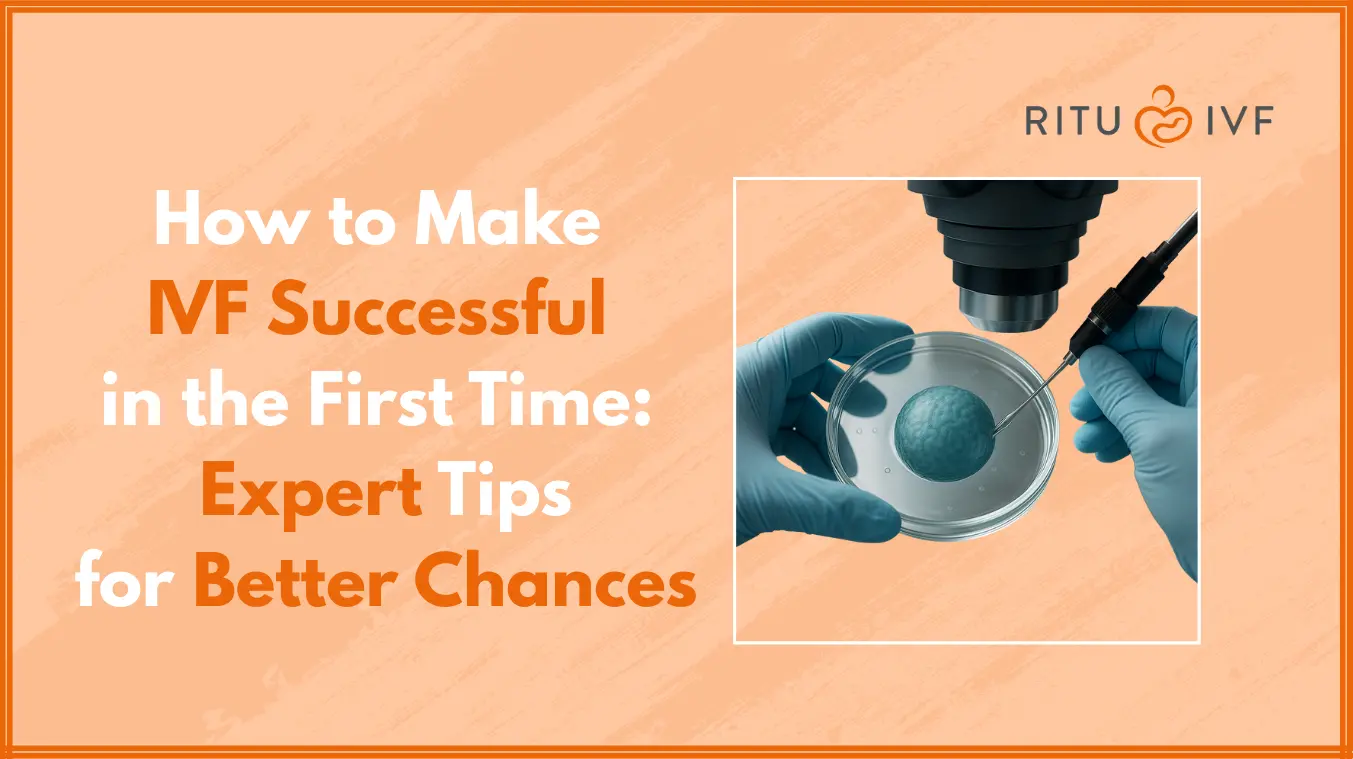
    When couples begin their journey with In-Vitro Fertilization (IVF), they often wonder how to make IVF successful the first time. Well, the IVF journey can be emotionally, physically and financially overwhelming, so maximizing your chances of success in the first cycle is essential. Although medical science plays a crucial role, preparation, lifestyle choices, and the right mindset also impact improving IVF outcomes. Determining ways to improve fertility health and aligning with medical protocols can make a difference in achieving a positive pregnancy result via IVF. 

    The good news is that many proven strategies can help increase your chances of success during your initial attempt. From selecting the right fertility clinic and following medical advice to making simple and powerful lifestyle changes for IVF, like exercise, nutrition and stress management, wherein each stage matters. In this blog, we will explore expert-backed tips for first IVF cycle success and practical approaches that will help couples to prepare your body, lifestyle to give you a chance of welcoming your baby sooner.

    Whats app

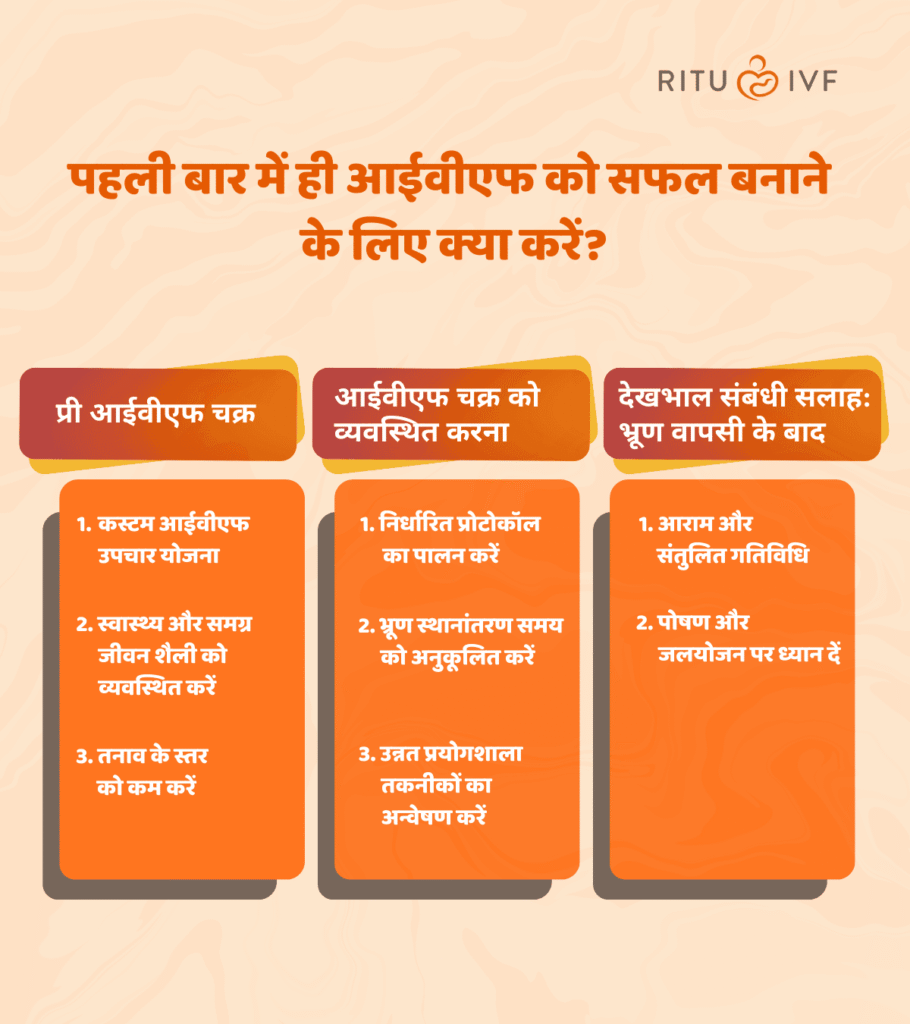
    Factors to Consider for Pre-screening IVF Cycle Success

    How to make IVF successful the first time? Couples need to undergo a pre-screening test before starting their IVF cycle. By assessing a couple’s health, fertility and lifestyle aspects in advance, doctors can design a suitable treatment plan customized to your needs. 

    What to do before IVF for success?

    • Semen Evaluation: Several tests are performed to measure the quantity and quality of semen and sperm.
    • Ovarian Reserve Testing: AFC (Antral Follicles Count) refers to the sum of follicles on both the ovaries. AMH (Anti-Mullerian Hormone) can assist in understanding ovarian reserve.
    • Infectious Blood Test: This test includes the detection of Hepatitis B Core antibody, Hepatitis B Surface antigen, Hepatitis C antibody, HIV-1 and HIV-2, Syphilis, Gonorrhoea, and Chlamydia. However, infectious diseases can cause infertility, hence it is essential for a couple to get tested for the contagious panel before beginning with the IVF treatment.
    • Uterine Lining Ultrasound: This is a standard method used to measure the thickness of the endometrium and rule out abnormalities in the uterus before the IVF process. 

    Read Also – What Is the Difference Between IVF and a Test Tube Baby?

    Understanding the IVF Process

    To know how to make IVF successful the first time, it is essential to determine the IVF process. It helps lay out clear expectations and reduces anxiety throughout the process. IVF involves a set of medical steps that boost fertility.

    Embryos are inserted into the uterus after sperm and eggs are combined in a lab. Couples can grasp the parts of the process like stimulation, egg collection, fertilization, and embryo placement. This helps them feel ready, informed, and confident about their odds of IVF success rate first attemptaround.

    • Preparation: The preparation phase typically begins two to four weeks before the start of the IVF cycle. It involves making small lifestyle changes to make sure you stay at your healthiest. However, your doctor may recommend a few medications to help regulate the menstrual cycle, which helps improve the chances of a successful IVF cycle.
    • Stage 1: Day 1 of your IVF will be the first day of your period, which is typically closest to the scheduled IVF treatment. This stage normally takes one day.
    • Stage 2: Next, you will begin fertility drugs that help in stimulating the ovaries, ensuring you ovulate effortlessly. It helps in releasing more eggs than usual. Three to twelve days may pass at this stage.
    • Stage 3: You will receive an injection of “pregnancy hormone” or human chorionic gonadotropin (hCG). This hormone helps your ovaries release eggs. After 36 hours of inserting the injection, you will have to go to a fertility clinic where your doctor will focus on retrieving eggs to use in the further stage.
    • Stage 4: Here, your partner or male donor will provide sperm during the egg retrieval stage. It takes one day. Your eggs will be fertilised within hours, and you will begin taking a hormone known as progesterone, which will help you prepare your uterus for a healthy pregnancy and reduce your chances of miscarriage.
    • Stage 5: Your uterus will receive a healthy embryo less than a week following egg fertilisation. However, this is a non-invasive process, during which you may experience cramps or mild discomfort.
    • Stage 6: After embryo transfer of 9 to 12 days, you have to visit the doctor. They check to see how well your body has accepted the implanted embryo. Additionally, you will need to undergo a blood test to assess your hormone levels related to pregnancy.Book a Consultation

    The Role of Fertility and Age in IVF Cycle Outcome

    If you are wondering how to make IVF successful the first time? It is worth considering factors like age and fertility age for the VF process. The best age for IVF success is deemed to be under 35 for women, as they typically have healthy eggs and a higher egg count. It is a good idea to talk to fertility specialists to get a clear picture of your scenario, and considering both partners’ fertility health is essential. 

    An essential factor in increasing the likelihood of success in an IVF cycle is leading a healthy lifestyle. Considering your diet, weight, exercise and lifestyle choices such as smoking or drinking, can have a significant impact on your fertility health.  These easy tweaks can boost egg quality and help sperm work better, which ups your chances of IVF working out the first time around.

    Often, couples are in constant hassle with how to make IVF successful the first time? The objective is to determine your menstrual cycle and reproductive window, which will help you plan your IVF process.

    Read Also – 7 Causes of a Bulky Uterus Every Woman Should Know

    How to Increase Chances of IVF Success in Initial Attempt?

    In addition to the testing and IVF process, there are essential aspects couples need to think about in preparation for the IVF cycle. The following IVF preparation tips for women may increase your chances of success on your first IVF cycle. 

    1. Choose the Right Fertility Expert

    Choosing an experienced fertility expert or clinic is essential! A clinic that has advanced technology, higher success rates, and personalized treatment protocols makes sure that the entire IVF procedure is managed by experts.

    2. Manage Stress During Stimulation and Embryo Transfer

    The stimulation stage includes hormone injections to encourage the ovaries to produce several eggs. This can be physically and emotionally overwhelming, hence managing stress is vital. Practices like meditation, deep breathing exercises, and yoga are recommended to help manage anxiety and emotional preparation for IVF. 

    The time before and during embryo transfer is significant. Staying calm and positive can help the body embrace the embryo. Use relaxation strategies after embryo transfer as well. Staying busy with lighter activities can help you stay positive and focus your mind away from the waiting to see if it has worked.

    3. Maintain a Healthy Weight

    An unhealthy BMI can interfere with your pregnancy test, which may increase the likelihood of miscarriage and negatively affect psychiatric treatment outcomes. Therefore, consider consulting your doctor about what constitutes a healthy BMI, a suitable diet for IVF success, and the timelines for commencing IVF treatment.

    In addition, it will improve your chances of succeeding with IVF overall and lower the risks of complications when you ultimately get a positive test. One essential factor linked to high BMI is increased risk, and in some cases, includes the inability to leverage anaesthetics, which is adequate for your IVF cycle. 

    4. Prioritize the Right Time for Embryo Transfer

    The right timing for embryo transfer and implantation is critical. Usually, experienced clinics have advanced systems in place, such as Endometrial Receptivity Analysis (ERA) to determine your window of optimal receptivity to ensure that your uterus is ready for the embryo.

    5. Avoid Strenuous Activities After Embryo Transfer

    Light movement is beneficial, but doctors recommend avoiding vigorous exercise, heavy lifting, or sudden strain for a period after transfer. Women can focus on gentle walking and relaxation, as it helps keep their body calm and optimal for implantation without undue stress that would lead to a successful outcome in their IVF cycle.


    Contact Us Now

    Conclusion

    In your journey to parenthood, determining how to make IVF successful the first time comes down to expert guidance, complete preparation and personalized care. By choosing your fertility specialist wisely, following the medical advice, and living a healthy lifestyle, you can increase your chance of IVF success. Connect with Ritu IVF for professional guidance and cutting-edge support to take the following steps towards becoming parents. 

    FAQs

    1. How to make IVF successful the first time?

    Choose an experienced fertility clinic or an experienced fertility specialist, undergo the advised pre-screening and adhere to the treatments that best engender the highest outcome for any IVF cycle.

    2. Can stress reduce IVF success chances?

    Yes, high stress levels can negatively impact fertility. Hence, it is recommended that women relax, stay calm, and seek emotional support. 

    3. How many embryos should be transferred for IVF success?

    Your doctor will advise you based on your health circumstances; however, paying for the transfer of one or two quality embryos represents a good trade-off between success and risk.

  • क्या IVF की वजह से महिला या बच्चे को कोई नुकसान होता है?

    क्या IVF की वजह से महिला या बच्चे को कोई नुकसान होता है?

    IVF आम तौर पर सुरक्षित है और जयपुर समेत भारत भर में यह प्रक्रिया अनुभवी डॉक्टरों द्वारा सफलतापूर्वक की जाती है. सही चिकित्सकीय देखरेख में IVF से महिलाओं या बच्चों को कोई बड़ा नुकसान नहीं होता. हालांकि, IVF के दौरान कुछ मामूली साइड इफ़ेक्ट या जोखिम हो सकते हैं, जिन्हें उचित देखभाल से संभाला जा सकता है.

    वंध्यता (इनफर्टिलिटी) से जूझ रहे दंपतियों के मन में अक्सर यह सवाल होता है कि क्या IVF करवाने से महिला या होने वाले बच्चे को कोई नुकसान होगा। अच्छी बात यह है कि आधुनिक चिकित्सा में IVF एक स्थापित और सुरक्षित प्रक्रिया मानी जाती है।

    डॉक्टर से बात करें
    क्या IVF प्रक्रिया सुरक्षित है?

    IVF (इन-विट्रो फर्टिलाइजेशन) को वर्तमान चिकित्सा विज्ञान में काफ़ी हद तक सुरक्षित पाया गया है। ज्यादातर मामलों में IVF के जरिए गर्भधारण करने वाली महिलाएँ वही स्वास्थ्य अनुभव करती हैं जो प्राकृतिक रूप से गर्भधारण करने वाली महिलाओं को होता है। शोध और चिकित्सकीय अनुभव से पता चलता है कि IVF कराने से महिला के स्वास्थ्य या गर्भावस्था पर कोई दीर्घकालिक गंभीर प्रभाव आमतौर पर नहीं पड़ता।

    हाँ, कुछ संभावित जोखिम अवश्य हैं, जैसे कि बहु-भ्रूण गर्भधारण (जुड़वाँ या अधिक बच्चे), ओवेरियन हाइपरस्टिमुलेशन सिंड्रोम (OHSS) या एक्टोपिक प्रेगनेंसी, लेकिन ये स्थितियाँ काफी दुर्लभ हैं और डॉक्टर की उचित निगरानी एवं देखभाल से इनका प्रबंधन संभव है। कुल मिलाकर, जब IVF विशेषज्ञ डॉक्टरों की देखरेख में किया जाता है तो यह एक सुरक्षित तकनीक है।

    अपॉइंटमेंट बुक करें

    IVF से महिला के शरीर को क्या नुकसान या साइड इफ़ेक्ट हो सकते हैं?

    IVF की प्रक्रिया में महिला को हार्मोन इंजेक्शन और अन्य चिकित्सकीय चरणों से गुजरना पड़ता है, जिससे कुछ अस्थायी शारीरिक प्रभाव हो सकते हैं। अधिकांश साइड इफेक्ट गंभीर नहीं होते, लेकिन जानकारी में रहना जरूरी है:

    • हार्मोनल बदलाव और हल्के साइड इफ़ेक्ट: IVF उपचार के दौरान दिए जाने वाले हार्मोन इंजेक्शन के कारण पेट में हल्की सूजन, सिरदर्द, मतली या मूड में बदलाव जैसे लक्षण आ सकते हैं। ये प्रभाव आमतौर पर अस्थायी और हल्के होते हैं।
    • ओवेरियन हाइपरस्टिमुलेशन सिंड्रोम (OHSS): अंडाशय का अत्यधिक उत्तेजित हो जाना (OHSS) एक दुर्लभ जटिलता है। इसमें पेट फूलना, उल्टी-मतली, तेज़ वजन बढ़ना जैसी समस्याएँ हो सकती हैं। गंभीर OHSS बहुत कम मामलों में होता है।
    • एग संग्रह प्रक्रिया की जटिलताएँ: IVF में अंडे निकालने की प्रक्रिया सूई द्वारा की जाती है। इस प्रक्रिया से बहुत ही कम मामलों में हल्का रक्तस्राव या संक्रमण का जोखिम रहता है। अनुभवी डॉक्टर इन संभावनाओं को न्यूनतम रखने के लिए पूरी सावधानी बरतते हैं।
    • एक्टोपिक प्रेगनेंसी: लगभग 3-5% मामलों में IVF के बाद भ्रूण गर्भाशय के बजाय फैलोपियन ट्यूब में प्रत्यारोपित हो सकता है। इसे एक्टोपिक प्रेगनेंसी कहते हैं, जो टिकाऊ गर्भावस्था नहीं होती और इसमें तुरंत चिकित्सकीय हस्तक्षेप की आवश्यकता होती है।
    • बहु-भ्रूण गर्भधारण: एक से अधिक भ्रूण ट्रांसफर करने पर जुड़वाँ या ट्रिपलेट गर्भ ठहरने की संभावना बढ़ जाती है। ऐसी गर्भावस्था में प्रीमैच्योर डिलीवरी, उच्च रक्तचाप या गर्भावधि मधुमेह जैसे जोखिम बढ़ सकते हैं।

    ध्यान देने वाली बात यह है कि IVF कराने से गर्भपात की संभावना सामान्यतः प्राकृतिक गर्भधारण जितनी ही होती है, यानी IVF की वजह से गर्भपात का ख़तरा अतिरिक्त रूप से नहीं बढ़ता।

    मुफ़्त परामर्श लें
    क्या IVF से जन्म लेने वाले बच्चे को कोई नुकसान होता है?

    यह प्रश्न लगभग हर उस दंपति के मन में आता है जो IVF पर विचार कर रहे हैं। खुशकिस्मती से, ज्यादातर मामलों में IVF से जन्मे बच्चे सामान्य और स्वस्थ होते हैं। IVF से गर्भधारण करने पर शिशु के विकास पर गंभीर प्रतिकूल असर पड़ने की संभावना बहुत कम है। फिर भी कुछ बिंदु ध्यान देने योग्य हैं:

    • जन्मजात विकृतियाँ: अब तक के शोध में यह साबित नहीं हुआ है कि IVF के कारण जन्मजात विकृतियों की दर में कोई बड़ी बढ़ोतरी होती है। अगर जोखिम थोड़ा बढ़ता भी है तो भी कुल मिलाकर यह काफी कम रहता है। अधिकांश “टेस्ट-ट्यूब बेबी” सामान्य रूप से स्वस्थ पैदा होते हैं।
    • समय से पहले जन्म व कम वजन: बहु-भ्रूण गर्भावस्था (जुड़वाँ या अधिक) होने पर शिशुओं के समय से पूर्व जन्म या कम वजन होने की संभावना बढ़ जाती है। प्रीमैच्योर जन्म से शिशुओं के स्वास्थ्य पर असर पड़ सकता है, इसलिए डॉक्टर एक ही भ्रूण स्थानांतरण पर ज़ोर देते हैं ताकि एक स्वस्थ एकल शिशु का जन्म हो।

    कुल मिलाकर, उपलब्ध चिकित्सकीय डेटा बताते हैं कि IVF से पैदा हुए अधिकांश बच्चों में किसी दीर्घकालिक नुकसान का ख़तरा नहीं होता। ये बच्चे अन्य बच्चों की तरह ही सामान्य रूप से बढ़ते और विकसित होते हैं।

    क्या जयपुर में IVF कराना सुरक्षित है?

    जयपुर शहर उन्नत चिकित्सा सुविधाओं और अनुभवी प्रजनन विशेषज्ञों के लिए जाना जाता है। यहाँ कई IVF केंद्र अंतरराष्ट्रीय मानकों के अनुरूप आधुनिक तकनीक और व्यक्तिगत देखभाल प्रदान करते हैं। उदाहरण के लिए, Ritu IVF जैसे प्रतिष्ठित क्लीनिक में हर चरण पर उच्च गुणवत्ता व सुरक्षा का ध्यान रखा जाता है। स्थानीय स्तर पर आपको आपातकालीन सुविधाएँ व भावनात्मक सहयोग भी आसानी से उपलब्ध है। कुल मिलाकर, जयपुर में उपलब्ध विशेषज्ञता और सुविधाओं के चलते IVF कराना एक सुरक्षित विकल्प माना जाता है।

    अक्सर पूछे जाने वाले प्रश्न (FAQs)

    प्र. क्या IVF प्रक्रिया दर्दनाक होती है?
    उ. IVF प्रक्रिया के दौरान कुछ चरणों में हल्का दर्द हो सकता है, जैसे अंडे निकालने के बाद पेट में दर्द या इंजेक्शन लगने पर चुभन। इन तकलीफ़ों को ऐनेस्थीसिया व दर्दनिवारक दवाओं से काफी हद तक नियंत्रित किया जाता है। अधिकांश महिलाएं IVF के चरण सुगमता से पूर्ण कर लेती हैं।

    प्र. क्या IVF कराने से कैंसर का जोखिम बढ़ जाता है?
    उ. नहीं, उपलब्ध शोध के अनुसार IVF से महिलाओं में कैंसर (खासकर अंडाशय के कैंसर) का जोखिम बढ़ने के ठोस प्रमाण नहीं मिले हैं। कुछ अध्ययनों में IVF कराने वाली महिलाओं में कैंसर दर मामूली अधिक देखी गई, लेकिन इसका कारण स्वयं IVF नहीं बल्कि महिलाओं की पूर्व स्वास्थ्य स्थिति, संतान संख्या या स्तनपान में अंतर जैसे कारक थे।

    प्र. IVF करवाने के बाद मुझे किन बातों का ध्यान रखना चाहिए?
    उ. IVF से गर्भधारण के बाद सामान्य गर्भावस्था की तरह ही अपनी सेहत का ख़याल रखें। संतुलित आहार लें और भरपूर आराम करें। शुरुआत में भारी सामान उठाने या ज़ोरदार व्यायाम से बचें। नियमित प्रसवपूर्व जाँच करवाते रहें और यदि पेट में तेज दर्द, भारी रक्तस्राव या कोई असामान्य लक्षण दिखे तो तुरंत डॉक्टर से संपर्क करें।

    प्र. IVF में जुड़वाँ बच्चे होने की संभावना क्या है?
    उ. IVF में जुड़वाँ या ट्रिपलेट बच्चे तब हो सकते हैं जब गर्भाशय में एक से अधिक भ्रूण प्रत्यारोपित किए जाएँ। कई क्लीनिक अब एक बार में एक ही भ्रूण प्रत्यारोपित करने की सलाह देते हैं ताकि बहु-भ्रूण गर्भ का जोखिम कम हो। याद रखें कि जुड़वाँ गर्भावस्था में माँ और शिशुओं दोनों के लिए जटिलताएँ कुछ बढ़ जाती हैं, इसलिए भ्रूणों की संख्या का निर्णय डॉक्टर की सलाह से सावधानीपूर्वक करें।

  • IVF की लागत जयपुर में 2026 – सही बजट और उपचार डिटेल्स

    IVF की लागत जयपुर में 2026 – सही बजट और उपचार डिटेल्स

    मातृत्व या पितृत्व का सपना हर जोड़े के लिए एक अनमोल अनुभव होता है। जब प्राकृतिक तरीके से यह सपना पूरा नहीं हो पाता, तो इन विट्रो फर्टिलाइजेशन (IVF) जैसी आधुनिक प्रजनन तकनीकें आशा की एक नई किरण लेकर आती हैं। IVF एक जटिल चिकित्सा प्रक्रिया है जिसमें अंडे और शुक्राणु को शरीर के बाहर एक प्रयोगशाला में निषेचित (फर्टिलाइज) किया जाता है, और फिर परिणामी भ्रूण को महिला के गर्भाशय में प्रत्यारोपित किया जाता है । यह बांझपन के विभिन्न कारणों, जैसे कम शुक्राणु संख्या, ओव्यूलेशन की समस्या, फैलोपियन ट्यूब में रुकावट, एंडोमेट्रियोसिस, या आनुवंशिक समस्याओं को रोकने में मदद कर सकता है। यह एकल व्यक्तियों या लैंगिक-विविध जोड़ों को भी परिवार शुरू करने में सहायता प्रदान करता है। 

    IVF उपचार का निर्णय लेते समय, जोड़ों के लिए सबसे महत्वपूर्ण पहलुओं में से एक इसकी लागत को समझना होता है। “जयपुर में IVF की लागत” जानना इसलिए आवश्यक है क्योंकि यह न केवल वित्तीय योजना बनाने में मदद करता है, बल्कि यह भी सुनिश्चित करता है कि आप बिना किसी अप्रत्याशित खर्च के अपने उपचार को पूरा कर सकें। IVF उपचार महंगा हो सकता है, जिसमें रक्त और इमेजिंग परीक्षण, दवाएं, अंडा निकालने और भ्रूण प्रत्यारोपण की प्रक्रियाएं, अंडे को निषेचित करने में शामिल प्रयोगशाला कार्य और भ्रूण भंडारण शामिल हैं । यह सिर्फ पैसों की बात नहीं है, यह आपके भविष्य के परिवार के सपने को साकार करने की दिशा में एक महत्वपूर्ण कदम है। यह यात्रा भावनात्मक और आर्थिक दोनों रूप से चुनौतीपूर्ण हो सकती है, और इस लेख का लक्ष्य आपको जयपुर में IVF के खर्च की पूरी जानकारी देकर पारदर्शिता के साथ मार्गदर्शन करना है।

    जयपुर में IVF की लागत – एक नज़र

    अपॉइंटमेंट बुक करें


    IVF सफलता दर – जयपुर बनाम अन्य शहर

    IVF सफलता दर एक महत्वपूर्ण विचार है, लेकिन इसे समझना जटिल हो सकता है। सफलता दर क्लिनिक, रोगी की उम्र, बांझपन का कारण और उपयोग की गई विशिष्ट तकनीकों पर बहुत निर्भर करती है ।

    • जयपुर में औसत सफलता दर: जयपुर में IVF क्लीनिकों की सामान्य सफलता दर 60% से 70% तक बताई गई है । हालांकि, महिला की उम्र 35 वर्ष से कम होने पर यह दर 30% से 50% प्रति चक्र तक हो सकती है ।
    • अन्य शहरों की तुलना:
    • पूरे भारत में, सरकारी संस्थानों (जैसे AIIMS) में सफलता दर 30-35%  से 50-60%  तक हो सकती है।
    • कुछ निजी क्लीनिक 70-80% तक की उच्च सफलता दर का दावा करते हैं, खासकर 35 वर्ष से कम उम्र की महिलाओं के लिए

    हैदराबाद में 35 वर्ष से कम उम्र की महिलाओं के लिए 40% सफलता दर बताई गई है

    उम्र का प्रभाव:

    उम्र IVF सफलता दर का सबसे महत्वपूर्ण निर्धारक है। 35 वर्ष से कम उम्र की महिलाओं में सफलता की संभावना अधिक होती है, जबकि 40 वर्ष से अधिक उम्र की महिलाओं में यह काफी कम हो जाती है 4। 44 वर्ष की आयु तक, सफल गर्भावस्था की संभावना लगभग 1% तक गिर जाती है 21। यह दर्शाता है कि महिला की उम्र सीधे अंडे की गुणवत्ता और मात्रा को प्रभावित करती है। कम उम्र में अंडे की गुणवत्ता बेहतर होती है, जिससे भ्रूण के स्वस्थ होने और गर्भाशय में प्रत्यारोपित होने की संभावना बढ़ जाती है। जैसे-जैसे उम्र बढ़ती है, अंडे की गुणवत्ता घटती जाती है, जिससे सफल गर्भावस्था की दर कम हो जाती है और कई बार अधिक चक्रों की आवश्यकता हो सकती है, जिससे कुल लागत बढ़ जाती है। इसका मतलब है कि लागत और सफलता दर को उम्र के संदर्भ में ही देखा जाना चाहिए। यह रोगियों को यथार्थवादी अपेक्षाएं निर्धारित करने और उपचार के समय के बारे में सूचित निर्णय लेने में मदद करता है। क्लीनिकों को सफलता दरों को उम्र-समूहों में विभाजित करके प्रस्तुत करना चाहिए ताकि रोगियों को यथार्थवादी अपेक्षाएं मिल सकें। रोगियों को अपनी उम्र के आधार पर अपनी व्यक्तिगत सफलता की संभावनाओं के बारे में डॉक्टर से खुलकर बात करनी चाहिए।

    IVF पैकेज और अतिरिक्त खर्च

    IVF उपचार की लागत को समझने के लिए यह जानना महत्वपूर्ण है कि एक “बुनियादी पैकेज” में क्या शामिल है और कौन से खर्च अतिरिक्त हो सकते हैं।

    • बुनियादी IVF पैकेज में क्या-क्या शामिल होता है? आमतौर पर, एक बुनियादी IVF पैकेज में प्रारंभिक परामर्श, कुछ डायग्नोस्टिक टेस्ट (जैसे अल्ट्रासाउंड), ओवेरियन स्टिमुलेशन (दवाओं को छोड़कर), अंडा पुनर्प्राप्ति (Egg Retrieval), शुक्राणु तैयारी (Sperm Preparation), पारंपरिक निषेचन (Conventional Fertilization), और एक ताजा भ्रूण स्थानांतरण (Fresh Embryo Transfer) शामिल होता है । कुछ क्लीनिकों में इसमें एनेस्थीसिया और निगरानी अपॉइंटमेंट भी शामिल हो सकते हैं।
    • कौन-कौन से एक्स्ट्रा चार्ज लग सकते हैं? “बुनियादी पैकेज” की लागत अक्सर भ्रामक हो सकती है क्योंकि इसमें कई आवश्यक या संभावित रूप से आवश्यक प्रक्रियाएं और दवाएं शामिल नहीं होती हैं, जिससे कुल खर्च काफी बढ़ जाता है। यह रोगियों के लिए एक “छिपी हुई लागत” बन सकती है। उदाहरण के लिए, जयपुर में IVF की लागत दवाओं को छोड़कर ₹2-2.5 लाख हो सकती है । कई उन्नत प्रक्रियाएं और दवाएं अक्सर आधारभूत लागत में शामिल नहीं होती हैं । यह वित्तीय पारदर्शिता की कमी का कारण बन सकता है, जिससे रोगियों को अप्रत्याशित खर्चों का सामना करना पड़ सकता है। रोगियों को किसी भी क्लिनिक से “जयपुर में IVF पैकेज” के बारे में विस्तृत ब्रेकडाउन मांगना चाहिए, जिसमें सभी संभावित अतिरिक्त खर्चों का स्पष्ट उल्लेख हो। यह सुनिश्चित करने के लिए कि कोई अप्रत्याशित वित्तीय बोझ न पड़े, उन्हें लिखित में एक विस्तृत लागत अनुमान प्राप्त करना चाहिए। यह क्लिनिक की विश्वसनीयता को भी बढ़ाता है।
      • दवाएं और इंजेक्शन: ये अक्सर अलग से बिल किए जाते हैं और कुल लागत का एक महत्वपूर्ण हिस्सा हो सकते हैं ।
      • ICSI (इंट्रासाइटोप्लाज्मिक स्पर्म इंजेक्शन): पुरुष बांझपन के मामलों में आवश्यक।
      • PGT/PGS (प्रीइम्प्लांटेशन जेनेटिक टेस्टिंग/स्क्रीनिंग): आनुवंशिक जांच के लिए।
      • FET (फ्रोजन एम्ब्रियो ट्रांसफर): यदि ताजा भ्रूण स्थानांतरण सफल नहीं होता है या अतिरिक्त भ्रूणों का उपयोग करना हो। इसमें भ्रूण क्रायोप्रिजर्वेशन (जमा करना) और वार्षिक भंडारण शुल्क शामिल है।   
      • डोनर गेमेट्स (अंडे/शुक्राणु/भ्रूण): यदि स्वयं के गेमेट्स का उपयोग संभव न हो।
      • सहायक हैचिंग (Assisted Hatching): भ्रूण को गर्भाशय में प्रत्यारोपित करने में मदद करने के लिए।
      • एंडोमेट्रियल रिसेप्टिविटी एनालिसिस (ERA): भ्रूण स्थानांतरण के लिए सबसे अच्छा समय निर्धारित करने के लिए।
      • एम्ब्रियो ग्लू (Embryo Glue): प्रत्यारोपण की संभावना बढ़ाने के लिए, खासकर कई IVF विफलताओं के बाद।
      • सर्जिकल शुक्राणु पुनर्प्राप्ति (SSR/PESA/TESA): यदि शुक्राणु स्खलन में मौजूद नहीं हैं ।

    IVF पैकेज में शामिल और अतिरिक्त खर्च

    घटक आमतौर पर बुनियादी पैकेज में शामिल अतिरिक्त खर्च (INR)
    प्रारंभिक परामर्श हाँ
    डायग्नोस्टिक टेस्ट (शुरुआती) हाँ (कुछ) ₹5,000 – ₹10,000
    ओवेरियन स्टिमुलेशन दवाएं नहीं ₹20,000 – ₹70,000
    अंडा पुनर्प्राप्ति प्रक्रिया हाँ
    एनेस्थीसिया (पुनर्प्राप्ति के दौरान) हाँ (कुछ क्लीनिकों में) ₹10,000 – ₹20,000 (यदि अलग से)
    शुक्राणु तैयारी हाँ
    पारंपरिक निषेचन हाँ
    भ्रूण कल्चर और विकास हाँ
    ताजा भ्रूण स्थानांतरण हाँ
    ICSI (इंट्रासाइटोप्लाज्मिक स्पर्म इंजेक्शन) नहीं (यदि आवश्यक हो) ₹1,50,000 – ₹2,60,000
    PGT (प्रीइम्प्लांटेशन जेनेटिक टेस्टिंग) नहीं (यदि आवश्यक हो) ₹2,00,000 – ₹4,50,000
    FET (फ्रोजन एम्ब्रियो ट्रांसफर) नहीं (पहला FET कुछ में शामिल हो सकता है) ₹50,000 – ₹2,10,000
    भ्रूण क्रायोप्रिजर्वेशन और भंडारण नहीं ₹70,000 – ₹1,40,000 (क्रायोप्रिजर्वेशन), ₹25,000 – ₹45,000 (वार्षिक भंडारण)
    डोनर अंडे नहीं ₹50,000 – ₹80,000
    डोनर शुक्राणु नहीं ₹8,000 – ₹12,000
    एम्ब्रियो ग्लू नहीं (विशेष मामलों में) ₹5,000 – ₹10,000
    सर्जिकल शुक्राणु पुनर्प्राप्ति (SSR) नहीं (यदि आवश्यक हो) ₹60,000 – ₹70,000

    नोट: ये अनुमानित लागतें हैं और क्लिनिक, व्यक्तिगत आवश्यकता और उपचार प्रोटोकॉल के अनुसार भिन्न हो सकती हैं। कृपया अपने क्लिनिक से विस्तृत लागत अनुमान प्राप्त करें।

    IVF में पैसे बचाने के तरीके

    IVF उपचार की उच्च लागत को देखते हुए, वित्तीय बोझ को कम करने के लिए कुछ रणनीतियाँ अपनाई जा सकती हैं:

    सही क्लिनिक चुनना: केवल लागत के आधार पर निर्णय नहीं लेना चाहिए। क्लिनिक की प्रतिष्ठा, सफलता दर, टीम की विशेषज्ञता और प्रदान की जाने वाली सेवाओं की पूरी श्रृंखला पर विचार करना आवश्यक है । ऐसे क्लीनिकों की तलाश करें जो पारदर्शी मूल्य निर्धारण और पैकेज प्रदान करते हैं जिसमें दवाओं की लागत शामिल हो । एक “वन-स्टॉप” क्लिनिक (जहां सोनोग्राफी, परामर्श, काउंसलिंग, हार्मोन परीक्षण, और डेकेयर सभी एक ही स्थान पर उपलब्ध हों) समय और पैसा बचा सकता है ।

    पैकेज लेना और भुगतान योजनाएं: कई क्लीनिक पैकेज डील या EMI विकल्प प्रदान करते हैं, जो कुल लागत को अधिक प्रबंधनीय बना सकते हैं ।

    बीमा कवरेज की जांच करें: IVF उपचार के लिए बीमा कवरेज की उपलब्धता बढ़ रही है, जो पहले दुर्लभ थी। यह रोगियों के लिए एक महत्वपूर्ण वित्तीय राहत प्रदान करता है। नए डेटा कई बीमा कंपनियों और विशिष्ट IVF बीमा उत्पादों (जैसे Safetree Fertility Insurance) को सूचीबद्ध करते हैं जो IVF उपचार को कवर करते हैं। यह एक महत्वपूर्ण उभरता हुआ रुझान है जो वित्तीय बाधाओं को कम कर सकता है। रोगियों को अपनी बीमा प्रदाता से संपर्क करना चाहिए और IVF कवरेज, प्रतीक्षा अवधि, सह-भुगतान और कटौती योग्य राशि के बारे में विस्तृत जानकारी प्राप्त करनी चाहिए। यह IVF लागत को काफी कम करने का एक प्रभावी तरीका हो सकता है।

    सरकारी योजनाएं और सब्सिडी: भारत के कुछ राज्यों में, जैसे तमिलनाडु, राजस्थान, उत्तर प्रदेश, मध्य प्रदेश, बिहार और गोवा, आर्थिक रूप से कमजोर जोड़ों के लिए मुफ्त या भारी रियायती IVF उपचार उपलब्ध हैं । आयुष्मान योजना जैसी सरकारी पहलें पात्र परिवारों को रियायती IVF प्रक्रियाएं प्रदान करती हैं । राजस्थान सरकार की ART नीति भी ऐसे जोड़ों को सहायता प्रदान करती है।

    अनावश्यक जांच और प्रक्रियाओं से बचें: अपने पिछले सभी टेस्ट रिपोर्ट साझा करें ताकि डॉक्टर केवल आवश्यक टेस्ट ही करवाएं । अनावश्यक भ्रूण परीक्षण (PGT) से बचना चाहिए, जब तक कि विशिष्ट संकेत न हों, क्योंकि ये महंगे होते हैं और भ्रूणों के लिए कुछ जोखिम भी पैदा करते हैं । बिना वैज्ञानिक प्रमाण वाली अतिरिक्त तकनीकों से भी बचना चाहिए।

    कम क्लिनिक विज़िट: टेली-परामर्श का लाभ उठाना चाहिए जहां संभव हो, यात्रा और काम से छुट्टी के खर्च को कम करने के लिए।

    मुफ़्त परामर्श लें

    क्यों चुनें Ritu IVF – जयपुर का बेस्ट IVF सेंटर

    Ritu IVF जयपुर में उन जोड़ों के लिए एक प्रमुख विकल्प के रूप में खड़ा है जो माता-पिता बनने के अपने सपने को साकार करना चाहते हैं। यह केंद्र कई कारणों से उत्कृष्ट है:

    उच्च IVF सफलता दर (स्टैट्स के साथ): Ritu IVF 35 वर्ष से कम उम्र की महिलाओं के लिए 90% की प्रभावशाली सफलता दर का दावा करता है । यह उनकी वेबसाइट के अनुसार “राष्ट्रीय औसत 68% से कहीं अधिक” है । यह एक मजबूत दावा है, हालांकि अन्य स्वतंत्र स्रोतों द्वारा दी गई सामान्य जयपुर सफलता दर 60-70% है, और AIIMS जैसे प्रतिष्ठित संस्थान 30-35% बताते हैं। यह अंतर इस बात पर जोर देता है कि सफलता दर की व्याख्या कैसे की जाती है (जैसे, नैदानिक गर्भावस्था बनाम जीवित जन्म, प्रति चक्र बनाम संचयी, विशिष्ट आयु समूह)। क्लीनिक अक्सर अपने सबसे अनुकूल डेटा को उजागर करते हैं, जो पूरी तरह से पारदर्शी होने के बावजूद, रोगियों के लिए तुलना को जटिल बना सकता है। Ritu IVF की उच्च सफलता दर को उनके दावे के रूप में प्रस्तुत किया जाता है, साथ ही यह भी बताया जाता है कि यह 35 वर्ष से कम उम्र की महिलाओं के लिए है। यह पारदर्शिता बनाए रखता है और रोगियों को यह समझने में मदद करता है कि सफलता दर कैसे भिन्न हो सकती है।

    अनुभवी डॉक्टर और एम्ब्रायोलॉजिस्ट: डॉ. रितु अग्रवाल, जयपुर की सर्वश्रेष्ठ IVF डॉक्टर, 13+ वर्षों के अनुभव के साथ, ICSI, IVF और IUI प्रक्रियाओं में विशेषज्ञ हैं। उन्होंने 18,000 से अधिक जोड़ों को माता-पिता बनने में मदद की है । उनकी विशेषज्ञता और अनुभव जटिल मामलों में भी उच्च सफलता दर सुनिश्चित करते हैं।

    एडवांस लैब टेक्नोलॉजी: Ritu IVF में अत्याधुनिक तकनीक और उपकरण हैं जो अंतरराष्ट्रीय मानकों के अनुरूप हैं । उन्नत लैब तकनीकें, जैसे कि सटीक भ्रूण कल्चर और चयन, सफल परिणाम के लिए महत्वपूर्ण हैं।

    पर्सनलाइज्ड केयर और ट्रांसपेरेंट कॉस्ट: IVF एक लंबी और भावनात्मक प्रक्रिया है। केवल तकनीकी दक्षता ही पर्याप्त नहीं है; रोगियों को भावनात्मक समर्थन और वित्तीय स्पष्टता की भी आवश्यकता होती है। Ritu IVF के मूल्य सीधे इन जरूरतों को पूरा करते हैं, जिससे यह सिर्फ एक चिकित्सा सुविधा से कहीं अधिक बन जाता है। क्लिनिक चुनते समय “माहौल और पर्यावरण” और “डॉक्टरों और कर्मचारियों की उपलब्धता” का महत्व व्यक्तिगत देखभाल के महत्व को दर्शाता है । इन पहलुओं को उजागर करना Ritu IVF को केवल एक क्लिनिक के रूप में नहीं, बल्कि एक सहायक भागीदार के रूप में प्रस्तुत करता है, जो भावनात्मक और वित्तीय चिंताओं को दूर करने में मदद करता है।

    सैकड़ों सफल कहानियां: Ritu IVF ने 10,000 से अधिक खुशहाल रोगियों को सेवा दी है, और उनकी वेबसाइट पर सफल कहानियाँ प्रेरणा और आशा प्रदान करती हैं । यह उनके उपचार की प्रभावशीलता और रोगी संतुष्टि का प्रमाण है।

    FAQs – IVF कॉस्ट से जुड़े आम सवाल

    Q1: जयपुर में एक IVF चक्र की औसत लागत क्या है?

    A1: जयपुर में एक बुनियादी IVF चक्र की लागत आमतौर पर ₹1,50,000 से ₹2,50,000 तक होती है, लेकिन इसमें दवाएं और अतिरिक्त प्रक्रियाएं शामिल नहीं होती हैं ।

    Q2: क्या IVF उपचार बीमा द्वारा कवर किया जाता है?

    A2: हाँ, अब भारत में कुछ विशिष्ट स्वास्थ्य बीमा योजनाएं IVF उपचार को कवर करती हैं। अपनी बीमा कंपनी से विवरण जानने के लिए संपर्क करें ।

    Q3: IVF की लागत को प्रभावित करने वाले मुख्य कारक क्या हैं?

    A3: क्लिनिक का अनुभव, डॉक्टर की योग्यता, आवश्यक दवाओं की खुराक, लैब तकनीक, और ICSI, PGT, या डोनर गेमेट्स जैसी अतिरिक्त प्रक्रियाओं की आवश्यकता मुख्य कारक हैं ।

    Q4: क्या सरकारी योजनाएं IVF उपचार में मदद करती हैं?

    A4: हाँ, राजस्थान सहित भारत के कुछ राज्यों में आर्थिक रूप से कमजोर जोड़ों के लिए आयुष्मान योजना और राज्य-विशिष्ट ART नीतियों के तहत मुफ्त या रियायती IVF उपचार उपलब्ध हैं ।

    Q5: क्या उम्र IVF सफलता दर और लागत को प्रभावित करती है?

    A5: हाँ, उम्र IVF सफलता दर का सबसे महत्वपूर्ण कारक है; कम उम्र में सफलता दर अधिक होती है। उम्र बढ़ने पर अधिक चक्रों की आवश्यकता हो सकती है, जिससे कुल लागत बढ़ सकती है ।

    Q6: Ritu IVF में सफलता दर क्या है?

    A6: Ritu IVF 35 वर्ष से कम उम्र की महिलाओं के लिए 90% की सफलता दर का दावा करता है ।

  • What Is the Difference Between IVF and a Test Tube Baby?

    What Is the Difference Between IVF and a Test Tube Baby?

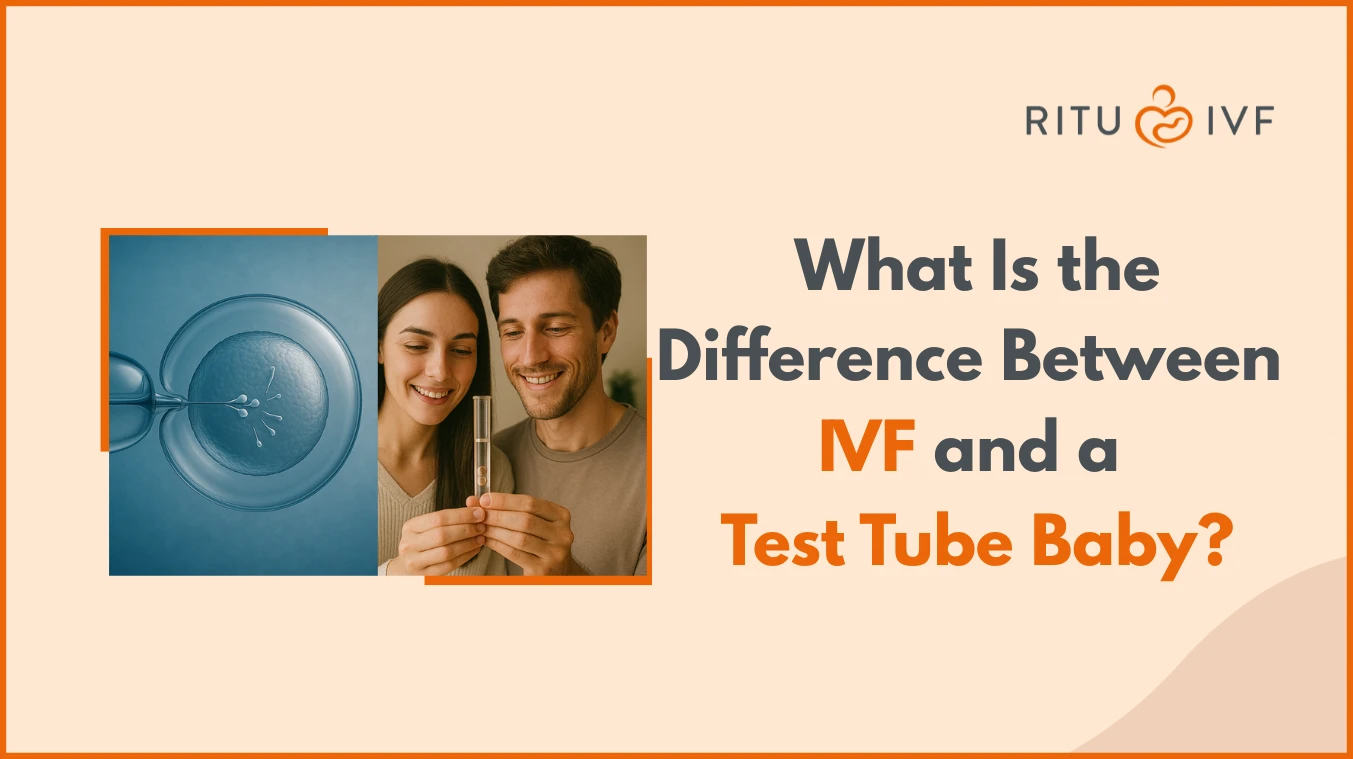
    When it comes to considering assisted reproductive techniques, couples often wonder about the difference between IVF and test tube baby. In comparison, these two terms are used interchangeably, which makes it even more confusing. The term “Test Tube Baby” refers to IVF treatment, also known as In-Vitro Fertilisation. Both describe the same procedure, wherein the egg is fertilized by sperm in a laboratory. However, medical and non-medical terms can make it seem like two separate things.

    So, what is the difference between IVF and test tube baby? Technically speaking, there is no difference! Test-tube baby is an older term, widely used when the initial IVF procedures were gaining traction. Whereas, IVF is the accurate medical name for the process. Over time, as awareness and medical literacy increased, IVF has become the preferred term for professionals. Determining this difference enables clearing up myths regarding fertility treatments.

    Book a Consultation

    What is IVF Procedure?

    To understand the key differences between IVF and test tube babies, both terminologies must be well comprehended.

    In vitro fertilisation (IVF) is a reputable form of assisted reproductive technology (ART) in which sperm and eggs are fertilized outside of the human body.  In addition, the IVF procedure entails removing eggs from the ovaries and physically combining them with sperm in a lab before fertilization. Several days after fertilization, the fertilized egg (embryo) is placed inside the uterus. Finally, pregnancy occurs when the embryo implants itself in the uterine wall.

    What is a Test Tube Baby?

    A Test Tube Baby is an informal term for a child conceived via the IVF process. If you’re still curious, what is the difference between IVF and test tube baby? There is no difference! A woman’s egg and a man’s sperm are combined in a laboratory dish during IVF. As the term suggests, embryos are developed and transferred (not in a test tube) but outside the human body. After fertilization occurred in the lab, it led to embryo transfer in the woman’s uterus, which helps in a successful pregnancy like natural conception.

    What is the Difference Between IVF and Test Tube Baby Fertility Treatment? Does any Difference Exist?

    Many couples wonder about the difference between IVF and test tube baby, but the truth is, there isn’t one! Both terms refer to the same medical procedure – In Vitro Fertilization (IVF), where an egg is fertilized by sperm outside the body. The embryos are developed in a lab dish and then implanted into the uterus. Moreover, “Test Tube Baby” is an older term, used casually, that became popular when IVF was first introduced, sparking public curiosity and a few misconceptions.

    Further, many wonder whether babies are grown in a test tube. No, the eggs are fertilised and combined with sperm in a lab before being placed into the uterus, where the baby develops normally during pregnancy. The phrase may be misleading, as IVF includes a careful lab process. So, when it comes to determining the difference between IVF and test tube baby, there is no scientific distinction; it is simply two names for the same reproductive breakthrough.

    Read Also –Everything You Need to Know About IVF Follicle Growth Chart 

    Key Reasons to Opt for the IVF Process

    After understanding the difference between IVF and test tube baby, let us explore key symptoms or reasons to consider the IVF process. Couples often choose IVF for infertility issues or when one partner has a health condition. However, IVF is an ideal reproductive option for same-sex couples or individuals seeking to conceive a baby without a partner.

    When to consider IVF?

    • Polycystic Ovary Syndrome (PCOS) or another ovarian disorder.

    • Blocked or damaged fallopian tubes.

    • Unexplained issues with the uterus.

    • Endometriosis.

    • Uterine Fibroids.

    • Low sperm count and other sperm-related impairments.

    • Risk of passing a genetic disease or disorder to a child.

    • Unexplained fertility.

    • Using an egg donor or a gestational surrogate for conceiving a baby.

    Whats app

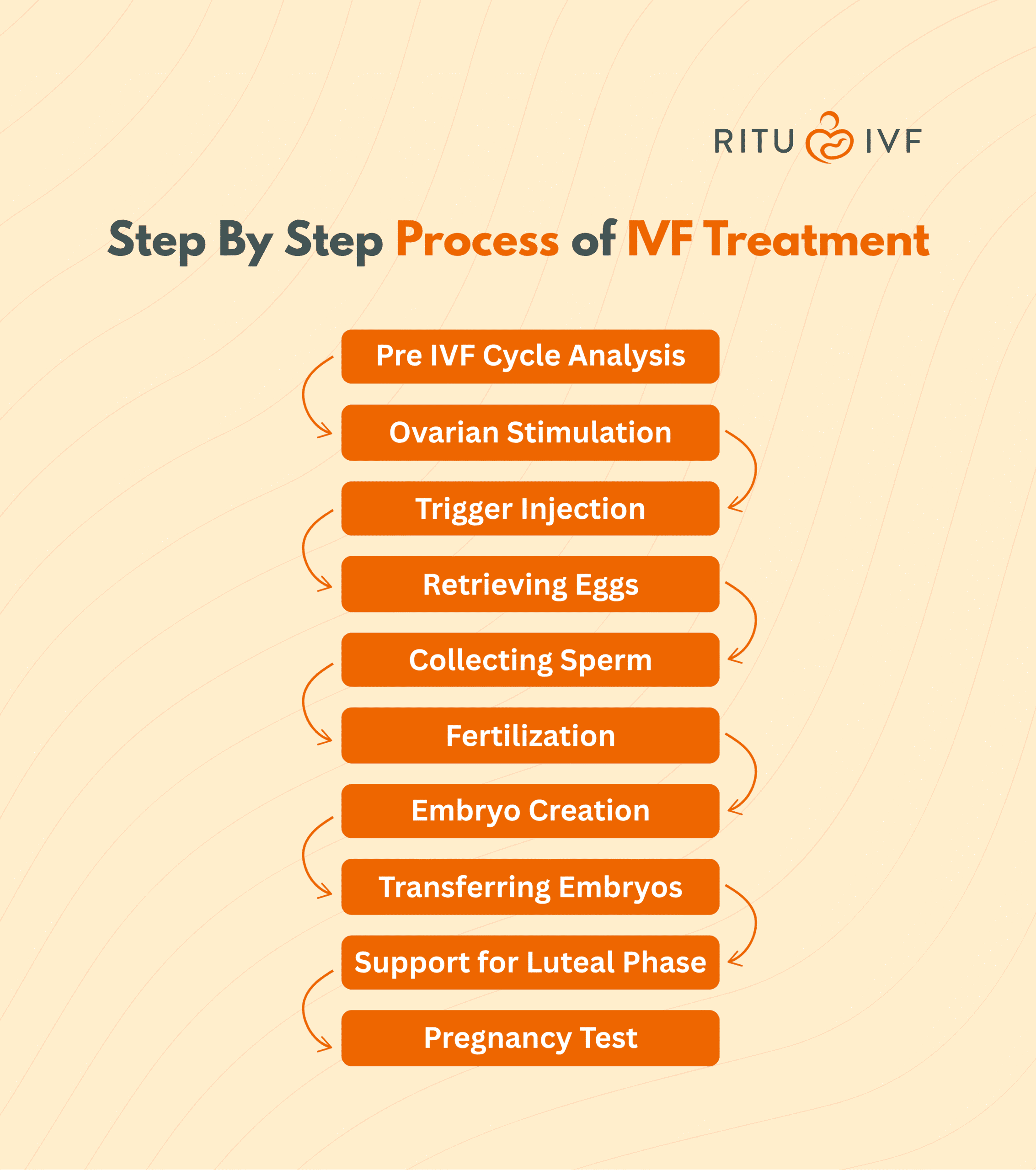
    Step-by-Step Process of IVF Treatment

    process of IVF treatment

    IVF includes varied steps using ART. It involves stimulating ovaries, retrieving eggs, fertilizing them with sperm in a lab, and then transferring the embryo into the uterus. Commonly known as the test tube process, the difference between IVF and test tube baby lies only in the term and not in the procedure.

    1. Pre-IVF Cycle Analysis

    Before beginning with IVF procedures, couples have to undergo extensive medical assessments like hormonal blood tests and an ultrasound to understand their reproductive health and ovarian reserves. Upon results, your doctor will create a custom plan and explain the necessary protocols.

    2. Ovarian Stimulation

    • Hormone-Based Injection: Over 8-14 days, a woman receives daily hormone injections (follicle-stimulating hormone and luteinizing hormone) to stimulate ovaries and produce multiple eggs instead of the usual single egg per cycle.

    • Tracking: Conducting blood tests and transvaginal ultrasounds to track overall follicle growth and hormonal levels.

    • Priming: Some protocols leverage oral contraceptives or even estrogen pills before stimulation to prime the ovaries.

    3. Trigger Injection

    When ultrasounds indicate that follicles have reached to the optimal size – 18-22 mm, “trigger” injection of GnRH or hCG is administered. This process helps mature eggs and prepares them for retrieval. However, the timing of the injection is scheduled carefully.

    4. Retrieving Eggs

    • Process: After 24-26 hours of trigger injection, eggs are collected in a minor outpatient process under light anaesthesia.

    • Method: A needle is inserted through the vaginal wall into the ovaries (followed by ultrasound) to aspirate follicular fluid containing eggs. This process normally takes around 15 to 30 minutes.

    5. Collecting Sperm

    • A fresh semen sample is collected (the same day as egg retrieval), or previously collected and then frozen sperm is leveraged.

    • Moving ahead, this sperm is processed and prepared to select the healthier one.

    6. Fertilization

    • In the lab, mature eggs are combined with sperm in a petri dish.

    • Standard IVF: Eggs and sperm are combined and left to fertilize naturally for a specific time.

    • ICSI (Intracytoplasmic Sperm Injection): A Single sperm is injected directly into a mature egg, ideally used for male factor infertility.

    • Finally, eggs and sperm are incubated in a controlled environment. After 17 to 18 hours, the fertilization is examined again.

    7. Embryo Creation

    • Embryo Development: The fertilized eggs (embryos) are tracked for 2-5 days as they develop, reaching the blastocyst stage (which is day 5 embryo).

    • Genetic Testing (Optional): In a few cases, pre-implantation genetic testing is performed to screen for chromosomal abnormalities within the baby.

    8. Transferring Embryos

    • Painless Process: One or more healthy embryos are selected for transferring into the woman’s uterus by using a thin catheter. This is performed without anaesthesia and feels similar to a pap smear.

    • Timing: This transfer takes 3-5 days after egg retrieval, depending on the embryo growth.

    9. Support for Luteal Phase

    • Medicine: The patient is recommended to take progesterone supplements (gel, tablets, or injection) to support embryo implantation and early pregnancy.

    10. Pregnancy Test

    • Blood Test: After two weeks after embryo transfer, conduct a blood test for hCG hormone to determine if pregnancy has occurred. Moreover, ultrasound confirmation is necessary if tests are positive.

    Read More – IVF Cost In India

    What can Couples Expect post-IVF treatment?

    After understanding, what is the difference between IVF and test tube baby? Understanding the causes of mild symptoms following an embryo transfer or IVF procedure is equally crucial.

    • Spotting.

    • Mild bloating and cramping.

    • Constipation.

    • Breast tenderness from high estrogen levels.

    Final Takeaway!

    The difference between IVF and test tube baby is only in medical terminology! Both refer to the same fertility procedure where the egg is fertilized outside the body. However, ‘Test Tube Baby” is just an informal phrase! Whether you call IVF or Test Tube Baby, the objective is the same, which helps couples and singles experience the joy of parenthood. Connect with our team to learn more about the IVF process.

    Contact Us Now

    FAQs

    1. Which is better, IVF or test tube baby?

    IVF and Test Tube Baby are both fertility treatments, and they are the same! The term “Test Tube Baby” is a casual or non-medical term used to refer to IVF treatment.

    2. Is an IVF baby a test tube baby?

    Yes, an IVF baby is often referred to as a test tube baby, as fertilization occurs in laboratory, outside the body. And then the embryo (developed in a lab dish) is implanted in the uterus.

    3. What is another name for a test tube baby?

    Another formal term for test tube baby is referred to as In Vitro Fertilization (IVF), which uses Assisted Reproductive Technology (ART)

    4. Is the test tube baby process painful?

    The test tube baby or IVF process may involve slight discomfort from injections, egg retrieval, or even hormone treatments. However, it is tolerated and not considered a painful process. Moreover, you can seek pain management options to reduce your discomfort level.

  • आईवीएफ क्या होता है? प्रक्रिया, फायदे, लागत और सही इलाज (2026)

    आईवीएफ क्या होता है? प्रक्रिया, फायदे, लागत और सही इलाज (2026)

    आईवीएफ (IVF), जिसका पूर्ण रूप इन विट्रो फर्टिलाइजेशन है, एक आधुनिक सहायक प्रजनन तकनीक है जो संतान चाहने वाले दंपतियों के लिए आशा की किरण है। आमतौर पर इसे टेस्ट ट्यूब बेबी के नाम से भी जाना जाता है। इस प्रक्रिया में महिला के अंडाणु (eggs) और पुरुष के शुक्राणु (sperm) को शरीर के बाहर प्रयोगशाला में मिलाकर निषेचन कराया जाता है। जब निषेचित भ्रूण बन जाता है, तो उसे सावधानीपूर्वक महिला के गर्भाशय में प्रत्यारोपित किया जाता है। सरल शब्दों में, IVF प्राकृतिक गर्भाधान में आ रही बाधाओं को दूर करके बांझपन का इलाज करने का एक प्रभावी तरीका है, जिससे वे दंपति भी माता-पिता बन सकते हैं जो प्राकृतिक रूप से गर्भधारण नहीं कर पा रहे हैं।

    आईवीएफ की प्रक्रिया (स्टेप-बाय-स्टेप)

    आईवीएफ की प्रक्रिया

    IVF प्रक्रिया मुख्यतः पाँच चरणों में पूरी होती है, जिसे चरणबद्ध तरीके से नीचे समझाया गया है:

    1. ओव्यूलेशन इंडक्शन (Ovulation Induction) – इस चरण में महिला को हार्मोनल इंजेक्शन व दवाइयाँ दी जाती हैं ताकि अंडाशय एक साथ कई अंडाणु विकसित कर सके। सामान्यतः हर माह एक अंडा परिपक्व होता है, लेकिन IVF के लिए 8-15 तक अंडों को उत्तेजित करके प्राप्त करना आदर्श होता है। अंडाणुओं की संख्या महिला की उम्र और उसकी शारीरिक प्रतिक्रिया पर निर्भर करती है। अंडे बढ़ाने की यह प्रक्रिया लगभग 10-12 दिनों तक चलती है, जिसमें विशेषज्ञ डॉक्टर नियमित अल्ट्रासाउंड और रक्त परीक्षण के जरिये अंडों की वृद्धि पर नज़र रखते हैं।
    2. अंडाणु संग्रह (Egg Retrieval) – जब अंडे पूर्ण रूप से परिपक्व हो जाते हैं, तब उन्हें एक मामूली प्रक्रिया द्वारा निकाला जाता है। एनेस्थीसिया (संवेदनाहारी) देकर अल्ट्रासाउंड की मार्गदर्शन में एक सूई की सहायता से अंडाशय से अंडाणु निकाले जाते हैं। यह लघु शल्यक्रिया 20-30 मिनट में पूरी हो जाती है और आमतौर पर उसी दिन मरीज घर जा सकती है। प्रक्रिया के बाद हल्का दर्द या ऐंठन संभव है, इसलिए कुछ घंटे आराम की सलाह दी जाती है।
    3. शुक्राणु संग्रह एवं निषेचन (Sperm Collection & Fertilization) – अंडा निकालने के दिन पुरुष साथी से वीर्य का नमूना लिया जाता है। प्राप्त अंडाणुओं को लैब में उसी दिन शुक्राणुओं के साथ मिलाकर निषेचन (fertilization) किया जाता है। कभी-कभी निषेचन की सफलता बढ़ाने के लिए इंट्रासाइटोप्लाज़मिक स्पर्म इंजेक्शन (ICSI) तकनीक का उपयोग किया जाता है, जिसमें एक एकल शुक्राणु को सीधे अंडे के भीतर इंजेक्ट किया जाता है। नियंत्रित लैब वातावरण में 3-5 दिनों तक अंडाणु और शुक्राणु को मिलाकर भ्रूण विकसित होने का इंतज़ार किया जाता है।
    4. भ्रूण स्थानांतरण (Embryo Transfer) – सफल निषेचन के बाद बने स्वस्थ भ्रूणों में से 1-2 सर्वोत्तम भ्रूण चुनकर महिला के गर्भाशय में स्थानांतरित किए जाते हैं। यह प्रक्रिया सरल तथा लगभग दर्दरहित होती है, जिसमें डॉक्टर एक पतली कैथेटर (नली) की मदद से भ्रूण को गर्भाशय में छोड़ते हैं। भ्रूण स्थानांतरण के बाद, महिला को कुछ समय क्लिनिक में आराम कराया जाता है और फिर दैनिक कार्यों के लिए सामान्य रूप से घर भेज दिया जाता है। स्थानांतरण प्रक्रिया के दौरान अत्यधिक सावधानी रखी जाती है क्योंकि यह IVF के सबसे संवेदनशील चरणों में से एक है।
    5. गर्भावस्था की पुष्टि (Pregnancy Test) – भ्रूण ट्रांसफ़र के लगभग 12-14 दिन बाद प्रसव संभावित महिला का रक्त या मूत्र परीक्षण करके गर्भावस्था का पता लगाया जाता है। इस अवधि में धैर्य रखना ज़रूरी होता है। यदि परीक्षण सकारात्मक आता है, तो गर्भावस्था स्थापित मानी जाती है और आगे प्रसवपूर्व देखभाल शुरू की जाती है। नकारात्मक परिणाम आने पर भी उम्मीद नहीं छोड़नी चाहिए, क्योंकि कई बार पूर्ण सफलता के लिए 2-3 IVF चक्र तक प्रयास करने पड़ सकते हैं (यह प्रत्येक दंपति की स्थितियों पर निर्भर करता है)।

    Book a Consultation

    किन लोगों के लिए आईवीएफ ज़रूरी है?

    IVF उपचार हर उन मामलों में सुझाया जाता है, जहाँ प्राकृतिक रूप से गर्भधारण संभव नहीं हो पा रहा या अन्य प्रजनन उपचार विफल हो चुके हैं। नीचे कुछ ऐसी परिस्थितियाँ दी गई हैं जिनमें IVF कराने की आवश्यकता पड़ सकती है:

    • फैलोपियन ट्यूब में समस्या: जिन महिलाओं की फ़ैलोपियन ट्यूब बंद, क्षतिग्रस्त या हटा दी गई हों, उनके लिए IVF ही संतान पाने का एकमात्र तरीका हो सकता है। बाधित या अनुपस्थित नलिकाओं के कारण अंडा और शुक्राणु का मिलन शरीर के अंदर संभव नहीं होता, जिसे IVF द्वारा लैब में कराया जाता है।
    • एंडोमेट्रियोसिस: इस स्थिति में गर्भाशय की अंदरूनी परत (एंडोमेट्रियम) शरीर के बाहर बढ़ने लगती है, जिससे प्रजनन क्षमता प्रभावित होती है। गंभीर एंडोमेट्रियोसिस वाले मामलों में IVF एक प्रभावी विकल्प के रूप में काम करता है।
    • ओव्यूलेशन संबंधी विकार: कुछ महिलाओं में अंडोत्सर्जन (ovulation) अनियमित या नहीं हो पाता, जिससे नियमित रूप से अंडे उपलब्ध नहीं होते। जब दवाओं से ओव्यूलेशन को नियंत्रित/प्रेरित करने पर भी गर्भधारण नहीं होता, तो IVF की सहायता ली जा सकती है।
    • गर्भाशय फाइब्रॉइड (Fibroids): गर्भाशय में होने वाली गैर-ग्रीवा गांठें (फाइब्रॉइड) कभी-कभी निषेचित अंडे के आरोपण में बाधा डालती हैं। यदि अन्य उपचार से समाधान न हो, तो IVF के जरिये स्वस्थ भ्रूण को सीधे गर्भाशय में रखकर गर्भधारण कराने की कोशिश की जाती है।
    • अस्पष्टीकृत बांझपन: कई दंपतियों में सारे परीक्षण सामान्य आने पर भी गर्भधारण नहीं हो पाता जिसे अनएक्सप्लेंड इनफर्टिलिटी कहा जाता है। ऐसे मामलों में, जब कारण स्पष्ट नहीं है और लंबे समय से संतान नहीं हो पा रही, IVF उपचार एक उम्मीद बनकर सामने आता है।
    • पुरुष-factor बांझपन: यदि पुरुष के शुक्राणु संबंधी परमेय समस्याएँ हों – जैसे शुक्राणुओं की संख्या बहुत कम होना (oligospermia), गतिशीलता की कमी, आकार सम्बन्धी विकृति या वीर्य में शुक्राणुओं की अनुपस्थिति (azoospermia) – तो IVF/ICSI तकनीक द्वारा अंडे को निषेचित करके गर्भधारण संभव कराया जा सकता है। यह पुरुष बांझपन के इलाज का भी मार्ग प्रदान करता है।
    • अनुवांशिक विकार: जिन दंपतियों को ज्ञात आनुवांशिक बीमारियों का जोखिम है, वे भी IVF का सहारा ले सकते हैं। IVF के साथ प्री-इम्प्लांटेशन जेनेटिक टेस्टिंग (PGT) करके हेल्दी भ्रूण चुनने से आनुवंशिक रोगों को संतति में आने से रोका जा सकता है। उदाहरण के लिए, यदि परिवार में कोई गंभीर अनुवांशिक रोग है, तो भ्रूण रोपण से पहले उसकी जाँच की जा सकती है।

    इनके अतिरिक्त, उम्र अधिक होने पर (उदाहरणतः 35-40 वर्ष के बाद) महिला की प्रजनन क्षमता घटने लगती है। ऐसे में डॉक्टर्स कभी-कभी सीधे IVF की सलाह देते हैं ताकि समय रहते गर्भधारण किया जा सके। कुल मिलाकर, जब भी बांझपन के पीछे का कारण IVF द्वारा संबोधित किया जा सकता है, यह विकल्प दंपति को अपनाने पर विचार करना चाहिए। विशेषज्ञ डॉक्टर आपकी स्थिति आंकलन करके बता सकते हैं कि IVF आपके लिए उपयुक्त है या नहीं।

    आईवीएफ के फायदे और जोखिम

    IVF तकनीक ने लाखों दंपतियों को माता-पिता बनने का सुख दिया है। इसके कई फायदे हैं, लेकिन इसके साथ कुछ संभावित जोखिम और चुनौतियाँ भी जुड़े हुए हैं। आइए IVF के फायदे और जोखिम को समझें:

    IVF के फायदे:

    • उच्च सफलता दर और संतान प्राप्ति की संभावना: IVF आज उपलब्ध बांझपन उपचारों में सबसे सफल तरीकों में गिना जाता है। खासकर युवा महिलाओं में प्रति चक्र गर्भधारण की अच्छी संभावना रहती है, जिससे निःसंतान दंपतियों को माता-पिता बनने का मौका मिलता है। कई बार अतिरिक्त भ्रूणों को फ़्रीज़ करके बाद में उपयोग करने से अगली बार सफलता की संभावना और बढ़ जाती है।
    • जटिल बांझपन मामलों में प्रभावी समाधान: जिन मामलों में अन्य उपचार (दवाएं, सर्जरी या IUI) विफल रहे हों, IVF एक अंतिम वरदान साबित होता है। फेलोपियन ट्यूब की समस्या, गंभीर एंडोमेट्रियोसिस, पुरुष बांझपन आदि जटिल स्थितियों में IVF सीधे अंडा-शुक्राणु मेल करवाकर समस्या का समाधान करता है।
    • दाता शुक्राणु/अंडाणु का विकल्प: IVF में जरूरत पड़ने पर डोनर स्पर्म या डोनर एग का उपयोग भी किया जा सकता है, जिससे वे दंपति भी संतान सुख पा सकते हैं जिनमें किसी एक के गांडकोश (Gametes) उपलब्ध नहीं हैं। उदाहरण के लिए, उम्रदराज़ महिला, जिसका अंडारक्षण कमजोर है, वह दाता अंडे से IVF कर सकती है।
    • परिवार नियोजन व समय का चयन: IVF के जरिये दंपति अपनी सुविधानुसार परिवार शुरू करने का समय चुनने में लचीलापन पा सकते हैं। कुछ लोग अपने भ्रूण या अंडाणु संरक्षित (फ्रीज़) करवाकर बाद में गर्भधारण करते हैं। करियर या अन्य कारणों से विलंब करना हो तो आईवीएफ टेक्नोलॉजी से प्रजनन क्षमता को संजोकर रखा जा सकता है।
    • अनुवांशिक बीमारी से बचाव: जैसा ऊपर उल्लेख हुआ, IVF के साथ PGT जैसी तकनीक जोड़कर स्वस्थ भ्रूण को चुना जा सकता है। इससे उन अनुवांशिक रोगों से मुक्त संतान पाने में मदद मिलती है जो माता-पिता को हों। इस प्रकार IVF स्वस्थ शिशु की संभावना बढ़ाता है।

    IVF से जुड़े जोखिम:

    • मल्टीपल प्रेग्नेंसी (एकाधिक भ्रूण गर्भ): IVF के दौरान यदि एक से अधिक भ्रूण गर्भाशय में प्रत्यारोपित किए जाएँ, तो जुड़वां या ट्रिपल गर्भ की संभावना बढ़ जाती है। मल्टीपल प्रेग्नेंसी से गर्भावस्था के दौरान जटिलताओं (उच्च रक्तचाप, समयपूर्व प्रसव आदि) का जोखिम बढ़ सकता है, इसलिए कई केंद्र अब सीमित भ्रूण ट्रांसफ़र करने पर जोर देते हैं।
    • ओवेरियन हाइपरस्टिम्यूलेशन सिंड्रोम (OHSS): कुछ मामलों में अंडाणु बढ़ाने वाली हार्मोन दवाओं पर अंडाशय अत्यधिक प्रतिक्रिया दे सकता है, जिससे ओवरी में सूजन, पेट दर्द, उल्टी, और द्रव संचय जैसी समस्याएँ होती हैं। गंभीर OHSS कम मामलों में होता है और आधुनिक प्रोटोकॉल से इसे काफी हद तक रोका जा सकता है, लेकिन हल्के OHSS के लक्षण IVF चक्र में देखे जा सकते हैं।
    • प्रक्रिया से जुड़े हल्के दुष्प्रभाव: अंडाणु संग्रह (Egg retrieval) के बाद कुछ महिलाओं को पेट में हल्का दर्द, ऐंठन या सूजन महसूस हो सकती है। हार्मोन इंजेक्शनों के कारण मूड में उतार-चढ़ाव, सिरदर्द, थकान या गर्मी लगने जैसी स्थितियाँ भी संभव हैं। भ्रूण ट्रांसफर के बाद मामूली रक्त-स्राव या स्पॉटिंग भी सामान्य है। ये अधिकांश दुष्प्रभाव अस्थायी होते हैं और कुछ दिनों में स्वतः ठीक हो जाते हैं।
    • गर्भावस्था संबंधी जटिलताएँ: IVF द्वारा गर्भधारण करने पर भी सामान्य गर्भावस्था की तरह ही सावधानियों की ज़रूरत होती है। कभी-कभार IVF pregnancies में गर्भपात (miscarriage) या अस्थानिक गर्भावस्था (ectopic pregnancy) का जोखिम बढ़ सकता है, विशेषकर वृद्धावस्था या अतीत में प्रजनन समस्याओं वाले मामलों में। हालांकि IVF से गर्भधारण किए हुए अधिकतर बच्चे पूर्णतः स्वस्थ और सामान्य होते हैं, फिर भी गर्भावस्था के दौरान नियमित डॉक्टर की निगरानी बहुत आवश्यक है।
    • भावनात्मक व आर्थिक तनाव: IVF एक महंगी और समय लेने वाली प्रक्रिया हो सकती है, जिससे कुछ दंपतियों को आर्थिक भार महसूस होता है। प्रत्येक चक्र की अनिश्चित सफलता दर के कारण मानसिक तनाव और चिंता होना स्वाभाविक है। इलाज के दौरान उत्साह और निराशा के उतार-चढ़ाव से जूझने में भावनात्मक संबल की जरूरत पड़ती है। इसलिए अच्छे सपोर्ट सिस्टम (परिवार, काउंसलिंग) और वित्तीय योजना के साथ आगे बढ़ना चाहिए।

    उपरोक्त जोखिम होने की संभावना को कम करने के लिए अनुभवी IVF विशेषज्ञ की देखरेख, उचित दवा खुराक और नियमित फॉलो-अप जरूरी है। सही केंद्र चुनने पर IVF काफी सुरक्षित प्रक्रिया मानी जाती है, और अब तक दुनिया भर में लाखों स्वस्थ शिशुओं का जन्म IVF से हो चुका है।

    Contact Us Now

    आईवीएफ ट्रीटमेंट की लागत (भारत में)

    IVF ट्रीटमेंट का खर्च भारत में कई कारकों पर निर्भर करता है। अलग-अलग शहरों, क्लीनिकों और रोगी की परिस्थितियों के अनुसार लागत में भिन्नता होती है। औसतन भारत में एक IVF चक्र (साइकिल) का कुल खर्च लगभग ₹1,00,000 से ₹3,00,000 तक हो सकता है। साधारण मामलों में प्रति चक्र ₹70,000 – ₹1,00,000 तक में भी बेसिक IVF कराया जा सकता है, जबकि बड़े महानगरों के प्रतिष्ठित केंद्रों में उन्नत सुविधाओं सहित प्रति चक्र लागत ₹2,50,000 – ₹3,00,000 या उससे अधिक तक जा सकती है। उदाहरण के लिए, दिल्ली जैसे शहर में एक IVF चक्र की कीमत लगभग ₹90,000 से ₹1,25,000 के बीच होती है, और कुछ शीर्ष क्लीनिकों में दवाइयों सहित यह ₹3 लाख तक पहुंच जाती है।

    IVF की लागत को प्रभावित करने वाले प्रमुख कारकों में शामिल हैं – क्लिनिक की प्रतिष्ठा व सफलता दर, डॉक्टर एवं एंब्रियोलॉजिस्ट की विशेषज्ञता, प्रयोगशाला की तकनीक और सुविधाएँ, मरीज की चिकित्सीय ज़रूरतें तथा चुनी गई प्रक्रिया का प्रकार। यदि IVF के साथ ICSI, लेज़र हैचिंग या PGT जैसी उन्नत तकनीकें इस्तेमाल की जाएँ तो इलाज महंगा होता जाता है। इसके अलावा, कुछ मामलों में अतिरिक्त प्रक्रियाएँ या सेवाएँ भी खर्च बढ़ाती हैं – जैसे डोनर अंडाणु/शुक्राणु का इस्तेमाल करने पर ₹30,000 – ₹1,00,000 तक का अतिरिक्त शुल्क हो सकता है, और जेनेटिक टेस्टिंग या फ्रीज़िंग आदि पर भी अतिरिक्त खर्च आता है। प्रारंभिक जाँच (हार्मोन टेस्ट, अल्ट्रासाउंड, सीमेन एनालिसिस) एवं परामर्श पर भी करीब ₹10,000-₹15,000 का खर्च आता है। कुल मिलाकर, हर दंपति के लिए IVF का पैकेज अलग हो सकता है – इसलिए सही होगा कि आप किसी विश्वसनीय IVF केंद्र से परामर्श लेकर अपनी परिस्थितियों के अनुसार सटीक लागत का आकलन करें। कई केंद्र EMI या किस्तों में भुगतान और पैकेज ऑफर भी प्रदान करते हैं, जिससे इलाज का आर्थिक बोझ कुछ कम किया जा सकता है।

    Whats app

    सामान्य सवाल (FAQ)

    प्रश्न: IVF की सफलता दर कितनी होती है?

    IVF की सफलता दर महिला की आयु, बांझपन के कारण और क्लिनिक की विशेषज्ञता पर निर्भर करती है। औसतन 35 वर्ष से कम उम्र की महिलाओं में प्रति IVF चक्र करीब 35-50% तक गर्भधारण की सफलता मिल जाती है। युवा महिलाओं में यह दर और भी अधिक (कुछ केंद्रों में 60-70% तक) रिपोर्ट की गई है, जबकि अधिक उम्र में सफलता दर घटकर 20-30% या कम हो सकती है। ध्यान दें कि कई बार स्वस्थ शिशु के जन्म के लिए 2-3 चक्र तक लग सकते हैं – इसलिए यदि पहली बार पूर्ण सफलता न मिले, तो निराश न हों और डॉक्टर की सलाह अनुसार प्रयास जारी रखें।

    प्रश्न: क्या IVF प्रक्रिया दर्दनाक होती है?

    सामान्यतः IVF ज़्यादा दर्दनाक नहीं होती। उपचार के दौरान कुछेक चरणों में हल्का दर्द या असहजता महसूस हो सकती है, मगर चिकित्सक इसे नियंत्रित करते हैं। उदाहरण के लिए, अंडाणु संग्रह के समय ऐनेस्थीसिया दिया जाता है, जिससे प्रक्रिया के दौरान दर्द महसूस नहीं होता। हार्मोन के इंजेक्शन लगने से मामूली सूजन या चुभन हो सकती है, लेकिन आजकल बहुत पतली सूई एवं बेहतर तकनीकों से ये कष्ट न्यूनतम होते हैं। भ्रूण ट्रांसफर भी लगभग दर्दरहित प्रक्रिया है। कुल मिलाकर, IVF के अधिकतर चरण साधनीय दर्द या तकलीफ के साथ पूरे हो जाते हैं और चिकित्सकीय दल इसे आपके लिए सहज बनाने का हर संभव प्रयास करता है।

    प्रश्न: IVF करवाने पर जुड़वां या ट्रिपल बच्चे होने की संभावना रहती है?

    हाँ, IVF में जुड़वां संतानों की संभावना सामान्य गर्भधारण से अधिक होती है, खासकर जब दो या उससे अधिक भ्रूण ट्रांसफ़र किए जाएँ। लगभग 20-30% IVF गर्भधारण में जुड़वां गर्भ देखा जाता था जब पहले अधिक भ्रूण प्रत्यारोपित किए जाते थे। हालांकि वर्तमान में अधिकतर अच्छे केंद्र एक ही स्वस्थ भ्रूण ट्रांसफर करने पर जोर देते हैं, जिससे जुड़वा या बहु-भ्रूण गर्भ की जोखिम काफी कम हो गई है। यदि एक से अधिक भ्रूण लगाए भी जाएँ, तो डॉक्टर आपका अवलोकन सावधानीपूर्वक करेंगे क्योंकि मल्टीपल प्रेग्नेंसी को उच्च जोखिम वाली श्रेणी में माना जाता है। सफलता और सुरक्षा के संतुलन के लिए डॉक्टर भ्रूणों की संख्या का फैसला मरीज की उम्र, भ्रूण गुणवत्ता और चिकित्सा इतिहास देखकर करते हैं।

    प्रश्न: IVF और IUI में क्या अंतर है?

    IUI (Intrauterine Insemination) और IVF दोनों बांझपन के इलाज के लिए प्रयुक्त तकनीकें हैं, लेकिन इनकी प्रक्रिया भिन्न है। IUI में महिला के गर्भाशय में सीधे शुक्राणु डाले जाते हैं और शुक्राणु का अंडे से मिलन (निषेचन) महिला के शरीर के अंदर ही होता है। यह साधारण तथा कम लागत वाली प्रक्रिया है, जो हल्के पुरुष बांझपन या अनएक्सप्लेंड इनफर्टिलिटी में पहले आज़माई जाती है। दूसरी ओर, IVF में निषेचन की प्रक्रिया शरीर के बाहर लैब में की जाती है – अंडे निकालकर लैब में स्पर्म से मिलाए जाते हैं, फिर बना भ्रूण गर्भाशय में रखा जाता है। IVF अधिक जटिल और महंगी प्रक्रिया है, लेकिन यह उन स्थितियों में काम आती है जहाँ IUI सफल नहीं रहा या संभव नहीं है (जैसे फैलोपियन ट्यूब ब्लॉक होना, भारी पुरुष कारक इन्फर्टिलिटी आदि)। संक्षेप में, IUI प्राकृतिक गर्भाधान के करीब है जबकि IVF पूरी तरह लैब-सहायित तकनीक है।

    प्रश्न: क्या IVF से पैदा हुए बच्चे स्वस्थ होते हैं?

    जी हाँ, IVF द्वारा जन्मे अधिकांश बच्चे स्वस्थ और सामान्य होते हैं। विश्व में 1978 से लेकर अब तक लाखों टेस्ट ट्यूब बेबी जन्म ले चुके हैं और उनका विकास प्राकृतिक गर्भ से जन्मे बच्चों की तरह ही होता है। शोध से पता चला है कि IVF शिशुओं में जन्म दोष या स्वास्थ्य समस्याओं का प्रतिशत सामान्य आबादी से भिन्न नहीं है। चूंकि IVF में भ्रूण की शुरुआती अवस्था में ही गुणवत्ता जांची जाती है, स्वस्थ भ्रूण के चयन से सफल सकारात्मक प्रसूति की संभावना रहती है। माता-पिता को यह चिंता नहीं करनी चाहिए कि IVF तकनीक से बच्चे पर कोई नकारात्मक प्रभाव पड़ेगा – आवश्यक है तो बस प्रसवपूर्व नियमित जांच और स्वस्थ जीवनशैली, जो हर गर्भावस्था के लिए जरूरी है। इसलिए, आप निश्चिंत होकर IVF से परिवार बढ़ाने का फैसला कर सकते हैं; आपके द्वारा पाया गया बच्चा उतना ही स्वस्थ होगा जितना प्राकृतिक गर्भ से जन्मा शिशु।

    Ritu IVF के साथ अपना सपना साकार करें

    अपने परिवार को पूर्ण करने का सपना देख रहे हैं? Ritu IVF के साथ उस सपने को साकार करें! Ritu IVF जयपुर का एक विश्वसनीय और अग्रणी फर्टिलिटी सेंटर है, जहां दयालु देखभाल और अत्याधुनिक तकनीक के साथ बांझपन का उपचार किया जाता है। हमारे केंद्र पर अनुभवी डॉक्टरों और प्रजनन विशेषज्ञों की टीम प्रत्येक मरीज को व्यक्तिगत ध्यान और compassionate care प्रदान करती है, ताकि आप सहज महसूस करें। Ritu IVF ने उच्च सफलता दर के साथ अनगिनत दंपतियों की गोद में खुशियां भरने में मदद की है – हमारे विशेषज्ञ जटिल से जटिल मामलों में भी मार्गदर्शन और उपचार प्रदान करते हैं।

    हमारी विशेषता है कि हम हर मरीज के इलाज को उसकी जरूरत के हिसाब से कस्टमाइज करते हैं और प्रक्रिया के हर चरण में पारदर्शिता बनाए रखते हैं। उच्च सफलता दर, आधुनिक लैब सुविधाएँ, निष्णात डॉक्टरों की टीम और सहायक स्टाफ Ritu IVF को एक बेहतरीन विकल्प बनाते हैं। यदि आप बांझपन से जूझ रहे हैं तो हताश न हों – Ritu IVF में आपका स्वागत है, जहां आपकी भावनाओं को समझते हुए उचित सलाह और उपचार मिलेगा। आज ही Ritu IVF में परामर्श बुक करें और पहला कदम अपने माता-पिता बनने के सपने की ओर बढ़ाएँ। हम आपके साथ मिलकर आपके सपनों को हकीकत में बदलने के लिए तत्पर हैं – आइए, Ritu IVF के साथ मिलकर नए जीवन की शुरुआत करें!


    निष्कर्ष:
    IVF एक उन्नत किन्तु सुलभ तकनीक है जिसने चिकित्सा के क्षेत्र में क्रांति लाई है। आईवीएफ क्या होता है से लेकर इसकी प्रक्रिया, लागत और सफलता तक हमने इस ब्लॉग में विस्तार से जानकारी दी। आशा है कि यह विवरण आपके संदेह दूर करने में सहायक रहा होगा। यदि आप या आपके परिचित बांझपन की समस्या से गुजर रहे हैं, तो देर न करें – सही जानकारी और उचित मार्गदर्शन लेकर आप भी पैरेंटहुड का सुख पा सकते हैं। याद रखें, हर समस्या का समाधान है और IVF ने यह साबित किया है कि थोड़ी सी वैज्ञानिक मदद से प्रकृति के इस चमत्कार (नवजीवन) को पाया जा सकता है। Ritu IVF जैसे भरोसेमंद केंद्र के साथ जुड़े और अपनी खुशियों की नई कहानी लिखें।

  • Age Limit for IVF in India: What’s the Legal Age Limit for IVF Treatment

    Age Limit for IVF in India: What’s the Legal Age Limit for IVF Treatment

    In-vitro fertilization has become one of the most popular treatments for people with infertility issues. While it is a great option for couples who cannot conceive naturally, many factors impact IVF success. Age, for instance, can be one of the major reasons behind the failure of IVF. Any couple thinking of undergoing this advanced reproductive technology must know the age limits to avoid complications and ensure safety.

    So, in this blog, I will offer valuable insights into this topic: the age limit for IVF in India.

    Legal Age Limit for IVF in India

    Before I tell you the age limit for IVF, it’s important to have some idea about the ART Act. So, what is the ART Act? The Assisted Reproductive Technology Act is a law curated to supervise and regulate fertility clinics in India. So, what does this Act tell us about the IVF age limit for women and men?

    The 2021 Assisted Reproductive Technology Act specifies the following age limits for in vitro fertilization (IVF) in India. 
    • 21–50 years old (for women)
    • 26-55 years old (for men)  

    Couples and fertility treatment centers should take the above-mentioned age limits seriously. We must all remember that the IVF age limit is there to ensure that a mother and her baby remain safe during and after the process.

    Best Age for IVF Treatment

    I just shared that the maximum age for IVF is 50 for women and 55 years for men. However, this age limit of 50 years does not guarantee that a woman can have a successful IVF when she’s 48 or 49. Many women get their menopause in their late 40s. Once your menopause arrives, the chances of giving birth are slim.

    So, what’s the ideal age for IVF? According to fertility specialists and the ART Act 2021, 25-35 years is the best time to plan a baby. Both men and women are youthful in their 20s and early 30s and the fertility levels are extremely high. The ovarian reserve and egg quality are also better, thus positively impacting the success rates.

    However, the right age differs from one person to another. Fit people who maintain a healthy lifestyle can have a smooth pregnancy with IVF in their late 30s and early 40s.

    Minimum Age for IVF

    Now that you know the maximum age to get pregnant is 50 years for women, are you intrigued to find out the minimum age for IVF?

    Conceiving is easy for a woman in her 20s, but girls below the age of 20 should never consider IVF or normal pregnancy. Teenage pregnancy is risky for various reasons. The risk of puerperal endometritis, systemic infections, and eclampsia tend to be higher for adolescent mothers. Preterm birth and low birth weight are also common in teenage pregnancies.

    Even in your early 20s, becoming a mother isn’t a wise decision. Although the quality of eggs is the best during these years and visiting an IVF clinic won’t be necessary, it is also the time to explore the world and build a career. A baby is a huge responsibility and so, early 20s is not the optimal age to conceive.

    Factors Affecting IVF Success Rate

    By now it must be clear to you that as age increases, the potential risks associated with IVF also increase. However, someone seeking IVF should be mindful of several other factors:

    • quality of the eggs
    • ovarian reserve
    • lifestyle choices (habits like smoking, drinking, and having excessive junk food significantly decrease fertility levels in men and women)
    • stress (chronic stress makes us less fertile)
    • issues like ovarian malfunction or uterine abnormalities
    • the thickness of the uterine lining
    • sperm quality of the male partner or donor
    • expertise of the fertility specialist 

    The Bottom Line

    So, that was all about the best age for IVF treatment. Therefore, keep in mind the upper age limit if undergoing IVF or some other advanced fertility treatment is your only option. Additionally, to receive reliable IVF treatment in India, research well and find the best IVF center in your area.

    References:

    The Assisted Reproductive Technology (Regulation) Act, 2021: A Step in the Right Direction – PMC

  • Understanding Genetic Testing in IVF: PGT, PGD, and PGS Explained

    Understanding Genetic Testing in IVF: PGT, PGD, and PGS Explained

    Assisted Reproductive Technology is the greatest ray of home in the lives of aspiring parents. There have been astounding technological advancements in the past few years that have helped thousands of infertile couples fulfill their dream of becoming parents. Preimplantation Genetic Screening, Preimplantation Genetic Testing, and Preimplantation Genetic Diagnosis are some of the most reliable advanced options.

    However, it is important to have complete awareness before opting for any of these technologies and that’s what this blog is all about. So, what is genetic testing in IVF and what should you know about it?

    Preimplantation Genetic Testing: An Overview

    There are different kinds of genetic tests performed by fertility specialists before embryo transfer. PGT or preimplantation genetic testing is one such screening test performed on an embryo that’s created through IVF (in vitro fertilization). Doctors do it to make sure that there aren’t any chromosomal or genetic disorders. PGT can be of the following three types:

    • PGT-M: Earlier referred to as preimplantation testing, this test is a type of PGT and it can screen for specific genetic defects or genetic abnormalities (that is, single-gene abnormalities)
    • PGT-A: The earlier name for this screening test was preimplantation genetic screening. PGS screens for any kind of chromosomal abnormalities. During this process, a single cell is taken from the embryo to test its DNA.
    • PGT-SR: Structural rearrangements of chromosomes can be detected through this test.

    Who Undergoes Genetic Testing for IVF

    Doctors suggest PGT under the following circumstances:

    • Both partners/ just one has a family history of genetic disorders
    • The man/ woman/ both is a carrier of some kind of chromosomal abnormality
    • The pregnant woman has reached an advanced age
    • The mother has suffered recurrent miscarriages in the past

    Reasons to Rethink PGS or PGD

    Although the various types of genetic testing are becoming increasingly popular in many fertility clinics, there are some compelling reasons why you should think carefully before you decide to screen embryos.

    1. Genes and chromosomes are different

    PGT does not reduce the risk of miscarriages. Even for embryos that are chromosomally normal a miscarriage can happen because of genetic defects, and this is not something that PGT can predict. So, if you are doing this screening test for embryo selection because you think that you will not have a miscarriage after it, then you should reconsider it.

    2. Mosaicism

    Not every cell in an embryo is genetically identical, and this phenomenon is termed mosaicism. This means that the 2-3 sells that go for Biopsy may fail to represent the other hundred cells present in the embryo. So, if there isn’t an abnormality in the biopsied cells, a healthy embryo might get detected only because the test results were misleading.

    3. Self-correction of embryos

    Self-correction is one of the qualities of embryos as they are dynamic entities. Even if some cells turn out to be abnormal, if the remaining cells are normal, they can multiply, resulting in a healthy baby. But if an embryo is discarded based on a false positive result, a viable pregnancy will be lost.

    4. Technical challenges

    We must not forget the technical complexity of tests like PGS. Most fertility treatment centers do not perform the tests on their own but depend on genetic labs where the biopsy cells are sent. The embryo biopsy results are often confusing and ambiguous, and they may not identify the problems. If the embryologist is not skilled enough, the result can’t be completely trusted. If a biopsy is poorly executed, it can kill or damage a healthy embryo.

    5. Psychological impact

    Saying yes to fertility treatments like IVF treatment is a big step for any couple. Feeling low at times is common and genetic analysis may add to their anxiety. For a pregnancy to be successful, the emotional well-being of the mother is of utmost significance.

    6. Additional expense

    Whether you do PGT or not, you will still have to undergo prenatal diagnosis if you get pregnant. It is done to prevent delivering a child with chromosome defects. It takes place at around eight weeks, and it is more reliable. So, if it is compulsory to do PND, why spend extra money on PGT?

    Parting Thoughts

    So, PGT, PGD, and PGS in IVF are beneficial in specific scenarios. However, the PGT process is not mandatory to have a rewarding IVF cycle and a successful pregnancy. Moreover, infertility issues differ from one couple to another, and hence, having a personalized preimplantation genetic diagnosis is the best way to achieve pregnancy. Reconsidering using the newest technologies and relying on proven methods will help you get the desired outcome.

    If you have more questions regarding IVF or want to further expand your knowledge on PGT testing, get in touch with an accomplished fertility expert or a genetic counselor.

  • After How Many Weeks IVF Pregnancy Is Safe?

    After How Many Weeks IVF Pregnancy Is Safe?

    For a couple struggling to get pregnant, paying attention to every little detail is crucial. If you have opted for IVF pregnancy, you must know that timing is one of the most important aspects that ensures the success of an IVF pregnancy. You should neither wait too long nor be too impatient. So, after how many weeks of IVF pregnancy is safe? Let us discuss this in detail.

    IVF Procedure

    IVF stands for in vitro fertilization. It is an assisted reproductive technology that can help infertile couples achieve a healthy IVF pregnancy. Many couples get pregnant through IVF fertility treatment, which involves fertilizing the eggs in a lab and then placing them into the womb.

    Want to Know: how is ivf pregnancy done

    IVF Pregnancy Is Safe or Not?

    Thousands of people around the globe are opting for IVF pregnancies and they are welcoming perfectly healthy babies into their lives. However, in the initial stage, you need to be extremely careful as the first trimester is when most miscarriages happen.

    So, ‘after how many weeks of IVF pregnancy is safe‘ is a recurring question and every couple opting for IVF wants to know the answer to this. According to IVF specialists, it will be wise to be mindful of the safety of an IVF pregnancy during the first twelve to fifteen weeks. Once 12- 15 weeks have passed, you can announce your pregnancy as the risk of getting a miscarriage will drop significantly by then. After that, the baby will develop rapidly.

    However, from the moment the pregnancy test result is positive till the time your baby is born, taking good care of your body and mind is mandatory – be it a normal pregnancy or one achieved through in vitro fertilization. Sleeping at least 7-8 hours, eating nutrient-rich meals, keeping excess weight gain in check, and staying happy are generally considered the best habits to have a successful pregnancy. So, always be conscious of what food you intake, keep your body hydrated, and minimize stress. Discuss with your doctor to understand all the risk factors to enjoy your IVF journey and make sure it proves fruitful in the end.

    Precautions After IVF Pregnancy

    1. After the embryo transfer, you should stay on bed rest for some time.
    2. Avoid activities that are physically straining such as running, strenuous exercises, jumping, etc.
    3. Take your medications on time along with a folic acid supplement.

    Know about: ivf pregnancy symptoms

    To Sum Up

    In the end, we would just tell you that IVF is an effective and safe treatment. The chances of delivering a healthy baby after the first IVF cycle is around 40%. After two cycles, this becomes 60% and after three cycles, there is a 70-80% chance of conceiving.

    And now you also know that once 12 weeks from conception has passed, the risks associated with IVF pregnancy disappear and then it is as safe as getting pregnant naturally.

    So, all the best with your IVF treatment. May you soon have a lively baby in your arms.


  • Trigger Injection IVF Cost , Success Rate and Its Importance in IVF Treatment 

    Trigger Injection IVF Cost , Success Rate and Its Importance in IVF Treatment 

    The trigger shot or trigger injection is used in various fertility treatments such as ART and IVF. So, for someone planning to undergo in vitro fertilization, it is natural to feel curious to know the trigger injection IVF cost in 2025 and how taking a trigger shot can increase their chances of conceiving.

    So, in today’s article, we will tell you all about trigger injections. Since you want a successful IVF, stay tuned till the end.

    Book a Consultation

    When and How is the Trigger Injection Given?

    Your fertility specialist will give clear instructions on how to administer the trigger shot. Following the timing instructions is crucial as a delay of even a few hours can affect the success of the IVF cycle.

    For the best results, you are supposed to take the trigger shot 36 hours before egg retrieval. Say, for instance, you have taken an afternoon appointment with your doctor for egg collection on Monday. Then the ideal time for taking the trigger shot is midnight of Saturday. There can be some variations to this time window depending on your IVF journey. Hence, you should consult your doctor to find out the perfect time for taking the trigger injection in IVF.

    Read More – Top Fertility Hospitals in Jaipur: A Detailed Review

    You should also understand that the timing of the IVF trigger shot is decided based on how developed the follicles are. The medical unit will keep track of it and inform you accordingly. If multiple follicles have attained their optimal size, only then the process should be carried out. That’s because egg quality plays a key role in this process. When eggs are underdeveloped or overdeveloped, the chances of conception will be lower.

    Now scroll down to the next section to know the trigger injection IVF cost.

    Whats app

    Cost of IVF Trigger Injection in 2025

    IVF is the best treatment for infertility and the IVF cost in Mumbai or any other Indian city is quite expensive. The trigger injection IVF cost is part of the cost of IVF treatment, and it depends on various factors. The price differs from one fertility clinic to another. The cost can also vary based on the city where you reside.

    If you still want to have some idea, the average cost of the IVF trigger injection in 2025 can be anywhere between Rs. 70,000 to Rs. 95,000.

    To know the exact amount you will pay, it is better to discuss it in detail with the fertility clinic you have chosen. Many well-known IVF centers offer affordable IVF treatment and have experienced doctors. They will give you an estimate of the total cost and you should also ensure that there aren’t any hidden costs.

    Read Also: IVF treatment cost in India

    The Bottom Line

    We may conclude by saying that the trigger injection IVF cost should not be the reason why you don’t undergo IVF treatment. You have tried for months to conceive naturally and after a lot of consideration, you have chosen this part. Moreover, the IVF procedure is a one-time expense and therefore, you should go ahead with it.