Category: IVF

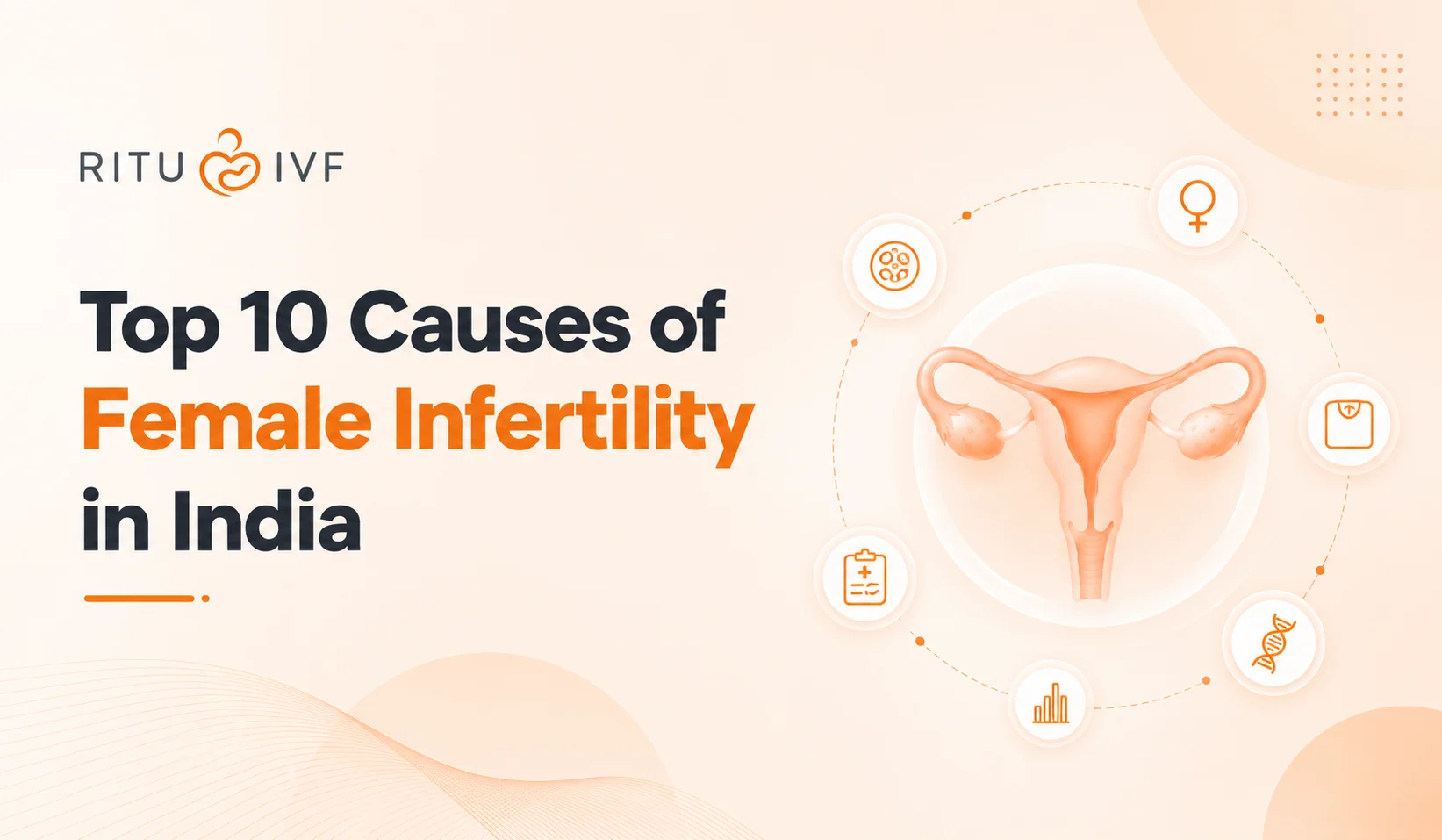
  • Top 10 Causes of Female Infertility in India (2026 Complete Guide)

    Top 10 Causes of Female Infertility in India (2026 Complete Guide)

    The most common causes of female infertility in India are PCOS, blocked fallopian tubes, endometriosis, ovulation disorders, and age-related decline. Around 1 in 6 Indian couples face fertility challenges, and in nearly 40% of those cases, the cause lies on the female side. The good news is most of these causes are diagnosable and treatable when addressed early.

    Female Infertility in India: A Quick Reality Check

    Before listing the causes, one clarification matters. Infertility is not a “female problem” by default. National data shows that male factor infertility accounts for 30 to 40% of cases in India, female factor for another 40%, and the remaining are either combined or unexplained. Yet, women still carry most of the social and emotional weight of the diagnosis. That needs to change.

    If you and your partner have been trying to conceive for over a year without success (or six months if you are above 35), both partners should get evaluated together. A complete fertility workup checks both sides of the equation, not just one. Skipping the male evaluation is one of the most common mistakes Indian couples make.

    With that context set, here are the top 10 causes of female infertility in India, ranked by how often they show up in our patients.

    Healthcare CTA

    Ready to take the next step toward parenthoo

    [Book an Appointment Now]

    Cause 1: PCOS (Polycystic Ovary Syndrome)

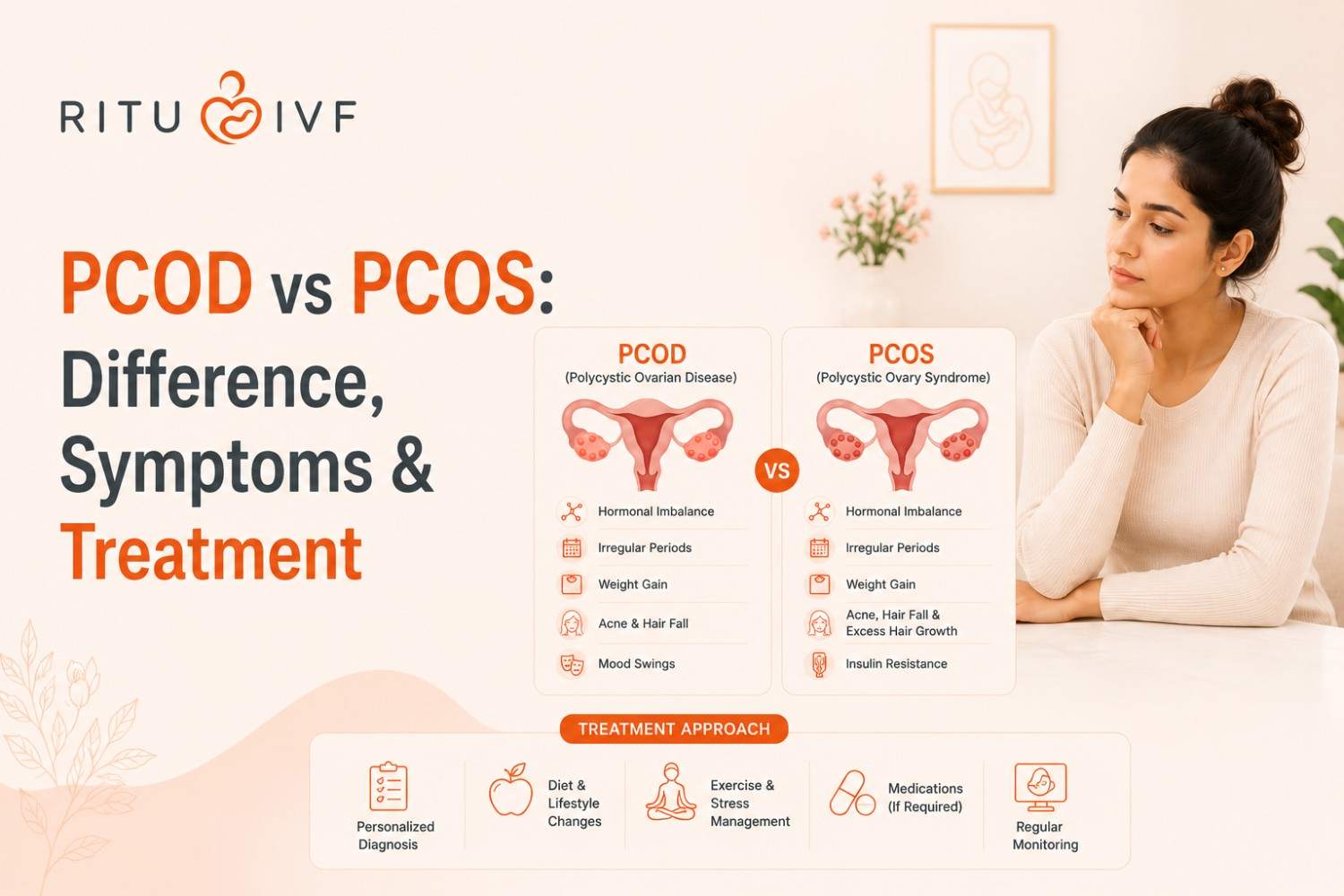
    PCOS is the single biggest cause of female infertility in India. Roughly 1 in 5 Indian women of reproductive age has PCOS, which is one of the highest rates globally. It is a hormonal disorder where the ovaries produce excess androgens (male hormones), develop multiple small cysts, and stop releasing eggs regularly.

    Common symptoms: irregular or missed periods, weight gain (especially around the abdomen), acne, excess facial or body hair, hair thinning on the scalp, and difficulty losing weight.

    Why it causes infertility: No regular ovulation means no egg available for fertilization. Even when ovulation does happen, hormonal imbalance can affect egg quality and uterine lining receptivity.

    Diagnosis involves: ultrasound (to see ovarian cysts), hormone blood tests (LH, FSH, testosterone, AMH), thyroid function, and insulin resistance check.

    Treatment options: lifestyle changes are the single most effective first step (weight loss of even 5 to 10% can restore ovulation in many women), Metformin for insulin resistance, ovulation-inducing drugs like Letrozole or Clomid, IUI for mild cases, and IVF when other methods fail. Around 70% of PCOS patients conceive successfully with proper treatment.

    Cause 2: Tubal Factor Infertility (Blocked Fallopian Tubes)

    Blocked fallopian tubes are the second most common cause in India, partly due to a uniquely Indian factor: genital tuberculosis. India has one of the highest rates of pelvic TB in the world, and it often damages the fallopian tubes silently before any pregnancy attempt.

    Common causes of tubal blockage: pelvic inflammatory disease (PID), genital tuberculosis, untreated sexually transmitted infections, endometriosis, previous abdominal or pelvic surgeries, and history of ectopic pregnancy.

    Why it causes infertility: Fallopian tubes are where sperm meets egg. If tubes are blocked, fertilization cannot happen naturally. If only partially blocked, the risk of ectopic pregnancy rises significantly.

    Symptoms: often silent. Sometimes pelvic pain, heavy or painful periods, or pain during intercourse.

    Diagnosis: HSG (hysterosalpingography) is the standard test. Laparoscopy gives a more detailed picture when HSG findings are unclear. TB workup is essential in Indian patients with unexplained tubal damage.

    Treatment: tubal surgery has limited success in most cases. IVF is the gold standard solution because it bypasses the tubes entirely. For women with confirmed tubal blockage, IVF often delivers the highest pregnancy success rate.

    Cause 3: Endometriosis

    Endometriosis affects 10 to 15% of Indian women of reproductive age, but the average diagnosis takes 7 to 9 years from when symptoms start. Many women in India normalize severe period pain, dismissing it as “just how periods are.” It is not.

    What it is: a condition where tissue similar to the uterine lining grows outside the uterus, on ovaries, fallopian tubes, or pelvic walls. This tissue still bleeds during menstruation, causing inflammation, scarring, and pain.

    Common symptoms: severe period pain that disrupts daily life, painful intercourse, heavy or prolonged bleeding, chronic pelvic pain, pain during bowel movements during periods, and infertility itself.

    Why it causes infertility: distorted pelvic anatomy, inflammation that affects egg and sperm quality, scarring around tubes and ovaries, and lower implantation rates.

    Diagnosis: clinical examination, transvaginal ultrasound (limited accuracy), MRI for detailed mapping, and laparoscopy as the gold standard.

    Treatment: depends on severity. Mild endometriosis may be managed with medication and timed conception. Moderate to severe cases benefit from laparoscopic surgery to remove endometriotic tissue, followed by attempts to conceive. IVF is often the most effective option for moderate to severe endometriosis, especially when combined with surgical treatment.

    Cause 4: Ovulation Disorders Beyond PCOS

    Not every ovulation problem is PCOS. Several other conditions disrupt egg release, and each requires a different approach.

    Common ovulation disorders in India:

    • Hypothalamic dysfunction: caused by extreme stress, significant weight loss, eating disorders, or excessive exercise. The brain stops sending hormonal signals needed for ovulation.
    • Premature ovarian insufficiency (POI): ovaries stop functioning normally before age 40. Genetic and autoimmune factors play a role.
    • Hyperprolactinemia: elevated prolactin levels (the hormone responsible for breastfeeding) can suppress ovulation in non-pregnant women.
    • Thyroid disorders: both hypothyroidism and hyperthyroidism interfere with ovulation. Hypothyroidism is particularly common in Indian women.

    Diagnosis: complete hormone panel including FSH, LH, AMH, TSH, T3, T4, and prolactin. Sometimes additional tests for autoimmune markers or genetic factors.

    Treatment: depends on the underlying cause. Thyroid medication, prolactin-lowering drugs, ovulation induction medication, lifestyle adjustments, or IVF in cases where ovulation cannot be restored. The good news is many of these conditions respond well to medication alone, restoring natural fertility within months.

    Cause 5: Uterine and Cervical Issues

    Even with healthy ovaries and open tubes, problems with the uterus or cervix can prevent pregnancy. These structural issues are surprisingly common in Indian women, especially after age 30.

    Common uterine and cervical problems:

    • Fibroids: non-cancerous growths in the uterine wall. Affects up to 30% of Indian women of reproductive age, especially after 30. Large or strategically placed fibroids can interfere with implantation.
    • Polyps: small growths in the uterine lining that can prevent embryo implantation.
    • Adenomyosis: uterine lining tissue growing into the uterine muscle, often coexists with endometriosis.
    • Septate or bicornuate uterus: congenital uterine abnormalities.
    • Asherman’s syndrome: scarring inside the uterus, often resulting from repeated D&C procedures or untreated infections after abortion or childbirth. This is a particularly underdiagnosed cause in India.
    • Cervical mucus issues: thick or hostile mucus that blocks sperm passage.

    Diagnosis: ultrasound, hysteroscopy (gold standard for uterine cavity issues), and MRI for complex cases.

    Treatment: hysteroscopic surgery for fibroids and polyps, scar removal for Asherman’s syndrome, and surgical correction for some congenital uterine abnormalities. IVF is often used after surgical treatment to maximize conception chances.

    Healthcare CTA

    Ready to take the next step toward parenthoo

    [Book an Appointment Now]

    Cause 6: Age-Related Decline in Egg Quality and Quantity

    This cause is rising dramatically in India. Two decades ago, the average urban Indian woman married by 24 and conceived by 26. Today, that has shifted to marriage at 28 to 32 and first pregnancy attempts in the early thirties. Biology, however, has not changed.

    The reality of fertility timelines:

    • A woman is born with all the eggs she will ever have, around 1 to 2 million at birth, declining throughout life.
    • By puberty, around 300,000 eggs remain.
    • Fertility starts declining gently around age 30.
    • Between 35 and 37, the decline becomes steeper.
    • After 40, both egg quantity and quality drop significantly.
    • By 43, the chance of natural conception per cycle is below 5%.

    Why age affects more than just quantity: older eggs are more likely to have chromosomal abnormalities, leading to failed fertilization, miscarriage, or genetic conditions in the baby.

    Diagnosis: AMH (anti-Müllerian hormone) is the most reliable marker of ovarian reserve. AFC (antral follicle count via ultrasound) provides another data point. FSH levels on day 2 or 3 of the cycle add context.

    Treatment options: ovulation induction with timed intercourse or IUI, IVF (the success rate per cycle drops with age), egg freezing options for women planning to delay pregnancy, and donor eggs for women whose own eggs are no longer viable. Honest, age-appropriate planning conversations should ideally start at 30, not 35.

    Cause 7: Hormonal Imbalances

    Many cases of unexplained infertility actually trace back to hormonal imbalances that get missed in a basic workup. India has particularly high rates of certain hormonal disorders that affect fertility.

    Major hormonal causes:

    • Hypothyroidism: affects 1 in 10 Indian women, often undiagnosed. Can prevent ovulation and increase miscarriage risk.
    • Hyperprolactinemia: suppresses ovulation. Often caused by stress, certain medications, or pituitary issues.
    • Insulin resistance: closely linked to PCOS and weight issues. Affects egg quality and ovulation.
    • Diabetes: poorly controlled diabetes affects fertility and increases pregnancy complications.
    • Cortisol imbalance: chronic stress raises cortisol, which suppresses reproductive hormones.

    Diagnosis: comprehensive hormone panel including TSH, T3, T4, prolactin, fasting insulin, HbA1c, and sometimes cortisol levels.

    Treatment: typically straightforward. Thyroid medication, prolactin-lowering drugs, insulin sensitizers, and dietary management. This category of infertility is often the easiest to treat because it responds well to medication alone. Many women conceive naturally within 6 to 12 months of starting treatment.

    Cause 8: Sexually Transmitted Infections and Pelvic Infections

    Untreated infections are a hidden cause of female infertility in India, partly because many infections are silent and partly because routine STI screening is uncommon in Indian healthcare.

    Common culprits:

    • Chlamydia: often asymptomatic, but causes serious tubal damage if untreated.
    • Gonorrhea: similar pattern, often symptomless in women.
    • Genital tuberculosis: uniquely high prevalence in India. Can damage tubes, ovaries, and uterine lining without obvious symptoms.
    • Recurrent vaginal infections: can ascend and cause PID over time.
    • Untreated PID (pelvic inflammatory disease): leaves permanent scarring on tubes and pelvis.

    Why this matters: even one untreated infection can cause permanent fertility damage. Many Indian women only learn about a past infection when fertility testing reveals tubal damage.

    Diagnosis: STI panel blood tests, vaginal swabs, HSG to check tubal patency, and TB-specific testing in suspected cases.

    Treatment: antibiotics for active infections, TB treatment regimens for genital tuberculosis (long but effective), and IVF when permanent damage has already occurred. Prevention through routine screening is far more effective than treatment after the fact.

    Cause 9: Lifestyle Factors

    This is the most controllable category of fertility issues, and yet it is also the most underestimated. Lifestyle does not just affect general health, it directly impacts hormonal balance, egg quality, and ovulation.

    Lifestyle factors that hurt female fertility:

    • Obesity: disrupts hormonal balance, contributes to PCOS, lowers IVF success rates.
    • Underweight: can stop ovulation entirely, especially BMI below 18.
    • Smoking and tobacco: including chewing tobacco and gutka, common in parts of India. Damages eggs and accelerates ovarian aging.
    • Alcohol: moderate to heavy consumption affects ovulation and embryo quality.
    • Chronic stress: elevates cortisol, suppresses reproductive hormones, common among urban working women.
    • Poor sleep: disrupts hormonal cycles, especially melatonin and reproductive hormones.
    • Sedentary lifestyle: worsens insulin resistance and PCOS.
    • Environmental toxins: pollution, endocrine-disrupting chemicals in plastics and pesticides.
    • Excessive caffeine: more than 3 cups daily linked to reduced fertility.

    The hopeful part: unlike most other causes, lifestyle factors are within your control. Studies consistently show that addressing these factors can significantly improve fertility outcomes within 3 to 6 months. Many couples conceive naturally after lifestyle improvements alone.

    Cause 10: Unexplained Infertility

    In 10 to 15% of cases, all standard tests come back normal but pregnancy still does not happen. This is called unexplained infertility. It is not a real diagnosis. It is a category that means current diagnostic tools have not yet identified the cause.

    Why this happens:

    • Subtle egg quality issues that standard tests cannot detect
    • Mild endometriosis missed on ultrasound
    • Implantation issues invisible to current imaging
    • Sperm function problems that go beyond standard semen analysis
    • Subtle hormonal imbalances at specific cycle moments

    Why “unexplained” feels frustrating: there is no clear villain, no specific fix, and no satisfying answer. Couples can feel stuck in limbo, doing everything right with no result.

    Treatment approach: even without a clear cause, treatment progresses in steps. Ovulation induction with timed intercourse or IUI is often tried first. If that fails after 3 to 6 cycles, IVF becomes the next step. Many couples with unexplained infertility actually conceive on IVF because the process bypasses several unknown variables (egg pickup, fertilization in lab, embryo transfer at optimal timing).

    Unexplained does not mean untreatable. It just means treatment is empirical rather than targeted.

    Need an Appointment?

    CLICK HERE

    When Should You See a Fertility Specialist?

    Timing matters in fertility evaluation. The earlier the cause is identified, the more options you have.

    General guidelines:

    • Under 35: consult a fertility specialist after 12 months of trying without success
    • Age 35 to 40: consult after 6 months of trying
    • Above 40: consult immediately when you decide to conceive
    • At any age: consult right away if you have known conditions like PCOS, irregular periods, endometriosis, history of pelvic surgery, or repeated miscarriages

    The “wait and see” approach is the single biggest mistake in fertility journeys. Time is the one resource that does not come back.

    Common Diagnostic Tests for Female Infertility

    A complete fertility workup typically includes the following.

    Hormone blood tests: AMH (ovarian reserve), FSH and LH (cycle day 2 or 3), TSH and prolactin (general endocrine function), estradiol (cycle quality).

    Imaging studies: transvaginal ultrasound for follicle count and uterine assessment, HSG to check fallopian tube patency, MRI for complex uterine conditions when needed.

    Procedural tests: hysteroscopy for direct visualization of the uterine cavity, laparoscopy when endometriosis or tubal disease is suspected.

    Other tests as indicated: genetic screening, infection panels, autoimmune workup, glucose tolerance test for insulin resistance.

    A thorough workup gives you and your doctor a clear roadmap. Skipping tests to save money or time often costs more in delayed treatment.

    Treatment Options Overview

    Once a cause is identified, treatment options are matched accordingly.

    Lifestyle modification: first-line treatment for PCOS, weight-related issues, and lifestyle-driven infertility.

    Medication: ovulation induction drugs (Letrozole, Clomid, gonadotropins), thyroid medication, prolactin management, insulin sensitizers.

    Surgical interventions: laparoscopic surgery for endometriosis, hysteroscopy for uterine issues, fibroid removal.

    Assisted reproductive techniques: IUI for mild infertility, IVF treatment process for tubal factor, severe endometriosis, advanced age, and unexplained infertility, ICSI when male factor is also present, PGT testing for women with recurrent miscarriages or genetic concerns.

    Donor and surrogacy options: donor eggs for poor egg quality, donor sperm when male factor is severe, surrogacy when carrying a pregnancy is medically risky.

    The right treatment depends on the cause, your age, your medical history, and personal preferences. A good fertility specialist will explain all options before recommending a path.

    Final Thoughts

    Female infertility in India is often misunderstood, underdiagnosed, and emotionally heavier than it should be. The truth is that most causes are identifiable, and most are treatable. What matters is timely action, a complete diagnostic workup that evaluates both partners, and a fertility team that treats you with honesty rather than empty reassurance.

    If you have been trying to conceive for over a year (or six months if you are above 35), do not wait any longer. The earlier you investigate, the more options you have, and the simpler the treatment path usually becomes.

    At RITU IVF Jaipur, Dr. Ritu Agarwal personally consults every new patient. Each diagnostic workup is comprehensive, treatment plans are personalized to your specific cause, and pricing is transparent from day one. Whether you need basic guidance, a second opinion, or advanced fertility treatment, we are here to help you understand what is actually going on and what can actually be done.

    Frequently Asked Questions

    Q1: What is the most common cause of female infertility in India?

    PCOS is the leading cause of female infertility in India, affecting roughly 1 in 5 women of reproductive age. Tubal factor infertility (often linked to genital tuberculosis or untreated infections) and endometriosis are the next most common causes.

    Q2: Can female infertility be cured permanently? Many causes of female infertility are treatable, though “cured” is not always the right word. PCOS, hormonal imbalances, and lifestyle factors can be managed effectively. Tubal blockage and severe endometriosis are bypassed through IVF rather than cured. Most women with fertility issues can achieve pregnancy with the right treatment plan.

    Q3: At what age does female fertility decline most sharply?

    Female fertility declines gently from age 30, more steeply between 35 and 37, and significantly after 40. By age 43, the chance of natural conception per cycle is under 5%. AMH testing helps assess your individual ovarian reserve regardless of age.

    Q4: How do I know if I am infertile as a woman?

    The clinical definition of infertility is the inability to conceive after 12 months of regular unprotected intercourse (or 6 months if over 35). Signs that warrant earlier evaluation include irregular or absent periods, severe period pain, history of pelvic infections or surgeries, and known conditions like PCOS or endometriosis.

    Q5: Can lifestyle changes alone fix infertility?

    For lifestyle-related causes such as obesity, underweight, smoking, or chronic stress, yes. Significant improvements in fertility have been documented within 3 to 6 months of addressing these factors. For structural or hormonal causes, lifestyle changes support but do not replace medical treatment.

    Q6: Is genital tuberculosis really a major cause of infertility in India?

    Yes. India has one of the highest rates of genital TB globally, and it often causes silent damage to fallopian tubes, ovaries, and uterine lining. Many women only discover past TB when fertility evaluation reveals tubal damage. TB screening should be part of any unexplained tubal disease workup in India.

    Q7: What is the success rate of treating female infertility?

    It depends on the cause and the woman’s age. PCOS treatment helps around 70% of patients conceive. IVF success rates for women under 35 with treatable causes range from 40 to 50% per cycle, and cumulative success across three cycles can cross 80% at well-equipped clinics.

  • How Many IVF Cycles Are Usually Needed? (2026 Success Rates Guide)

    How Many IVF Cycles Are Usually Needed? (2026 Success Rates Guide)

    How many IVF cycles are needed for pregnancy? Most patients conceive within 2 to 3 cycles. The first cycle has roughly 40% success in women under 35. The cumulative IVF success rate crosses 75% by cycle 3, which is why doctors plan IVF as a multi-cycle commitment, not a single attempt.

    Healthcare CTA

    Ready to take the next step toward parenthoo

    [Book an Appointment Now]

    How Many IVF Cycles Are Needed for a Successful Pregnancy?

    The honest answer most fertility doctors will give you: it depends on your age, diagnosis, and embryo quality. For couples in their early thirties with no major medical issues, one cycle is often enough. For older women, or those with conditions like low AMH or repeated implantation failure, two or three cycles might be needed.

    Dr. Ritu Agarwal puts it simply: “Most of my patients walk in expecting one cycle to be enough. I always counsel them to plan emotionally and financially for two. If success comes in cycle one, beautiful. If not, the second cycle gives us better data and a sharper protocol. Going in prepared protects you from heartbreak.”

    The current Indian fertility data backs this up. National success rates per cycle range between 30 and 50% depending on age. By the time a couple completes three cycles with a good clinic, their cumulative chance of conceiving sits between 70 and 85%. Understanding the full IVF treatment process helps set realistic timelines from day one.

    IVF Success Rate Per Cycle: A Cycle by Cycle Breakdown

    Each IVF cycle is treated as an independent attempt, but the success rate is not flat across cycles. Cycle one carries the highest baseline. Subsequent cycles depend heavily on what your doctor learns from each round.

    First IVF Cycle Success Rate

    In India, the first IVF cycle success rate for women under 35 falls between 35 and 45%. At top-tier clinics with strong embryology labs, this can touch 50%. The first cycle is essentially a learning round for your doctor. Hormone response, egg quality, embryo grading, and uterine receptivity all get measured here. Even if the cycle does not result in pregnancy, the data collected is valuable. A first cycle that fails is not the same as IVF failing. It is the clinical baseline your second cycle protocol will be designed around.

    Second IVF Cycle Success Rate

    The second IVF cycle success rate is often higher than the first when handled by an experienced clinic. The reason is simple: the protocol is now personalized to your body. If estrogen levels were too high in cycle one, dosage gets adjusted. If embryo quality was poor, ICSI or genetic testing might get added. If implantation failed, the lining preparation changes. For women under 35, second cycle success in well-equipped Indian clinics typically lands between 40 and 50%. For women between 35 and 40, expect 30 to 35%. Your second attempt is rarely a copy of the first.

    IVF Success Rate After 3 Cycles

    By the third cycle, the IVF success rate after 3 cycles, on a cumulative basis, ranges between 75 and 85% for women under 35. For women aged 35 to 40, cumulative success sits around 55 to 65%. Beyond cycle three, additional cycles still help, but the curve flattens. This is the point where most fertility specialists pause and review whether the strategy needs a bigger change, like donor eggs, donor sperm, or a different lab. Three cycles is not a hard ceiling, but it is the natural decision checkpoint.

    Cumulative IVF Success Rate Explained

    The cumulative IVF success rate is the chance of pregnancy across multiple attempts combined, not per single cycle. This number is the one you should actually plan around.

    Here is how it stacks up for women under 35 at clinics with proven track records:

    Cycle NumberPer-Cycle Success RateCumulative Success Rate
    Cycle 140%40%
    Cycle 245%67%
    Cycle 340%80%
    Cycle 435%87%
    Cycle 530%91%

    The math behind this is straightforward. If cycle one has a 40% chance, then 60% of patients will not conceive. Of those 60%, another 45% conceive in cycle two. The combined probability of conceiving in cycle one or two becomes 67%. By cycle three, you are at 80%.

    This is why fertility specialists recommend planning for at least two cycles from the start. Not because one cycle will not work, but because the cumulative odds are dramatically better when you treat IVF as a series, not a single shot.

    For women above 40, the cumulative curve is gentler. Three cycles bring success to roughly 35 to 45%. Four to five cycles can take it past 50%. The numbers are smaller, but the principle holds: cumulative beats single attempt every time.

    Healthcare CTA

    Ready to take the next step toward parenthoo

    [Book an Appointment Now]

    IVF Success Rate by Age (How Age Changes the Equation)

    Age is the single biggest variable in IVF success. Egg quality, embryo viability, and implantation rates all decline with age, not in a straight line, but on a curve that gets steeper after 35.

    Under 35: Strongest Success Window

    Women under 35 have the highest IVF success rates across the board. Per-cycle success ranges from 40 to 50% at well-run clinics. Cumulative success after three cycles can cross 80%. Egg quality is at its peak, embryo grading is generally strong, and implantation rates are healthy. If you are in this age bracket and IVF is on the table, do not delay. Every year of waiting after 32 reduces your statistical odds. The average number of IVF cycles needed in this group is one to two.

    Age 35 to 40: What Changes

    Between 35 and 40, the curve starts bending. Per-cycle success drops to 25 to 35%. Egg quality begins declining, and the rate of chromosomal abnormalities in embryos rises. This is where genetic testing becomes especially valuable, because you want to transfer the embryo with the highest chance of healthy implantation. Cumulative success across three cycles in this group lands between 55 and 65%. Two to three cycles is the typical plan. Many patients in this age range also choose to consider egg freezing options if they are postponing pregnancy further.

    Above 40: Realistic Expectations

    Above 40, IVF success per cycle drops to 10 to 15% with own eggs. By age 43, this falls under 5%. The biological reason is egg quality, not the uterus, which is why many women over 40 succeed with donor eggs at success rates similar to younger women. If you are over 40 and starting IVF, an honest conversation with your doctor matters more than any treatment protocol. Some patients in this group complete three to five cycles before pregnancy. Others switch to donor eggs after one or two failed attempts. There is no wrong path here, only the one that fits your reality.

    How Long Is One IVF Cycle? (Duration in Weeks)

    The IVF cycle duration in weeks is typically 4 to 6 weeks from start to pregnancy test. Here is how the timeline breaks down.

    Week 1 to 2: Ovarian Stimulation. Daily hormone injections start on day 2 or 3 of your menstrual cycle. The goal is to produce multiple mature eggs instead of one. You visit the clinic every 2 to 3 days for ultrasound scans and blood work to track follicle growth.

    Week 3: Egg Retrieval. A trigger injection is given when follicles are ready. About 36 hours later, eggs are retrieved under light anesthesia. The procedure takes 20 to 30 minutes. You go home the same day.

    Week 3: Fertilization in the Lab. Eggs and sperm are combined in the embryology lab. Embryos develop over 3 to 5 days under monitored conditions.

    Week 3 to 4: Embryo Transfer. A graded embryo is transferred to the uterus. The procedure is simple, painless, and takes about 10 minutes.

    Week 5 to 6: Two Week Wait. After 12 to 14 days, a beta hCG blood test confirms whether implantation succeeded.

    Average IVF Attempts Before Pregnancy: Real Patient Data

    National averages are helpful, but clinic specific data is what you should actually look at. The average IVF attempts before pregnancy varies dramatically between clinics depending on protocol quality, lab standards, and patient selection.

    At RITU IVF Jaipur, internal patient data over the last 24 months shows the following pattern (these numbers should be verified with the clinical team before publication):

    • Roughly 58 to 62% of patients under 35 conceive in their first cycle
    • An additional 18 to 20% conceive in their second cycle
    • A further 8 to 10% conceive in their third cycle
    • Cumulative success across three cycles: approximately 84 to 88% for women under 35

    For women aged 35 to 40, the breakdown shifts:

    • Around 35 to 40% conceive in cycle one
    • An additional 20 to 22% conceive in cycle two
    • Roughly 12 to 15% conceive in cycle three
    • Cumulative success across three cycles: approximately 65 to 70%

    These numbers reflect a clinic with genetic testing available, a strong in-house embryology lab, and personalized protocols. They are not industry averages. National Indian averages typically run 10 to 15 percentage points lower across each cycle.

    One patient who agreed to share her story (name changed for privacy) is Anjali, 33, from Jaipur. She had two failed IUI attempts before starting IVF. Her first IVF cycle resulted in a chemical pregnancy. Her second cycle, with an adjusted protocol that included PGT, gave her a healthy baby boy. Her total time from first IVF appointment to delivery was 14 months. You can read more patient success stories on our website.

    What to Do After a Failed IVF Cycle

    A failed cycle is not the end of the road. It is, honestly, often where useful clinical learning begins. The question of what to do after failed IVF depends on what your doctor learned from the cycle.

    Common Reasons IVF Fails

    Most IVF failures fall into one of four buckets: poor egg quality, embryo chromosomal abnormality, implantation failure due to uterine factors, or hormonal imbalance during the cycle. Sometimes the answer is unexplained, even after a thorough workup. Genetic testing, hysteroscopy, and ERA (endometrial receptivity analysis) are tools used to dig deeper after a failed attempt. Without proper investigation, repeating the same protocol is unlikely to give a different outcome.

    IVF Success Rate After 2 Failed Cycles

    The IVF success rate after 2 failed cycles is often misunderstood. Statistically, the third cycle still has a 30 to 40% success rate at a good clinic, provided the protocol has been adjusted based on what the previous two cycles revealed. Couples who switch clinics after two failures often see jumps in success because the new clinic brings fresh diagnostics and a different lab approach. Two failures is not a verdict. It is data.

    Getting a Second Opinion

    If you have had two unsuccessful cycles at the same clinic with the same protocol, a second opinion is not disloyal. It is responsible. A new specialist will review your records, embryology reports, hormone profiles, and uterine assessments. Sometimes they spot something missed. Sometimes they confirm the original plan was correct and you just need one more attempt. Either way, you walk away with clarity, not just hope. If you are unsure about your next step, you can book a consultation with Dr. Ritu for an unbiased review.

    When to Stop IVF Treatment: An Honest Conversation

    There is no universal rule for when to stop IVF treatment. Some couples conceive on cycle five. Others stop after three and choose adoption, donor eggs, or surrogacy. The right answer is the one that protects your physical health, mental wellbeing, and relationship.

    Doctors generally suggest reviewing the path forward after three failed cycles, especially if no clear medical reason has emerged. At that point, the conversation shifts from “let us try again” to “let us evaluate what is realistic.” Continuing without a strategy change rarely changes the outcome.

    Donor egg IVF is a powerful option for women whose egg quality is the limiting factor. Success rates jump significantly because the egg, not the uterus, was the issue. Surrogacy becomes relevant when carrying a pregnancy is medically risky or impossible.

    The emotional toll of repeated IVF cycles is real. Hormone medications, financial stress, and recurring grief after each negative test add up. A good fertility clinic will tell you when continuing is reasonable and when stepping back, even temporarily, is wiser. Honest counseling on this is one of the markers of a clinic that treats you as a person, not a case file. If you reach this checkpoint, take it slowly. There is no rush in this decision.

    Cost of Multiple IVF Cycles in Jaipur

    Multiple IVF cycles cost less than most people assume, mainly because the second and third cycles do not require repeating all the diagnostic and pre-treatment work.

    A first IVF cycle in Jaipur typically costs between Rs 1,80,000 and Rs 2,80,000, depending on the clinic, medication protocol, and whether ICSI or PGT is included. This covers consultations, baseline tests, hormone medications, egg retrieval, lab work, embryo transfer, and the pregnancy test.

    The second cycle, however, is usually 30 to 40% cheaper if started within 6 to 12 months of the first. Tests like AMH, hysteroscopy, and semen analysis often do not need repeating. You also already have your protocol baseline. Frozen embryo transfer cycles, when usable embryos are stored from the first round, can drop the cost under Rs 80,000 because you skip stimulation and retrieval entirely.

    Most clinics in Jaipur, including RITU IVF, offer two cycle and three cycle package deals that bring the per cycle cost down further. Some packages include a refund clause if pregnancy is not achieved within the package window. EMI options through tie-ups with healthcare financing partners make spreading the cost across 12 to 24 months feasible for most families.

    For a full breakdown of pricing, including what is included and what counts as add-on, see our detailed guide on IVF cost in Jaipur.

    Need an Appointment?

    CLICK HERE

    How RITU IVF Helps You Conceive in Fewer Cycles

    The number of cycles you end up needing depends heavily on the clinic you choose. Two clinics can give you the same cycle count on paper, but the protocol quality, lab standards, and patient handling decide whether each cycle actually moves you closer to pregnancy.

    At RITU IVF, the approach is built around reducing the number of cycles needed, not stretching them. Three things drive this.

    First, every patient gets a personalized protocol. There is no standard hormone dosage. Stimulation levels, trigger timing, and embryo transfer windows are adjusted to your specific hormonal profile and ovarian reserve.

    Second, the in-house embryology lab handles everything from fertilization to embryo grading without outsourcing. Lab standards are one of the biggest hidden variables in IVF success, and an in-house operation gives full control over conditions like incubation, vitrification, and transfer timing.

    Third, PGT testing is offered for patients where it makes clinical sense. Selecting a chromosomally normal embryo before transfer can cut implantation failures dramatically, especially for women over 35 or those with prior failed cycles. This often reduces the cycle count from three to one or two.

    The clinic also keeps the patient-to-doctor ratio low, which means Dr. Ritu Agarwal personally tracks each case rather than handing off mid-cycle. For most patients, the result is fewer cycles, less emotional cost, and a faster path to pregnancy.

    Common Patient Questions About IVF Cycle Count

    Patients walking into our clinic typically have the same set of doubts about how many cycles they will need. Below are the most frequent ones, addressed honestly.

    Will I Need More Than One IVF Cycle?

    Most patients should mentally prepare for two cycles, even if the first one might be enough. This is not pessimism, it is preparation. The first cycle often gives the doctor data about your hormonal response and embryo quality that simply cannot be predicted in advance. Patients who plan for two cycles report far less emotional stress than those who pin everything on one attempt.

    How Quickly Should I Start the Next Cycle After a Failed Attempt?

    A typical gap of 1 to 3 months is standard. Your body needs time to recover from hormone stimulation, and your doctor needs time to review what worked and what did not. Frozen embryo transfer cycles can sometimes start sooner if you have stored embryos from the first round. Rushing without a strategy change is rarely productive.

    What If My First Cycle Fails Completely?

    A failed first cycle is not a sign that IVF will not work for you. It is a clinical baseline that your doctor uses to redesign the second protocol. Many couples whose first cycle failed go on to conceive in the second or third attempt with adjusted medication, ICSI, or genetic testing added. Do not let one failed cycle define your fertility journey.

    Should I Blame Myself If IVF Does Not Work the First Time?

    No. IVF outcomes depend on biological factors largely outside your control: egg quality, embryo development, uterine receptivity, hormonal balance. None of this reflects your worth, effort, or commitment. A medical situation requires a medical solution, not self-blame. Trust the process and trust your doctor.

    Need an Appointment?

    CLICK HERE

    Frequently Asked Questions

    Q1: Is IVF successful in the first attempt?

    IVF can succeed in the first attempt for women under 35, with success rates between 40 and 50% at experienced clinics. However, planning emotionally and financially for two cycles is wiser. The first cycle often gives the doctor critical data to refine the protocol if needed.

    Q2: How many IVF cycles can a woman do safely? Medically, there is no hard limit on the number of IVF cycles a woman can do. Most fertility specialists are comfortable with 3 to 6 cycles when monitored carefully. Beyond that, the focus shifts to whether continuing makes sense given personal, medical, and emotional factors.

    Q3: Does IVF success rate increase with each cycle? Per-cycle success rates do not strictly increase, but cumulative success rate climbs significantly. After three cycles, cumulative success can reach 75 to 85% for women under 35. Each cycle gives doctors more data to refine the protocol, often making subsequent cycles smarter, not just repeated.

    Q4: What is the gap between two IVF cycles?

    A typical gap between two IVF cycles is 1 to 3 months. This gives the body time to recover from hormone stimulation and lets doctors review what worked and what did not. Frozen embryo transfers can sometimes happen sooner if usable embryos are stored from the first cycle.

    Q5: Are frozen embryo transfers counted as separate cycles?

    Frozen embryo transfers are technically separate cycles but are simpler and cheaper than fresh cycles. They skip ovarian stimulation and egg retrieval. Many fertility specialists count fresh and frozen transfers from the same retrieval as one extended cycle when measuring cumulative outcomes.

    Q6: How many IVF cycles does insurance cover in India?

    Most private health insurance plans in India do not cover IVF, though some new policies offer limited coverage for one or two cycles. Always check your specific policy. Many fertility clinics, including RITU IVF, offer EMI options and package deals to ease the financial load.

    Q7: Can IVF work after 5 failed cycles?

    Yes, IVF can still work after 5 failed cycles, though success rates per cycle drop. At this stage, a thorough re-evaluation is essential. Donor eggs, donor sperm, surrogacy, or switching to a clinic with stronger lab capabilities may significantly improve outcomes. Failure of 5 cycles is not a final answer.

    Final Thoughts

    IVF is rarely a single cycle decision, and the sooner that becomes clear, the better you can plan. Most successful pregnancies happen within two to three cycles when the clinic is doing its job right. Walking in prepared, both emotionally and financially, takes a huge amount of pressure off the journey.

    What matters most is choosing a clinic that respects your time, your money, and your hope. A clinic that runs proper diagnostics, personalizes your protocol, and tells you the truth about your odds is worth more than one that promises miracles in cycle one.

    If you are starting IVF, considering a second opinion, or simply looking for honest answers about your fertility options, our team at RITU IVF Jaipur is here to help. Dr. Ritu Agarwal personally consults every new patient. Pricing is transparent, the helpline runs 24/7, and the conversation always starts with what is best for you.

  • IVF की जरूरत कब पड़ती है? जानिए 7 मुख्य कारण और संकेत | 2026 गाइड

    IVF की जरूरत कब पड़ती है? जानिए 7 मुख्य कारण और संकेत | 2026 गाइड

    जब माता-पिता बनने की कोशिश लंबे समय से जारी हो और सफलता न मिले, तो मन में सबसे पहला सवाल यही उठता है कि क्या अब IVF करवाने का समय आ गया है?

    यह सवाल बेहद स्वाभाविक है। लेकिन इसका जवाब हर couple के लिए अलग होता है।

    IVF यानी In Vitro Fertilization आज बांझपन के इलाज की सबसे प्रभावशाली और वैज्ञानिक रूप से सिद्ध तकनीकों में से एक है। लेकिन यह हर किसी के लिए पहला विकल्प नहीं होता।

    कुछ विशेष चिकित्सीय स्थितियाँ ऐसी होती हैं जिनमें IVF न केवल सबसे उचित बल्कि एकमात्र प्रभावी उपचार होता है।

    जयपुर की प्रसिद्ध प्रजनन विशेषज्ञ Dr. Ritu Agarwal, जिन्हें IVF और प्रजनन चिकित्सा में तेरह से अधिक वर्षों का अनुभव है, कहती हैं कि “सही समय पर सही निर्णय लेना ही IVF की सफलता की नींव है।”

    इस लेख में हम आपको बताएंगे वे सात मुख्य कारण और संकेत जो यह तय करते हैं कि IVF आपके लिए सही विकल्प है।

    Healthcare CTA

    IVF के बारे में कोई सवाल?

    हम यहाँ मदद के लिए हैं! 💙

    IVF की जरूरत कब पड़ती है? जानिए 7 मुख्य कारण और संकेत

    1. फैलोपियन ट्यूब का बंद होना या क्षतिग्रस्त होना

    फैलोपियन ट्यूब का बंद या क्षतिग्रस्त होना IVF का सबसे प्रमुख और स्पष्ट संकेत है। जब ट्यूब्स अवरुद्ध हों तो शुक्राणु अंडे तक नहीं पहुँच सकते और प्राकृतिक गर्भधारण संभव नहीं होता।

    फैलोपियन ट्यूब्स वह मार्ग हैं जिनसे अंडाणु अंडाशय से गर्भाशय तक पहुँचता है और जहाँ स्वाभाविक रूप से निषेचन (Fertilization) होता है। जब यह मार्ग किसी कारण से बाधित हो जाता है तो गर्भधारण की संभावना लगभग समाप्त हो जाती है।

    फैलोपियन ट्यूब बंद होने के मुख्य कारण:

    • पूर्व में हुए पेल्विक संक्रमण (Pelvic Inflammatory Disease) के कारण निशान पड़ना
    • एंडोमेट्रियोसिस (Endometriosis) की वजह से ट्यूब में रुकावट
    • पहले हुई एक्टोपिक प्रेगनेंसी (Ectopic Pregnancy) के बाद ट्यूब को नुकसान
    • पेट या पेल्विस की सर्जरी के बाद आसंजन (Adhesions) बनना
    • जन्मजात असामान्यताएं

    IVF इसका समाधान क्यों है:

    IVF में फैलोपियन ट्यूब की आवश्यकता ही नहीं होती। अंडे को सीधे अंडाशय से निकाला जाता है और प्रयोगशाला में निषेचन करके भ्रूण को सीधे गर्भाशय में स्थानांतरित किया जाता है।

    यही कारण है कि ट्यूब से जुड़ी समस्याओं में IVF सबसे प्रभावी और अक्सर एकमात्र उपाय होता है।

    2. पुरुष बांझपन (Male Infertility Factors)

    जब पुरुष के वीर्य विश्लेषण (Semen Analysis) में शुक्राणुओं की संख्या, गतिशीलता या आकार में गंभीर कमी पाई जाए, तो IVF और विशेषकर ICSI सबसे प्रभावी उपचार बन जाता है।

    बांझपन के लगभग चालीस से पचास प्रतिशत मामलों में पुरुष कारक जिम्मेदार होते हैं। यह तथ्य अभी भी समाज में पूरी तरह स्वीकार नहीं किया जाता, जिससे निदान में देरी होती है।

    पुरुष बांझपन के वे कारण जिनमें IVF या ICSI आवश्यक होता है:

    • ओलिगोस्पर्मिया (Oligospermia): शुक्राणुओं की संख्या सामान्य से बहुत कम होना
    • एस्थेनोस्पर्मिया (Asthenospermia): शुक्राणुओं की गतिशीलता बेहद कमज़ोर होना
    • टेरेटोस्पर्मिया (Teratospermia): शुक्राणुओं का आकार असामान्य होना
    • एज़ूस्पर्मिया (Azoospermia): वीर्य में शुक्राणुओं का बिल्कुल न होना। इसमें TESA या PESA प्रक्रिया से शुक्राणु निकालकर ICSI किया जाता है
    • एंटीस्पर्म एंटीबॉडीज (Antisperm Antibodies): जब प्रतिरक्षा तंत्र स्वयं शुक्राणुओं को नष्ट करने लगे

    ICSI की भूमिका:

    IVF के साथ ICSI (Intracytoplasmic Sperm Injection) तकनीक ने पुरुष बांझपन के उपचार में क्रांति ला दी है। इसमें एक स्वस्थ शुक्राणु को सीधे अंडे में प्रवेश कराया जाता है।

    Dr. Ritu Agarwal कहती हैं कि पुरुष बांझपन को लेकर शर्म या देरी न करें। Ritu IVF में उन्नत Semen Analysis और DNA Fragmentation Test से सटीक निदान किया जाता है।

    3. PCOS या ओव्यूलेशन की समस्या (PCOS & Ovulation Disorders)

    जब PCOS या अन्य ओव्यूलेशन विकारों में दवाओं और IUI से सफलता न मिले, तो IVF सबसे प्रभावी अगला कदम होता है।

    पॉलीसिस्टिक ओवेरियन सिंड्रोम (PCOS) भारत में महिला बांझपन का सबसे सामान्य कारण है। ICMR के अनुसार भारत में लगभग बीस से पच्चीस प्रतिशत महिलाएं PCOS से प्रभावित हैं।

    PCOS में IVF क्यों आवश्यक हो सकता है:

    PCOS में अंडाशय में अनेक छोटे-छोटे सिस्ट बन जाते हैं और ओव्यूलेशन अनियमित या अनुपस्थित हो जाता है। ऐसे में स्वाभाविक गर्भधारण की संभावना बहुत कम हो जाती है।

    वे स्थितियाँ जिनमें IVF की आवश्यकता होती है:

    • Clomiphene या Letrozole जैसी ओव्यूलेशन दवाओं से अंडे विकसित न हों
    • तीन से चार IUI साइकिलों के बाद भी गर्भधारण न हो
    • PCOS के साथ-साथ अन्य समस्याएं जैसे ट्यूब की रुकावट या पुरुष बांझपन भी हो
    • महिला की आयु पैंतीस से अधिक हो और समय का महत्व हो

    PCOS में IVF की विशेषता:

    Ritu IVF में PCOS रोगियों के लिए Modified Natural Cycle या Mild Stimulation Protocol का उपयोग किया जाता है जो OHSS के जोखिम को कम करता है और सुरक्षित IVF सुनिश्चित करता है।

    ओव्यूलेशन विकार के अन्य कारण:

    • हाइपोथैलेमिक एमेनोरिया: मस्तिष्क से ओव्यूलेशन का संकेत न जाना
    • थायरॉइड विकार: जो हार्मोनल संतुलन बिगाड़ते हैं
    • हाइपरप्रोलैक्टिनेमिया: प्रोलैक्टिन हार्मोन का अत्यधिक स्तर

    इन सभी में उचित निदान के बाद ही IVF या अन्य उपचार निर्धारित किया जाता है।


    4. एंडोमेट्रियोसिस (Endometriosis)

    गंभीर एंडोमेट्रियोसिस में जब अन्य उपचार विफल हो जाएं, तो IVF सबसे प्रभावी और अनुशंसित उपचार होता है।

    एंडोमेट्रियोसिस एक ऐसी स्थिति है जिसमें गर्भाशय की आंतरिक परत जैसा ऊतक (Endometrial Tissue) गर्भाशय के बाहर विकसित होने लगता है, जैसे अंडाशय, फैलोपियन ट्यूब या पेल्विस में।

    यह स्थिति न केवल असहनीय दर्द का कारण बनती है बल्कि प्रजनन क्षमता को भी गंभीर रूप से प्रभावित करती है।

    एंडोमेट्रियोसिस प्रजनन क्षमता को कैसे प्रभावित करती है:

    • फैलोपियन ट्यूब के आसपास निशान और आसंजन बनाती है जो अंडे के मार्ग को अवरुद्ध करते हैं
    • अंडाशय में एंडोमेट्रियोमा (Chocolate Cyst) बनाती है जो अंडे की गुणवत्ता घटाते हैं
    • गर्भाशय के वातावरण को बदल देती है जिससे भ्रूण का प्रत्यारोपण कठिन हो जाता है
    • पुरानी सूजन (Chronic Inflammation) अंडे और शुक्राणु दोनों को नुकसान पहुँचाती है

    IVF किन cases में अनिवार्य हो जाता है:

    • Stage III या Stage IV एंडोमेट्रियोसिस में
    • दोनों फैलोपियन ट्यूब प्रभावित हों
    • Laparoscopic Surgery के बाद भी गर्भधारण न हो
    • Ovarian Reserve कम हो और समय का महत्व हो

    Ritu IVF में एंडोमेट्रियोसिस के रोगियों के लिए विशेष Antagonist Protocol और Freeze-All Embryo Strategy का उपयोग किया जाता है जो सफलता दर को अधिकतम करती है।

    5. उम्र और घटता ओवेरियन रिजर्व (Low AMH)

    पैंतीस वर्ष से अधिक आयु की महिलाओं में या जिनका ओवेरियन रिजर्व (AMH) कम हो, उनमें IVF जल्दी शुरू करना सफलता की संभावना बढ़ाता है।

    महिला की प्रजनन क्षमता आयु के साथ सीधे घटती है। यह एक जैविक सच्चाई है। ASRM के अनुसार पैंतीस वर्ष के बाद अंडों की संख्या और गुणवत्ता दोनों तेज़ी से घटने लगती हैं।

    उम्र का प्रजनन क्षमता पर प्रभाव:

    • तीस वर्ष से कम: प्रजनन क्षमता अपने चरम पर होती है
    • तीस से पैंतीस वर्ष: धीरे-धीरे कमी शुरू होती है
    • पैंतीस से चालीस वर्ष: अंडों की गुणवत्ता और संख्या में उल्लेखनीय कमी
    • चालीस वर्ष से अधिक: प्राकृतिक गर्भधारण की संभावना बहुत कम, Chromosomal abnormalities का जोखिम अधिक

    Low AMH और Diminished Ovarian Reserve:

    AMH यानी Anti-Müllerian Hormone ओवेरियन रिजर्व का सबसे सटीक मापक है। जब AMH का स्तर कम हो तो इसका अर्थ है कि अंडाशय में अंडों की संख्या घट रही है।

    ऐसी स्थिति में IVF के लाभ:

    • IVF में एक साथ कई अंडे प्राप्त किए जाते हैं जिससे सर्वोत्तम भ्रूण चुनने का अवसर मिलता है
    • भविष्य के लिए भ्रूण फ्रीज किए जा सकते हैं
    • Preimplantation Genetic Testing (PGT) से गुणसूत्र संबंधी जाँच संभव है
    • समय की बर्बादी नहीं होती जो इस उम्र में सबसे महत्वपूर्ण है

    Dr. Ritu Agarwal की सलाह है कि यदि आपकी आयु पैंतीस से अधिक है और छह महीने से प्रयास जारी हैं, तो बिना देरी किए विशेषज्ञ से मिलें। 

    6. अनुवांशिक विकार (Genetic Disorders)

    जब किसी दंपती में वंशानुगत आनुवांशिक बीमारियों का जोखिम हो, तो IVF के साथ Preimplantation Genetic Testing (PGT) स्वस्थ भ्रूण सुनिश्चित करने का सबसे प्रभावी तरीका है।

    कुछ परिवारों में गंभीर आनुवांशिक बीमारियाँ पीढ़ी दर पीढ़ी चलती आती हैं। ऐसे में स्वाभाविक गर्भधारण में यह बीमारी शिशु में जाने का जोखिम बना रहता है।

    वे अनुवांशिक स्थितियाँ जिनमें IVF और PGT आवश्यक है:

    • थैलेसीमिया (Thalassemia): रक्त संबंधी गंभीर वंशानुगत रोग
    • सिकल सेल एनीमिया (Sickle Cell Anemia): लाल रक्त कणिकाओं की असामान्यता
    • हंटिंगटन रोग (Huntington’s Disease): तंत्रिका तंत्र को प्रभावित करने वाला वंशानुगत रोग
    • सिस्टिक फाइब्रोसिस (Cystic Fibrosis): फेफड़ों और पाचन तंत्र को प्रभावित करने वाला विकार
    • बार-बार गर्भपात होना: जब Chromosomal abnormalities के कारण गर्भ बार-बार न रुके

    PGT कैसे काम करता है:

    IVF की प्रक्रिया में जब भ्रूण Blastocyst अवस्था में पहुँच जाता है तो उसकी कुछ कोशिकाएं लेकर आनुवांशिक परीक्षण किया जाता है।

    केवल वे भ्रूण जो आनुवांशिक रूप से स्वस्थ पाए जाते हैं, उन्हें ही गर्भाशय में स्थानांतरित किया जाता है। इससे न केवल गर्भधारण की संभावना बढ़ती है बल्कि स्वस्थ शिशु का जन्म सुनिश्चित होता है।

    7. अनएक्सप्लेंड इनफर्टिलिटी (Unexplained Infertility)

    जब सभी जाँचें सामान्य हों, फिर भी एक वर्ष या उससे अधिक समय से गर्भधारण न हो रहा हो, तो इसे Unexplained Infertility कहते हैं और IVF इसके उपचार का एक प्रभावी विकल्प है।

    यह स्थिति मानसिक रूप से सबसे कठिन होती है। जब रिपोर्ट में सब कुछ सामान्य दिखे लेकिन गर्भ न रुके तो निराशा और भ्रम दोनों बढ़ते हैं।

    Unexplained Infertility के संभावित छिपे कारण:

    • अंडे और शुक्राणु मिलने के बाद निषेचन न होना जो साधारण जाँचों में नहीं दिखता
    • भ्रूण की गुणवत्ता में सूक्ष्म कमी
    • गर्भाशय की ग्रहणशीलता (Uterine Receptivity) में कमी
    • अंडे की आनुवांशिक गुणवत्ता में सूक्ष्म दोष
    • Immunological कारण जो प्रत्यारोपण में बाधा डालते हैं

    IVF इसमें कैसे सहायक है:

    IVF एक प्रकार का निदानात्मक उपकरण भी है। जब निषेचन प्रयोगशाला में होता है तो embryologist देख सकते हैं कि अंडे और शुक्राणु किस प्रकार व्यवहार कर रहे हैं।

    यदि IVF में भी निषेचन न हो तो ICSI का सहारा लिया जाता है। इसे Split IVF-ICSI Approach कहते हैं जो Unexplained Infertility में बेहद प्रभावी है।

    कितने IUI के बाद IVF करना चाहिए:

    • तीन से चार असफल IUI साइकिलों के बाद IVF की ओर बढ़ना उचित है
    • यदि महिला की आयु पैंतीस से अधिक हो तो दो असफल IUI के बाद ही IVF विचार करें
    • यदि ओवेरियन रिजर्व कम हो रहा हो तो और प्रतीक्षा उचित नहीं है

    IVF शुरू करने से पहले क्या करें?

    IVF की प्रक्रिया शुरू करना शारीरिक, भावनात्मक और आर्थिक रूप से एक बड़ा कदम होता है। इसकी सफलता की संभावना बढ़ाने और तनाव कम करने के लिए आपको कुछ जरूरी तैयारियां पहले से कर लेनी चाहिए।

    यहाँ कुछ मुख्य कदम दिए गए हैं जो आपको IVF साइकिल शुरू करने से पहले उठाने चाहिए:

    1. अपनी जीवनशैली में सुधार (Lifestyle Changes)

    IVF की सफलता आपके अंडों और शुक्राणुओं की गुणवत्ता पर निर्भर करती है।

    • स्वस्थ आहार: अपनी डाइट में प्रोटीन, हरी सब्जियां, फल और ओमेगा-3 फैटी एसिड शामिल करें। प्रोसेस्ड फूड और ज्यादा चीनी से बचें।
    • वजन नियंत्रित करें: बहुत अधिक या बहुत कम वजन हार्मोनल संतुलन को बिगाड़ सकता है। एक संतुलित BMI (Body Mass Index) सफलता की दर बढ़ाता है।
    • बुरी आदतों का त्याग: धूम्रपान (Smoking), शराब और कैफीन (चाय/कॉफी) का अधिक सेवन तुरंत बंद कर दें, क्योंकि ये प्रजनन क्षमता को नुकसान पहुँचाते हैं।

    2. जरूरी मेडिकल टेस्ट (Pre-IVF Testing)

    डॉक्टर उपचार शुरू करने से पहले कुछ बुनियादी टेस्ट करवाते हैं ताकि आपकी स्थिति का पता चल सके:

    • महिला के लिए: AMH (एग रिजर्व देखने के लिए), अल्ट्रासाउंड, और गर्भाशय की जांच।
    • पुरुष के लिए: सीमेन एनालिसिस (Semen Analysis) ताकि शुक्राणुओं की संख्या और गति देखी जा सके।
    • संक्रामक रोग: एचआईवी (HIV), हेपेटाइटिस और सिफलिस जैसे टेस्ट दोनों पार्टनर्स के लिए अनिवार्य होते हैं।

    3. प्रीनेटल विटामिन्स शुरू करें (Start Supplements)

    डॉक्टर की सलाह पर कम से कम 2-3 महीने पहले से फोलिक एसिड (Folic Acid) और अन्य जरूरी सप्लीमेंट्स लेना शुरू करें। यह भ्रूण के विकास में मदद करता है और जन्म दोषों के जोखिम को कम करता है।

    4. भावनात्मक और मानसिक तैयारी (Mental Wellness)

    IVF एक रोलरकोस्टर की तरह हो सकता है।

    • तनाव कम करें: ध्यान (Meditation), योग या अपनी पसंदीदा हॉबी के लिए समय निकालें।
    • एक-दूसरे का साथ: पति-पत्नी आपस में खुलकर बात करें और एक-दूसरे का सहारा बनें।
    • काउंसलिंग: यदि जरूरत महसूस हो, तो किसी प्रोफेशनल फर्टिलिटी काउंसलर से बात करें।

    5. वित्तीय योजना (Financial Planning)

    IVF का खर्च काफी हो सकता है। प्रक्रिया शुरू करने से पहले:

    • ट्रीटमेंट पैकेज की पूरी जानकारी लें।
    • दवाओं और अतिरिक्त प्रक्रियाओं (जैसे ICSI या एम्ब्रियो फ्रीजिंग) के छिपे हुए खर्चों के बारे में पूछें।
    Healthcare CTA

    IVF के बारे में कोई सवाल?

    हम यहाँ मदद के लिए हैं! 💙

    निष्कर्ष

    निःसंतानता या बांझपन का सामना करना किसी भी जोड़े के लिए भावनात्मक रूप से थकाने वाला हो सकता है। लेकिन आज के समय में IVF (In-Vitro Fertilization) ने उन बाधाओं को दूर कर दिया है जिन्हें पहले नामुमकिन माना जाता था। चाहे समस्या ब्लॉक फैलोपियन ट्यूब की हो, पुरुष बांझपन की या फिर बढ़ती उम्र की—विज्ञान के पास हर चुनौती का समाधान मौजूद है।

    याद रखिए, IVF की जरूरत पड़ना किसी कमजोरी का संकेत नहीं है, बल्कि यह आपके माता-पिता बनने के सपने को सच करने का एक आधुनिक और सुरक्षित रास्ता है। सही समय पर लिया गया फैसला और एक अनुभवी फर्टिलिटी विशेषज्ञ का मार्गदर्शन आपकी सफलता की संभावनाओं को कई गुना बढ़ा सकता है।

    यदि आप भी लंबे समय से कोशिश कर रहे हैं और परिणाम नहीं मिल रहे, तो घबराएं नहीं। अपनी रिपोर्ट्स के साथ एक विशेषज्ञ से मिलें और अपनी खुशियों की दिशा में पहला कदम बढ़ाएं।

    अक्सर पूछे जाने वाले सवाल (FAQs)

    Q1. IVF कब करवाना चाहिए?

    उत्तर: यदि आपकी उम्र 35 से कम है और आप 1 साल से प्रयास कर रहे हैं, या आपकी उम्र 35 से अधिक है और 6 महीने से गर्भधारण नहीं हो पा रहा है, तो आपको फर्टिलिटी विशेषज्ञ से मिलना चाहिए। इसके अलावा, यदि ट्यूब ब्लॉक हैं या गंभीर पुरुष बांझपन है, तो तुरंत IVF पर विचार करना चाहिए।

    Q2. क्या IVF से पैदा हुए बच्चे सामान्य होते हैं?

    उत्तर: हाँ, बिल्कुल। IVF से जन्मे बच्चे शारीरिक और मानसिक रूप से उतने ही सामान्य और स्वस्थ होते हैं जितने कि प्राकृतिक रूप से जन्मे बच्चे। इस प्रक्रिया का बच्चे के स्वास्थ्य पर कोई नकारात्मक प्रभाव नहीं पड़ता।

    Q3. क्या IVF प्रक्रिया में दर्द होता है?

    उत्तर: नहीं, IVF की मुख्य प्रक्रिया जैसे ‘एग रिट्रीवल’ हल्की बेहोशी (Sedation) में की जाती है, जिससे दर्द का अहसास नहीं होता। भ्रूण स्थानांतरण (Embryo Transfer) की प्रक्रिया एक साधारण अल्ट्रासाउंड जैसी होती है, जिसमें किसी एनेस्थीसिया की भी जरूरत नहीं पड़ती।

    Q4. IVF की सफलता दर (Success Rate) क्या है?

    उत्तर: IVF की सफलता दर महिला की उम्र, लाइफस्टाइल और क्लिनिक की तकनीक पर निर्भर करती है। सामान्यतः, युवा महिलाओं में सफलता दर 60% से 80% तक हो सकती है। आधुनिक तकनीकें जैसे ICSI और PGT इस दर को और बढ़ा देती हैं।

    Q5. क्या IVF के लिए अस्पताल में भर्ती होना पड़ता है?

    उत्तर: नहीं, यह एक ‘डे-केयर’ प्रक्रिया है। एग रिट्रीवल के बाद आपको कुछ ही घंटों में छुट्टी मिल जाती है। इसके लिए अस्पताल में रात भर रुकने की आवश्यकता नहीं होती।

    Q6. क्या पहली बार में ही IVF सफल हो जाता है?

    उत्तर: कई मामलों में पहली बार में सफलता मिल जाती है, लेकिन कुछ जोड़ों को 2 या 3 साइकिल की आवश्यकता हो सकती है। यह आपकी शारीरिक स्थिति और भ्रूण की गुणवत्ता पर निर्भर करता है।

    Q7. जयपुर में IVF का खर्च कितना है?

    उत्तर: जयपुर में IVF का खर्च आमतौर पर ₹1,00,000 से ₹2,50,000 के बीच हो सकता है। यह दवाओं, लैब की तकनीक और आवश्यक अतिरिक्त प्रक्रियाओं (जैसे एम्ब्रियो फ्रीजिंग) पर निर्भर करता है।

  • पुरुषों में बांझपन के कारण, लक्षण और इलाज | Ritu IVF

    पुरुषों में बांझपन के कारण, लक्षण और इलाज | Ritu IVF

    माता-पिता बनना दुनिया के सबसे खूबसूरत अनुभवों में से एक है। लेकिन कई कपल्स के लिए यह सफर आसान नहीं होता और उन्हें निराशा का सामना करना पड़ता है। हमारे समाज में अक्सर बांझपन (Infertility) के लिए केवल महिलाओं को जिम्मेदार ठहराया जाता है, जो कि पूरी तरह से गलत है। मेडिकल साइंस के अनुसार, लगभग 30% से 40% मामलों में गर्भधारण न कर पाने की वजह पुरुष साथी में छिपी होती है।

    अगर आप भी इस समस्या से जूझ रहे हैं, तो सबसे पहले यह समझना जरूरी है कि यह कोई शर्मिंदगी का विषय नहीं है, बल्कि एक आम मेडिकल कंडीशन है। सही समय पर पुरुषों में बांझपन के कारण को पहचानकर, इसका सफल इलाज किया जा सकता है। कई पुरुष मन ही मन परेशान रहते हैं और इंटरनेट पर पिता न बन पाने के लक्षण या संकेत तलाशते रहते हैं, लेकिन सही जानकारी के अभाव में वे डॉक्टर के पास जाने से कतराते हैं।

    इस विस्तृत ब्लॉग में, हम Ritu IVF के विशेषज्ञों के नजरिए से मेल इनफर्टिलिटी (Male Infertility) के हर पहलू पर चर्चा करेंगे। हम जानेंगे कि पुरुषों में बांझपन के कारण क्या हैं, इसके शुरुआती लक्षण क्या होते हैं, और आधुनिक मेडिकल साइंस (जैसे IVF और ICSI) की मदद से इसका इलाज कैसे संभव है।

    Healthcare CTA

    IVF के बारे में कोई सवाल?

    हम यहाँ मदद के लिए हैं! 💙

    मेल इनफर्टिलिटी (Male Infertility) क्या है?

    जब कोई पुरुष अपनी महिला साथी को एक साल तक बिना किसी सुरक्षा के नियमित शारीरिक संबंध बनाने के बावजूद गर्भधारण (Pregnancy) कराने में असमर्थ होता है, तो इस स्थिति को पुरुषों में बांझपन या मेल इनफर्टिलिटी कहा जाता है।

    गर्भधारण के लिए एक पुरुष के वीर्य (Semen) में पर्याप्त मात्रा में स्वस्थ शुक्राणुओं (Sperms) का होना बहुत जरूरी है। अगर स्पर्म का निर्माण सही से नहीं हो रहा है, उनकी गति (Motility) धीमी है, या उनका आकार (Morphology) असामान्य है, तो वे महिला के अंडे (Egg) को निषेचित (Fertilize) नहीं कर पाते। इसे ही आम भाषा में शुक्राणु की कमी की समस्या कहा जाता है।

    यह समझना बहुत महत्वपूर्ण है कि मेल इनफर्टिलिटी का पुरुष की पौरुषता (Masculinity) या मर्दानगी से कोई लेना-देना नहीं है। यह केवल प्रजनन प्रणाली (Reproductive System) से जुड़ी एक स्वास्थ्य समस्या है, जिसे एडवांस ट्रीटमेंट के जरिए ठीक किया जा सकता है।

    पुरुषों में बांझपन के कारण (Main Causes of Male Infertility)

    मेल इनफर्टिलिटी के पीछे कई तरह के मेडिकल, पर्यावरणीय और जीवनशैली से जुड़े कारक हो सकते हैं। सही इलाज के लिए पुरुषों में बांझपन के कारण को गहराई से समझना सबसे पहला और अहम कदम है। इसे हम तीन मुख्य भागों में बांट सकते हैं:

    1. मेडिकल कारण (Medical Causes)

    • वैरीकोसेल (Varicocele): यह पुरुषों में बांझपन का सबसे आम कारण है। इसमें अंडकोष (Testicles) की नसें सूज जाती हैं, जिससे वहां का तापमान बढ़ जाता है। बढ़ा हुआ तापमान स्पर्म की क्वालिटी और संख्या दोनों को बुरी तरह प्रभावित करता है।

    • इन्फेक्शन (Infections): कुछ संक्रमण (जैसे गोनोरिया, क्लैमाइडिया या प्रोस्टेट का इन्फेक्शन) स्पर्म के उत्पादन में बाधा डाल सकते हैं या उस रास्ते को ब्लॉक कर सकते हैं जिससे स्पर्म बाहर आते हैं।

    • हार्मोनल असंतुलन (Hormonal Imbalances): टेस्टोस्टेरोन (Testosterone) और मस्तिष्क (Pituitary Gland) से निकलने वाले अन्य हार्मोन स्पर्म के निर्माण के लिए जरूरी होते हैं। इनमें कोई भी असंतुलन बांझपन का कारण बन सकता है।

    • स्खलन की समस्याएं (Ejaculation Issues): रेट्रोग्रेड एजाकुलेशन (Retrograde Ejaculation) एक ऐसी स्थिति है जिसमें वीर्य लिंग से बाहर निकलने के बजाय वापस मूत्राशय (Bladder) में चला जाता है।

    2. जीवनशैली से जुड़े कारण (Lifestyle Factors)

    • नशे की लत: सिगरेट पीना, शराब का अत्यधिक सेवन और ड्रग्स का इस्तेमाल स्पर्म काउंट को तेजी से कम करता है।

    • तनाव (Stress): लंबे समय तक मानसिक तनाव में रहने से शरीर के वे हार्मोन असंतुलित हो जाते हैं जो स्पर्म बनाने में मदद करते हैं।

    • मोटापा (Obesity): अधिक वजन होने से हार्मोनल बदलाव होते हैं, जो सीधे तौर पर पुरुष प्रजनन क्षमता (Male Fertility) को नुकसान पहुंचाते हैं।

    3. पर्यावरणीय कारण (Environmental Causes)

    • रसायनों के संपर्क में आना: जो पुरुष फैक्ट्रियों में काम करते हैं और लगातार भारी धातुओं (Heavy Metals), कीटनाशकों या रेडिएशन के संपर्क में आते हैं, उनमें शुक्राणु उत्पादन काफी कम हो जाता है।

    • अत्यधिक गर्मी: लगातार गर्म पानी से नहाना, या बहुत देर तक लैपटॉप को गोद में रखकर काम करने से अंडकोष का तापमान बढ़ता है, जिससे स्पर्म नष्ट हो सकते हैं।

    मेल इनफर्टिलिटी के लक्षण (Symptoms of Male Infertility)

    ज्यादातर मामलों में, बांझपन का कोई स्पष्ट लक्षण दिखाई नहीं देता है। एक पुरुष का यौन जीवन (Sexual life) और स्खलन (Ejaculation) बिल्कुल सामान्य लग सकता है, लेकिन फिर भी वह इनफर्टिलिटी का शिकार हो सकता है। मुख्य समस्या तब पकड़ में आती है जब कपल बच्चा प्लान करने की कोशिश करता है और सफलता नहीं मिलती।

    फिर भी, कुछ मामलों में शरीर कुछ संकेत देता है। अगर आप इनमें से कोई भी मेल इनफर्टिलिटी के लक्षण महसूस कर रहे हैं, तो डॉक्टर से सलाह जरूर लें:

    स्पर्म काउंट कम होने के लक्षण और अन्य शारीरिक संकेत:

    • यौन इच्छा में कमी: सेक्स ड्राइव (Libido) का अचानक कम हो जाना हार्मोनल असंतुलन का एक बड़ा संकेत है।

    • इरेक्टाइल डिस्फंक्शन (Erectile Dysfunction): इरेक्शन बनाए रखने में लगातार परेशानी आना।

    • अंडकोष (Testicles) में दर्द या सूजन: अंडकोष के हिस्से में दर्द, गांठ (Lump) या सूजन महसूस होना वैरीकोसेल या इन्फेक्शन का लक्षण हो सकता है।

    • वीर्य (Semen) की मात्रा में कमी: स्खलन के दौरान सामान्य से बहुत कम वीर्य निकलना।

    • बालों का झड़ना: चेहरे या शरीर के बालों का अचानक कम होना क्रोमोसोमल या हार्मोनल समस्याओं की ओर इशारा करता है।

    बांझपन की जांच और डायग्नोसिस

    सही इलाज के लिए सटीक डायग्नोसिस होना बहुत जरूरी है। जब आप Ritu IVF जैसे किसी अनुभवी फर्टिलिटी क्लिनिक में जाते हैं, तो डॉक्टर सबसे पहले आपकी मेडिकल हिस्ट्री समझते हैं और कुछ जरूरी टेस्ट लिखते हैं।

    सबसे प्रमुख टेस्ट सीमेन एनालिसिस (Semen Analysis) होता है। इस टेस्ट में वीर्य का सैंपल लैब में जांचा जाता है ताकि स्पर्म की संख्या (Count), गति (Motility) और आकार (Morphology) का पता लगाया जा सके। इसके अलावा ब्लड टेस्ट और स्क्रोटल अल्ट्रासाउंड (Scrotal Ultrasound) भी किए जा सकते हैं।

    💡 उपयोगी जानकारी: कई कपल्स टेस्ट के खर्च को लेकर चिंतित रहते हैं। अगर आप जयपुर में हैं और जांच के बारे में सोच रहे हैं, तो आप हमारे इस विस्तृत गाइड में पुरुष प्रजनन क्षमता परीक्षण की लागत के बारे में पूरी जानकारी पढ़ सकते हैं।

    Healthcare CTA

    IVF के बारे में कोई सवाल?

    हम यहाँ मदद के लिए हैं! 💙

    शुक्राणु की स्थिति का तुलनात्मक विश्लेषण (Sperm Condition Table)

    नीचे दी गई टेबल में स्पर्म की अलग-अलग स्थितियों और उनके प्रभाव को आसानी से समझाया गया है:

    मेडिकल कंडीशन (स्थिति)स्पर्म की स्थितिप्राकृतिक गर्भधारण की संभावनासुझाये गए आधुनिक इलाज
    Normal (सामान्य)15 मिलियन/मिलीलीटर से अधिकबहुत अधिक (High)जीवनशैली में सुधार, प्राकृतिक प्रयास
    Oligozoospermia (ऑलिगोज़ूस्पर्मिया)शुक्राणु की कमी (15 मिलियन से कम)मध्यम से कम (Low)IUI, IVF ट्रीटमेंट, दवाइयां
    Asthenozoospermia (एस्थेनोज़ूस्पर्मिया)स्पर्म की गति (Motility) कम होनाबहुत कम (Very Low)IVF, ICSI (आईसीएसआई) ट्रीटमेंट
    Azoospermia (एज़ूस्पर्मिया)वीर्य में स्पर्म का बिल्कुल ना होनाशून्य (Zero)TESA/PESA के साथ ICSI ट्रीटमेंट

    मेल इनफर्टिलिटी और नील स्पर्म का इलाज (Advanced Treatments)

    मेडिकल साइंस ने आज इतनी तरक्की कर ली है कि गंभीर बांझपन के मामलों में भी पिता बनने का सपना पूरा किया जा सकता है। पुरुषों में बांझपन के कारण के आधार पर Ritu IVF में निम्नलिखित वर्ल्ड-क्लास ट्रीटमेंट उपलब्ध हैं:

    1. दवाइयां और सर्जरी (Medication and Surgery)

    अगर समस्या हार्मोनल असंतुलन या इन्फेक्शन की है, तो इसे दवाइयों के कोर्स से ठीक किया जा सकता है। वहीं, अगर मरीज को वैरीकोसेल (नसों में सूजन) है, तो एक छोटी सी माइनर सर्जरी के जरिए नसों को रिपेयर किया जाता है, जिससे स्पर्म काउंट में सुधार आ जाता है।

    2. IUI (Intrauterine Insemination)

    यह उन पुरुषों के लिए एक शानदार विकल्प है जिनमें स्पर्म काउंट थोड़ा कम है या गति धीमी है। इसमें लैब में स्पर्म को धोकर (Sperm Wash) सबसे अच्छी क्वालिटी के स्पर्म्स को अलग किया जाता है और महिला के ओवुलेशन के समय सीधे गर्भाशय (Uterus) में डाल दिया जाता है।

    3. IVF और ICSI तकनीक (The Ultimate Solution)

    अगर IUI फेल हो जाता है या स्पर्म की क्वालिटी बहुत ज्यादा खराब है, तो IVF (In Vitro Fertilization) का सहारा लिया जाता है।

    • ICSI (Intracytoplasmic Sperm Injection): यह मेल इनफर्टिलिटी के लिए एक क्रांतिकारी तकनीक है। इसमें लाखों स्पर्म्स की जरूरत नहीं होती। एम्ब्रियोलॉजिस्ट एक सिंगल, सबसे स्वस्थ स्पर्म को चुनता है और उसे एक विशेष सुई के माध्यम से सीधे महिला के अंडे (Egg) के अंदर इंजेक्ट कर देता है।

    4. नील स्पर्म का इलाज (Azoospermia Treatment)

    कई बार वीर्य में स्पर्म बिल्कुल नहीं होते (नील स्पर्म), लेकिन अंडकोष के अंदर उनका निर्माण हो रहा होता है। ऐसे में घबराने की जरूरत नहीं है। Ritu IVF में TESA, PESA, या TESE जैसी सर्जिकल स्पर्म रिट्रीवल तकनीकों का उपयोग किया जाता है। एक छोटी सी सुई की मदद से अंडकोष से सीधे स्पर्म निकाल लिए जाते हैं और फिर ICSI तकनीक का उपयोग करके महिला के अंडे को फर्टिलाइज किया जाता है। यह नील स्पर्म का इलाज आज हजारों पुरुषों को पिता बनने का सुख दे रहा है।

    निष्कर्ष (Conclusion)

    पुरुष बांझपन एक जटिल समस्या लग सकती है, लेकिन यह लाइलाज बिल्कुल नहीं है। सबसे बड़ी चुनौती इस विषय पर खुलकर बात करना और सही समय पर सही डॉक्टर तक पहुंचना है। अगर आप अपने जीवन में मेल इनफर्टिलिटी के लक्षण महसूस कर रहे हैं या बच्चा प्लान करने में मुश्किलें आ रही हैं, तो खुद को दोष न दें और न ही तनाव लें।

    विज्ञान के पास आज आपकी हर समस्या का समाधान है। थोड़ी सी हिम्मत दिखाएं और एक फर्टिलिटी एक्सपर्ट से अपनी जांच करवाएं। Ritu IVF की अनुभवी टीम अत्याधुनिक तकनीक और पूरी संवेदनशीलता के साथ इस सफर में आपके साथ खड़ी है।

    क्या आप अपने पिता बनने के सपने को साकार करना चाहते हैं? आज ही अपनी मेडिकल रिपोर्ट्स के साथ Ritu IVF में हमारे फर्टिलिटी विशेषज्ञों से परामर्श (Consultation) बुक करें। हम आपके लिए सबसे बेहतरीन और सुरक्षित इलाज सुनिश्चित करेंगे।

    अक्सर पूछे जाने वाले सवाल (FAQs)

    Q1. पुरुषों में बांझपन के मुख्य कारण क्या होते हैं?

    Ans: मुख्य कारणों में वैरीकोसेल (अंडकोष की नसों में सूजन), हार्मोनल असंतुलन, गुप्तांगों का इन्फेक्शन, और खराब जीवनशैली (जैसे भारी धूम्रपान, शराब, और अत्यधिक तनाव) शामिल हैं।

    Q2. क्या नील स्पर्म (Azoospermia) वाले पुरुष कभी पिता बन सकते हैं?

    Ans: जी हाँ, बिल्कुल। एडवांस नील स्पर्म का इलाज जैसे TESA/PESA तकनीकों के जरिए अंडकोष से सीधे स्पर्म निकालकर ICSI प्रक्रिया के माध्यम से बायोलॉजिकल पिता बनना संभव है।

    Q3. स्पर्म काउंट कम होने के लक्षण कैसे पहचाने जा सकते हैं?

    Ans: आमतौर पर इसका कोई बाहरी लक्षण नहीं होता। लेकिन यौन इच्छा में कमी, इरेक्शन में समस्या, या अंडकोष में हल्का दर्द और सूजन स्पर्म काउंट कम होने के लक्षण हो सकते हैं। सही पहचान के लिए सीमेन एनालिसिस (Semen Analysis) टेस्ट जरूरी है।

    Q4. क्या हस्तमैथुन (Masturbation) करने से बांझपन या शुक्राणु की कमी होती है?

    Ans: नहीं, यह एक बहुत बड़ा मिथक है। हस्तमैथुन एक सामान्य प्रक्रिया है और इसका स्पर्म काउंट कम होने या मेल इनफर्टिलिटी से कोई भी वैज्ञानिक संबंध नहीं है।

    Q5. मेल इनफर्टिलिटी के लिए सबसे सफल ट्रीटमेंट कौन सा है?

    Ans: स्पर्म की गंभीर कमी या खराब गतिशीलता वाले मामलों में ICSI (Intracytoplasmic Sperm Injection) तकनीक सबसे सफल और आधुनिक ट्रीटमेंट मानी जाती है।

  • What Are the Chances of Twins with IVF? Facts Every Couple Should Know

    What Are the Chances of Twins with IVF? Facts Every Couple Should Know

    Are you considering IVF to start your parenthood journey? Then, you might find yourself wondering whether the IVF procedure can increase the chances of having twins. While IVF has helped millions of families conceive, many couples are surprised to learn there are significant chances of twins with IVF. This occurs when more than one embryo is transferred to enhance implantation chances, which may lead to doubling your joy of conceiving twins. 


    Approaching advancement in fertility treatments enables doctors to control how many embryos are transferred, which means the chances of twins with IVF 2 embryos depend on multiple personal and medical factors. While IVF increases the likelihood of conceiving twins, it is not guaranteed, though. Factors like the number of embryos transferred, embryo quality, the clinic’s treatment approach, and more play a huge role. Determining the range of factors will help couples set realistic expectations and make informed decisions with fertility specialists regarding the chances of having twins with IVF.

    Healthcare CTA

    Ready to take the next step toward parenthoo

    [Book an Appointment Now]

    How Common Is it to Conceive Twins with the IVF Process?

    The chances of twins with IVF or multiple babies are more common than people expect. This is because fertility specialists tend to transfer more than one embryo to the uterus to enhance the chances of a successful pregnancy. When more than one embryo is implanted successfully, it can result in the conception of twins or, sometimes, triplets.

    A recent study highlighted that the chance of twins with PGD IVF is around 1-3% of pregnancies. This is referred to as monozygotic (identical) twinning, in which a single embryo splits into two embryos early in development.

    As per the Centres for Disease Control and Prevention (CDC), the chances of identical twins with IVF are around 12-13% of IVF pregnancies, higher than 1-2% in natural conception. However, many fertility clinics across the world are now using the single embryo transfer method to reduce the health risks that may befall the mother and the babies due to multiple births.

    However, there is a number of factors that determine the chances of twins with IVF 2 embryos are transferred, and they include the following:

    • Maternal Age: The younger the woman, the higher the chances of successful implantation.

    • Number of Transferred Embryos: The number of embryos transferred into the womb is crucial in determining the number of babies that will be born.

    • Use of Fertility Medication: New fertility medication can stimulate the release of multiple eggs.

    • Embryo Quality: The quality of the embryos is also crucial since they can implant successfully and lead to pregnancy.

    • Splitting Embryos: Occasionally, one embryo may split, resulting in identical twins.

    Conceiving twins may seem exciting for many couples undergoing IVF, but doctors consider the risk of multiple pregnancies, such as pre-term birth, pregnancy complications and low birth weight, so that you can undergo a safe and healthy IVF pregnancy journey. For this reason, fertility specialists personalise embryo transfer strategies to ensure maternal and fetal safety. 

    Your Journey to Motherhood Starts Here

    “With advanced fertility care and personalized support every step of the way.”

    Contact Us

    Chances of Twins with IVF: How to Select Embryo(s)?

    1. Number of Embryos Transferred

    The number of embryos transferred in the IVF cycle is considered to be one of the most significant factors in the occurrence of twin pregnancy.

    • Single Embryo Transfer (SET): When only one embryo transfer is performed in the IVF cycle, the occurrence of twin pregnancy is very low, i.e., 1 to 2%, and this is due to the formation of identical twin embryos at the development stage.

    • Double Embryo Transfer (DET): When double embryos are transferred in the IVF cycle, the chances of twins with IVF 2 embryos increases.

    Many fertility clinics all over the world recommend Single Embryo Transfer, particularly in young women with high-quality embryos.

    2. Role of Embryo Quality in IVF Twin Pregnancy

    The quality of the embryo is also an important factor in determining the implantation of both embryos in the uterus. High-quality embryos (especially blastocysts developed for 5-6 days) have a high implantation rate. If two high-quality embryos are transferred, the chances of having twins with IVF and of implantation increase.

    The quality of the embryo is usually assessed by the embryologists based on certain factors, such as:

    • Cell Development
    • Fragmentation Level
    • Blastocyst Expansion
    • Inner Cell Mass Quality

    The quality of the embryo plays an important role in the implantation and increases the chances for the birth of twins in cases where two embryos are transferred.

    3. Identical Twins Can Still Occur with One Embryo

    Even when only one embryo is transferred by the doctor, IVF can result in the conception of twins.

    Identical twins are formed when an embryo splits after attaching itself to the mother’s uterus. Medical studies show this is a rare incidence in 1 to 2 per cent of IVF pregnancies.

    4. Age of the Woman and Twin Pregnancy Probability

    A woman’s age is a major factor in the success of IVF and the conception of twins.

    • Women Under 35 Years: Implantation rates are high in younger women. It is recommended that two embryos be inserted unless the couple does not want twins.

    • Women Between 35-40 Years: Women in this group are at moderate risk for implantation. It is sometimes recommended that two embryos be inserted in this group as well.

    • Women Over 40 Years: Implantation rates are low in women over 40. It is recommended that multiple embryos be inserted, and the chance of twins with PGD IVF is very small.

    5. Identical Twins with IVF: Can It Happen?

    Twins can occur even when only one embryo was transferred and this embryo splits and implants in the womb. This type of twins is called monozygotic or identical twins.

    The chance of having identical twins through IVF is rare but higher than the natural chance. The chance is estimated at 1 to 2 per cent.

    Factors that increase the chance of having identical twins through IVF:

    • Transferring a blastocyst-stage embryo
    • Carrying out assisted hatching
    • Lab handling of the embryo

    6. Type of IVF Cycle (Fresh vs Frozen Transfer)

    Studies have shown that Frozen Transfer tends to have better implantation rates than Fresh Transfer.

    In cases where multiple embryos are transferred in a frozen cycle, the chances of achieving multiple pregnancies may increase because both embryos may implant.

    7. How do Doctors Select Embryos for Transfer in IVF?

    Embryo selection is a critical process, as it helps in attaining a high rate of success in pregnancies while avoiding multiple pregnancies. In most cases, doctors examine the embryos based on different aspects, such as:

    • Embryo Grading System: This helps in checking the quality of the embryo.

    • Blastocyst Development Stage: In this case, embryos at day 5 are usually the best.

    • Preimplantation Genetic Testing for Chromosomal Abnormalities: This helps in checking abnormalities in the embryo.

    • Time-Lapse Embryo Tracking: This shows the exact time taken before the embryo develops to the next level of development.

    The objective of embryo selection is to choose the embryo with the highest potential of implantation, thus helping the clinic increase the chances of a successful outcome.

    8. Why Clinics Prefer Single Embryo Transfer?

    In the past, it had been a common practice to transfer more than one embryo to increase the chances of pregnancy in women undergoing IVF treatment. However, it has been observed that this increases the possibilities of twin birth, which in turn affects health in a negative manner.

    Understanding Key Risks Of Twin Pregnancy with IVF

    • Premature Birth
    • Gestational Diabetes
    • Low Birth Weight
    • High Blood Pressure During Pregnancy

    However, in recent times, it has been recommended by many fertility clinics to adopt “Elective Single Embryo Transfer” in women undergoing IVF treatment.

    9. Can Couples Choose Twins with IVF?

    There are some couples who request the transfer of two embryos, hoping to conceive twins; however, doctors carefully assess whether it is medically safe. However, prior to transferring 2 embryos, there are some factors that the medical staff considers, such as:

    • Woman’s Age
    • Previous IVF Attempts
    • Overall Health & Pregnancy Risks
    • Embryo Quality

    IVF can lead to the birth of twins. The main objective of fertility treatment is to attain a healthy pregnancy and baby, and not the birth of multiple babies.

    Final Takeaway

    IVF can cause multiple births as opposed to natural conception. This is usually determined by the mother’s age and the quality of the embryos. In today’s conception methods, single embryo transfer is encouraged to avoid risks and ensure the safety of the mother and child. Knowing the chances of twins in IVF will help couples make the best decision in their journey to parenthood.

    If you are looking to undergo IVF and want expert advice based on your health condition, then seek experts assistance at Ritu IVF.

    FAQs

    1. What are the factors that boost the chances of having twins with IVF?

    The number of embryos transferred, the quality of the embryos, the age of the mother, and the use of fertility drugs are the factors that increase the chances of having twins in IVF.

    2. What are the overall chances of twins with IVF?

    The overall IVF twin conception rates are between 20 and 30 per cent.

    3. Does embryo quality affect the likelihood of twins?

    Yes, high-quality embryos have better implantation chances, which increases the possibility of twins if more than one embryo is transferred. 

  • How Much Does a Semen Analysis Test Cost in Jaipur? Complete Guide 2026

    How Much Does a Semen Analysis Test Cost in Jaipur? Complete Guide 2026

    Semen analysis test cost in Jaipur is one of the most searched questions by couples who are struggling to conceive and want to understand male fertility better. The semen analysis test cost in Jaipur typically ranges from Rs 400 to Rs 1,500 depending on the type of test, the lab, and whether advanced parameters are included. If you and your partner have been trying to conceive without success, knowing the sperm count test price in Jaipur is a practical first step. This complete 2026 guide covers everything you need to know, from pricing and procedure to normal ranges and where to get tested.

    Healthcare CTA

    Ready to take the next step toward parenthoo

    [Book an Appointment Now]

    Quick Overview: Semen Analysis Test in Jaipur at a Glance

    Test TypePrice RangeTurnaround Time
    Basic Semen AnalysisRs 400 to Rs 80024 to 48 hours
    Advanced Semen AnalysisRs 1,000 to Rs 1,50024 to 48 hours
    Sperm DNA Fragmentation TestRs 2,000 to Rs 5,00048 to 72 hours
    Male Infertility PackageRs 1,200 to Rs 2,50024 to 48 hours

    What Is a Semen Analysis Test and Why Does It Matter?

    A semen analysis test, also called a sperm count test, is the most important diagnostic tool for evaluating male fertility. It examines the quantity, quality, and movement of sperm in a semen sample. According to the World Health Organization (WHO), male factor infertility contributes to approximately 40 to 50% of all infertility cases globally.

    Many couples focus only on the woman when conception is delayed. However, the male partner’s sperm health is equally important. A simple, painless, and affordable semen analysis test can provide answers within 24 to 48 hours, saving months of unnecessary waiting and guesswork.

    Why Doctors Recommend a Semen Analysis

    • First diagnostic step when a couple cannot conceive after 12 months of trying
    • Evaluates sperm count, motility, morphology, and semen volume
    • Identifies male factor infertility early so treatment can begin sooner
    • Required before starting IUI or IVF treatment cycles
    • Confirms successful vasectomy by checking sperm absence in semen

    Semen Analysis Test Cost in Jaipur: Full Price Breakdown

    The semen analysis test cost in Jaipur varies based on several factors including the type of analysis, the accreditation of the lab, and whether a fertility consultation is bundled with the test. Here is a detailed breakdown to help you plan your visit.

    Basic vs Advanced Semen Analysis Cost

    A basic semen analysis checks the core parameters: sperm count, motility, morphology, and semen volume. This is available at most diagnostic labs in Jaipur for Rs 400 to Rs 800. An advanced semen analysis adds parameters like sperm DNA fragmentation, reactive oxygen species (ROS) testing, and sperm vitality, pushing the cost to Rs 1,000 to Rs 1,500 or higher.

    Sperm Count Test Price in Jaipur by Lab Type

    Lab TypeEstimated Cost
    Government / Public LabRs 100 to Rs 300
    Private Diagnostic LabRs 400 to Rs 800
    NABL Accredited LabRs 600 to Rs 1,200
    IVF Clinic Andrology LabRs 800 to Rs 1,500
    Advanced Fertility CentreRs 1,000 to Rs 2,500

    The sperm count test price in Jaipur at NABL accredited labs is slightly higher because these labs follow internationally standardised testing protocols, ensuring greater accuracy and reliability of results.

    What Factors Affect Semen Analysis Test Cost in Jaipur?

    Understanding what influences the semen analysis test cost in Jaipur helps you choose the right lab without overspending or compromising on accuracy.

    Key Factors That Influence Price

    • Test complexity: Basic analysis costs less than advanced DNA fragmentation tests
    • Lab accreditation: NABL or ISO certified labs charge a premium for quality assurance
    • Location of the lab: Labs in central Jaipur areas like Malviya Nagar or C-Scheme may charge more
    • Consultation bundle: Some clinics include a fertility specialist consultation with the test
    • Report speed: Same-day or urgent reports carry an additional charge at most labs

    Male Fertility Test Jaipur: What Does the Test Actually Check?

    A complete male fertility test in Jaipur goes beyond just counting sperm. Understanding each parameter helps you interpret your report with confidence when you receive your results.

    H3: Core Parameters in a Semen Analysis Report

    • Sperm count (concentration): Number of sperm per millilitre of semen
    • Sperm motility: Percentage of sperm that are moving actively
    • Sperm morphology: Percentage of sperm with a normal shape and structure
    • Semen volume: Total amount of semen produced per ejaculation
    • Liquefaction time: How quickly the semen becomes liquid after ejaculation

    A male fertility test in Jaipur at a good andrology lab will evaluate all these parameters and provide a detailed report with reference ranges and clinical interpretation. This report directly guides your fertility doctor in recommending the next steps.

    Semen Analysis Normal Range: Understanding Your Results

    Knowing the semen analysis normal range helps you understand whether your results indicate a fertility issue or fall within acceptable limits. The WHO 2021 reference values are the globally accepted standard for interpreting semen analysis reports.

    WHO Semen Analysis Normal Range Reference Values

    ParameterNormal Range (WHO 2021)
    Semen Volume1.4 ml or more
    Sperm Concentration16 million per ml or more
    Total Sperm Count39 million per ejaculate or more
    Progressive Motility30% or more
    Total Motility42% or more
    Normal Morphology4% or more (Strict Kruger Criteria)
    Liquefaction TimeWithin 60 minutes

    If your results fall below the semen analysis normal range in any parameter, it does not mean you cannot father a child. It means further evaluation is needed. Many men with below-normal results successfully achieve pregnancy with the right treatment, including IUI, IVF, or ICSI (Intracytoplasmic Sperm Injection).

    What Abnormal Results May Indicate

    • Low sperm count (Oligospermia): Fewer than 16 million sperm per ml
    • No sperm in semen (Azoospermia): Requires further investigation and possible surgical sperm retrieval
    • Poor motility (Asthenospermia): Sperm cannot swim effectively to reach the egg
    • Abnormal morphology (Teratospermia): Most sperm have irregular shapes affecting fertilisation ability
    • Low semen volume (Hypospermia): May indicate blockage or hormonal issues

    How to Prepare for a Semen Analysis Test

    Proper preparation ensures accurate results and avoids the need for repeat testing. Your doctor or lab will give specific instructions, but these general guidelines apply in most cases.

    Preparation Checklist Before Your Test

    • Abstain from ejaculation for 2 to 5 days before the test (not more than 7 days)
    • Avoid alcohol, tobacco, and caffeine for at least 48 hours before the test
    • Do not take any new medications without informing your doctor
    • Avoid hot baths, saunas, or steam rooms for at least 48 hours before testing
    • Inform the lab if you have had any recent illness or fever, as this can temporarily affect sperm count

    The sample is usually collected through masturbation in a private room at the lab or clinic. Some labs allow home collection with delivery to the lab within 30 to 60 minutes in a sterile container.

    Male Fertility Test Jaipur: When Should You Get Tested?

    A male fertility test in Jaipur is recommended in several situations beyond just inability to conceive. Early testing saves time and helps both partners understand where the fertility challenge lies.

    You Should Get a Semen Analysis If

    • You and your partner have been trying to conceive for 12 months or more without success
    • Your partner is over 35 and you have been trying for 6 months
    • You have a history of groin injury, surgery, or infection
    • You have had a varicocele diagnosis or testicular issues
    • You smoke heavily, use alcohol regularly, or have a stressful lifestyle
    • You are about to start IUI or IVF treatment

    When Should You See a Fertility Doctor?

    According to WHO, infertility is defined as failure to achieve pregnancy after 12 months of regular unprotected intercourse. However, some men should seek evaluation sooner. Do not wait, early evaluation leads to better outcomes.

    • Under 35 years (partner): Seek evaluation after 12 months of trying
    • Over 35 years (partner): Seek evaluation after 6 months of trying
    • Abnormal semen results on two consecutive tests
    • History of cancer treatment including chemotherapy or radiation
    • Known hormonal disorder or genetic condition
    • Two or more failed IUI cycles without explanation
    Healthcare CTA

    Ready to take the next step toward parenthoo

    [Book an Appointment Now]

    Frequently Asked Questions (FAQs)

    Q1: What is the average semen analysis test cost in Jaipur in 2026?

    The average semen analysis test cost in Jaipur in 2026 ranges from Rs 400 to Rs 800 for a basic test at a private diagnostic lab. Advanced semen analysis including DNA fragmentation testing can cost Rs 2,000 to Rs 5,000. NABL accredited labs and IVF clinic andrology labs may charge slightly more for higher accuracy and detailed reporting.

    Q2: What is the normal sperm count as per the semen analysis normal range?

    According to WHO 2021 reference values, the semen analysis normal range for sperm concentration is 16 million per millilitre or more. Total sperm count should be 39 million per ejaculate or more. Progressive motility should be 30% or more and normal morphology should be at least 4% using strict Kruger criteria. Results below these values require further evaluation by a fertility specialist.

    Q3: Is the sperm count test price in Jaipur covered under health insurance?

    In most cases, a basic sperm count test price in Jaipur is not covered under standard health insurance plans in India. However, some fertility treatment packages at IVF clinics may include diagnostic tests. It is advisable to check directly with your insurance provider and the clinic before booking. Many labs offer affordable pricing that makes out-of-pocket payment manageable.

    Q4: Where is the best lab for semen analysis in Jaipur?

    The best lab for semen analysis in Jaipur is one that is NABL accredited, uses WHO 2021 standardised testing protocols, and has experienced andrologists or embryologists interpreting results. IVF clinic andrology labs generally offer the most comprehensive male fertility testing in Jaipur. Always choose a lab that provides a detailed clinical report rather than just raw numbers.

    Q5: How accurate is a male fertility test in Jaipur and do I need to repeat it?

    A single male fertility test in Jaipur gives a useful snapshot but sperm parameters naturally vary from day to day. If the first result is abnormal, doctors typically recommend repeating the test after 2 to 4 weeks to confirm the findings. Factors like recent illness, stress, and abstinence duration can all affect results. Two consecutive abnormal reports are generally required before a clinical diagnosis of male infertility is made.

  • IVF Myths and Facts: Know the Truth Before Starting IVF

    IVF Myths and Facts: Know the Truth Before Starting IVF

    IVF myths and facts are among the most searched topics by couples considering fertility treatment today. Misinformation about IVF spreads fast, and believing the wrong things can delay your treatment and damage your chances of becoming a parent. Understanding true IVF myths and facts is therefore not just helpful, it is essential. Common misconceptions about IVF cause unnecessary fear, confusion, and hesitation in couples who genuinely need medical help. In this guide, we separate fiction from science so you can walk into your fertility journey with clarity and confidence.

    Healthcare CTA

    Ready to take the next step toward parenthoo

    [Book an Appointment Now]

    Quick Overview: IVF Myths vs Facts at a Glance

    MythFact
    IVF always results in twinsSingle embryo transfer is now standard practice
    IVF causes cancerNo scientific evidence supports this claim
    IVF is only for womenMale factor infertility is treated with IVF too
    IVF is always painfulMost patients experience only mild discomfort
    IVF guarantees pregnancySuccess depends on age, health, and diagnosis

    What Are the Biggest Common Misconceptions About IVF?

    Before starting treatment, most couples encounter dozens of common misconceptions about IVF from family, friends, and unreliable online sources. These myths range from fears about cancer risk and multiple births to beliefs that IVF is only for older women or a last resort. The truth is that IVF is a well-researched, globally proven fertility treatment that has helped over 8 million babies be born worldwide. Separating IVF myths and facts early gives couples the confidence to seek help without unnecessary delay.

    Myth 1: IVF Always Causes Twins or Triplets

    One of the most widespread common misconceptions about IVF is that it always leads to multiple pregnancies. This was partially true in the early days of IVF when doctors transferred multiple embryos to improve success chances. Today, that practice has changed significantly.

    The Truth About Multiple Births and IVF

    • Modern IVF uses elective single embryo transfer (eSET) as the standard approach
    • The American Society for Reproductive Medicine (ASRM) recommends single embryo transfer for most patients
    • Multiple births occur only when more than one embryo is deliberately transferred
    • Advanced lab techniques improve single embryo success rates significantly
    • Twin pregnancies carry higher health risks for both mother and baby

    The IVF myths and facts around multiple births are clear: twins are not an automatic outcome. Your doctor chooses the safest and most effective transfer strategy based on your individual case.

    Myth 2: Is IVF Safe for Women? Cancer Risk Explained

    A very common fear is that IVF hormonal medications increase the risk of breast or ovarian cancer. This myth has caused many women to delay or avoid treatment entirely. Understanding whether is IVF safe for women is therefore one of the most important questions to answer with evidence.

    What Research Actually Says

    • Multiple large-scale studies show no significant link between IVF medications and cancer
    • The hormonal stimulation used in IVF works only on eggs already scheduled for that month’s cycle
    • Women with infertility may have a slightly higher baseline cancer risk due to genetic factors, not IVF
    • IVF medications do not deplete your future egg reserve or trigger early menopause
    • All patients undergo thorough medical screening before starting any IVF protocol

    Is IVF safe for women? The medical consensus is yes. IVF is one of the most studied medical procedures in the world and carries a well-documented safety record across decades of clinical use.

    Myth 3: IVF Success Rate Truth, Does It Always Work?

    Many couples either overestimate or underestimate IVF success. Some believe IVF always works on the first try. Others believe it never works at all. Neither extreme reflects the IVF success rate truth.

    IVF Success Rate Truth by Age Group

    Age GroupLive Birth Rate Per Cycle
    Under 35Up to 48.5%
    35 to 37Around 38.3%
    38 to 40Around 26.8%
    41 to 42Around 11 to 13%

    The IVF success rate truth is that outcomes depend on several key factors including age, egg quality, sperm quality, embryo health, uterine receptivity, and the experience of the fertility team. Success is not guaranteed in a single cycle, but cumulative success rates across multiple cycles are significantly higher. Many couples who do not succeed in the first attempt do achieve pregnancy in subsequent cycles.

    Myth 4: IVF Is Only a Last Resort

    Another damaging myth is that IVF should only be considered after years of failed treatments. While it is true that simpler treatments are often tried first, IVF is recommended earlier in specific situations. Waiting too long can reduce success rates, especially as a woman ages.

    When IVF Is Recommended Earlier

    • Both fallopian tubes are blocked or removed
    • Severe male factor infertility with very low sperm count
    • Failed multiple IUI cycles without success
    • Advanced maternal age (over 35 years)
    • Diagnosed genetic disorders requiring preimplantation genetic testing (PGT)
    • Endometriosis affecting egg quality or tube function

    IVF myths and facts around timing matter because age is the single biggest factor in IVF success. Your fertility specialist will always recommend the most appropriate treatment path based on your diagnosis.

    Myth 5: IVF Babies Are Not as Healthy as Naturally Conceived Babies

    This is one of the most emotionally charged common misconceptions about IVF. Many parents worry that IVF babies face higher risks of developmental problems or poor health. The evidence tells a very different story.

    IVF Treatment Facts About Baby Health

    • The vast majority of IVF babies are born healthy and develop normally
    • Long-term studies following IVF children for decades show no significant developmental differences
    • Any slight increase in certain risks is linked to underlying parental health factors, not the IVF procedure itself
    • Preimplantation genetic testing (PGT) actually helps select the healthiest embryos, reducing miscarriage risk
    • Louise Brown, the world’s first IVF baby born in 1978, is a healthy adult today

    These IVF treatment facts confirm that the laboratory process of fertilisation does not harm the baby’s health or development in any meaningful way.

    Healthcare CTA

    Ready to take the next step toward parenthoo

    [Book an Appointment Now]

    IVF Treatment Facts: What the Process Actually Involves

    Understanding IVF treatment facts helps remove the fear that surrounds the procedure. IVF is not a single injection or a simple pill. It is a carefully managed medical process carried out over 4 to 6 weeks per cycle.

    The IVF Process Step by Step

    • Ovarian stimulation: Hormone injections encourage the ovaries to produce multiple mature eggs
    • Egg retrieval: A minor procedure under sedation to collect the eggs, typically taking 20 to 30 minutes
    • Fertilisation: Eggs and sperm are combined in a laboratory setting
    • Embryo culture: Embryos are monitored for 3 to 5 days to select the strongest one
    • Embryo transfer: One healthy embryo is placed into the uterus using a thin catheter
    • Pregnancy test: Conducted approximately 14 days after transfer

    Most patients describe the process as manageable. Mild bloating, fatigue, and emotional sensitivity are common side effects. Serious complications like ovarian hyperstimulation syndrome (OHSS) are rare and carefully monitored by your medical team.

    Is IVF Safe for Women With Other Health Conditions?

    Women with conditions like PCOS, endometriosis, thyroid disorders, or uterine fibroids often wonder whether IVF is safe for them specifically. In most cases, these conditions are managed as part of the IVF preparation process.

    Conditions Commonly Treated Alongside IVF

    • PCOS patients are monitored closely to prevent OHSS during stimulation
    • Endometriosis may require laparoscopic surgery before IVF to improve outcomes
    • Thyroid levels are optimised before starting any IVF cycle
    • Uterine fibroids affecting the uterine cavity are treated before embryo transfer
    • Women with poor ovarian reserve may use donor eggs with high success rates

    Is IVF safe for women with these conditions? With proper pre-treatment evaluation and a personalized protocol, the answer is yes for the vast majority of patients. 

    When Should You Consider IVF?

    According to WHO, infertility is defined as failure to conceive after 12 months of regular unprotected intercourse. However, certain situations call for earlier evaluation and faster action.

    • Under 35 years: Seek help after 12 months of trying
    • Over 35 years: Seek help after 6 months of trying
    • Diagnosed with blocked tubes, low sperm count, or PCOS
    • Two or more failed IUI cycles
    • History of recurrent miscarriage
    • Previous pelvic surgery or infection.
    Healthcare CTA

    Ready to take the next step toward parenthoo

    [Book an Appointment Now]

    Frequently Asked Questions (FAQs)

    Q1: What are the most important IVF myths and facts every couple should know?

    The most important IVF myths and facts include understanding that IVF does not always cause twins, does not cause cancer, and does not guarantee success in one cycle. IVF is safe, widely studied, and highly effective when matched to the right diagnosis. Couples should consult a fertility specialist rather than rely on social media or word-of-mouth information.

    Q2: What is the IVF success rate truth for women over 35?

    The IVF success rate truth is that age significantly affects outcomes. Women aged 35 to 37 have a live birth rate of around 38.3% per cycle. Women aged 38 to 40 achieve around 26.8% per cycle. While success rates decline with age, many women over 35 and even over 40 do achieve successful pregnancies through IVF, especially with donor eggs when needed.

    Q3: Is IVF safe for women who have PCOS?

    Yes, is IVF safe for women with PCOS, and the answer is yes with proper medical management. Women with PCOS are at slightly higher risk of ovarian hyperstimulation syndrome (OHSS), so fertility doctors use adjusted stimulation protocols to minimise this risk. With the right monitoring, IVF is both safe and highly effective for women with PCOS.

    Q4: What are the key IVF treatment facts about the egg retrieval procedure?

    IVF treatment facts show that egg retrieval is a minor outpatient procedure performed under light sedation. It takes approximately 20 to 30 minutes. Most women experience mild cramping afterward and recover within 24 hours. It is not a surgical operation requiring hospitalisation, and the vast majority of patients tolerate it well with minimal discomfort.

    Q5: Are common misconceptions about IVF stopping couples from getting treatment?

    Yes, common misconceptions about IVF are a major reason why couples delay seeking help. Fears about cancer, multiple births, pain, and cost prevent many people from exploring a treatment that could genuinely help them. IVF myths and facts need to be openly discussed with a qualified fertility specialist who can give personalised, evidence-based guidance.

  • WHAT IS A BULKY UTERUS? A COMPLETE GUIDE FOR WOMEN

    WHAT IS A BULKY UTERUS? A COMPLETE GUIDE FOR WOMEN

    It can be disturbing and frightening for many women to see the words “bulky uterus” on an ultrasound report. A lot of them want to know about a thick uterus, if it is of any concern, and whether having a bulky uterus signals cancer. In fact, a bulky uterus is just an enlarged uterus, and it is a rather common diagnosis in gynaecology. 

    There are many reasons why a uterus may become bulky, such as fibroids, hormonal changes, adenomyosis, pregnancy, or infections. A slightly bulky uterus may not always create symptoms and may not need treatment. However, if the cervix looks thick and is associated with symptoms such as heavy periods, pelvic pain, or infertility, you should see a doctor for further evaluation. 

    Here, in this blog, we fully explain what it means to have a bulky uterus, its causes, various signs to look out for, when to go to the doctor, and treatment alternatives that are available. 

    When you know and understand your diagnosis, you can make sensible and informed decisions regarding your reproductive health. 

    Healthcare CTA

    Ready to take the next step toward parenthoo

    [Book an Appointment Now]

    What Does a Bulky Uterus Mean? 

    The uterus is a pear-shaped organ in the pelvis that helps with reproduction. It usually measures about 7–9 cm long, 4–5 cm wide, and 2–3 cm thick. 

    A bulky uterus occurs when it is a little bigger than normal. 

    When a doctor says “bulky uterus”, they are talking about an enlarged uterus that is bigger than what is normal for a person’s age and reproductive status. 

    It doesn’t always signify cancer or a serious illness. You need to always look at the symptoms and do more examination to find out what the problem is. 

    Causes of a Bulky Uterus 

    Let’s explore what often causes a big uterus. 

    1. Uterine Fibroids(Being the Most Common Reason)

    Fibroids are growths that arise in the wall of the uterus and are not malignant. They happen often, especially among women between thirty and fifty years of age. 

    Some of the symptoms are: 

    • Bleeding heavily throughout your period 
    • Pressure in the pelvis 
    • Urge to urinate frequently 
    • Experiencing pain in the back 
    • Having trouble getting pregnant 
    1. Adenomyosis 

    Adenomyosis occurs when the uterine lining expands into its muscular wall, and it mostly affects women over 35. 

    This can lead to: 

    • Very painful periods along with heavy bleeding 
    • Long-term pain in the pelvis 


    1. Physiological changes, such as being pregnant

    The uterus normally grows larger in the early stages of pregnancy. If a woman of childbearing age has a large uterus, she should always rule out pregnancy first. 

    1. Hormonal Imbalance

    An excessive amount of estrogen can make the lining of the uterus grow temporarily. 

    1. Any Infection

    A severe infection can cause the uterus to enlarge, such as pelvic inflammatory disease. 

    Signs of a Bulky Uterus 

    Not everyone with a bulky uterus experiences symptoms. But when symptoms do happen, they could include: 

    • Changes in Menstruation 


    -Bleeding a lot 

    -Periods that last more than seven days 

    -Passing blood clots 

    -Experiencing severe cramps 

    • Pelvic symptoms 


    -Having pain in the lower abdomen 

    -Feeling of fullness or pressure 

    -Bloating 

    -Having pain during sex 

    • Bladder and bowel symptoms 


    -Going to the bathroom a lot  

    -Feeling constipated 

    -Not being able to completely empty the bladder 

          –      Fertility Issues 

    -Difficulty Conceiving  

    -Having miscarriages 

    Is Having a Bulky Uterus Dangerous? 

    A bulky uterus is not potentially dangerous on its own, as it is only a sign. How serious it is depends on what caused it. 

    If you have any of the following, it might be concerning. 

    • Severe anemia caused by a lot of hemorrhage 
    • Pain in the pelvis that continues to persist 
    • Bleeding after menopause 
    • Rapid expansion of the uterus 

    Having an early assessment guarantees prompt intervention. 

    How Doctors Confirm a Diagnosis 

    Doctors diagnose by doing the following required examinations: 

    • Ultrasound: It is routinely performed to check for the size of uterus, any fibroids, adenomyosis, and the thickness of the endometrium. 
    • Examination of the pelvis: Gynaecologists check the uterine size manually. 
    • MRI: for detailed evaluation if necessary. 
    • Blood tests: To rule out anaemia and to check hormonal levels. 

    Ways to Treat a Bulky Uterus 

    The cause and severity of the problem will determine the treatment. 

    Medications include: 

    -Hormonal treatment 

    -Pills for birth control 

    -Treatment with progesterone 

    -Painkillers to reduce any discomfort 

    -Tranexamic acid for bleeding 

    -Iron supplements 

    Procedures include: 

    -Myomectomy: removal of fibroids while the uterus is preserved 

    -Embolization of the uterine artery: a minimally invasive procedure where the blood supply to fibroids is cut off, resulting in the shrinkage of fibroids 

    -Endometrial ablation: the uterine lining is targeted and destroyed to reduce the menstrual flow, performed in women with heavy bleeding.  

    -IUD with hormones: a levonorgestrel-releasing intrauterine device is placed to reduce bleeding and pain and prevent endometrial thickening. 

    -Hysterectomy: done in extreme instances, it involves the complete removal of the uterus 

    A lot of women can deal with their issues without surgery. 

    When Should You Go To The Doctor? 

    If you see any of the following signs and symptoms, get medical help: 

    • If bleeding heavily, your period pads are getting wet every hour 
    • If experiencing any severe pain in the pelvis 
    • Bleeding after menopause 
    • Sudden weight loss 
    • Discharge that smells bad 

    Early evaluation stops problems, and many women can avoid major surgeries from happening. 

    A Few Tips for Women with a Bulky Uterus 

    Medical care is crucial, but lifestyle support is also helpful: 

    • Keep your weight in check 
    • Exercise on a regular basis 
    • Take a lot of an iron-rich diet if you have excessive bleeding. 
    • Reduce stress 
    • Managing Vitamin D levels 
    • Have regular check-ups with a gynaecologist 
    Healthcare CTA

    Ready to take the next step toward parenthoo

    [Book an Appointment Now]

    Conclusion 

    A bulky uterus is a common condition among women that is usually easy to treat and manage. Knowing about what a bulky uterus signifies can help you feel less scared. Many women might not experience any significant signs and symptoms, but a few may develop symptoms such as bleeding heavily during their periods, fertility problems, and pain in the pelvis. 

    Modern medicine can address most diseases, whether they are a bulky uterus, fibroids, adenomyosis, or a cervix that looks bulky. 

    If you notice any of these symptoms, you should consult a gynaecologist right away to take care of your health. 

    Frequently Asked Questions

    Q1. Does a bulky uterus mean having cancer? 

    No. A bulky uterus is often caused by non-cancerous (benign) disorders like fibroids. Cancer is not a common cause, especially in younger females. Women who are in their post-menopause period and are bleeding abnormally should be checked and be sure to rule out cancer. 

    Q2. Is it possible for a bulky uterus to revert to normal? 

    Yes, but it depends on what caused it. It’s because of hormones or due to pregnancy; it can go back to its normal size. You may notice fibroids getting smaller on their own after menopause, and in certain situations, treatment can assist in lessening symptoms and size. 

    Q3. Do women with a bulky uterus find it difficult to become pregnant? 

    Yes, at times, if the growth is caused by fibroids or adenomyosis, it could make it difficult to implant or increase the risk of miscarriage.  

    Q4. Having a mildly bulky uterus is normal? 

    Yes, a mildly bulky uterus can be typical for some women, especially after having a baby, before their periods or due to short-term alterations in hormones. Doctors may only suggest watching if there are no symptoms like significant bleeding or pain in the pelvis. 

    Q5. What does it indicate when an ultrasound report says “bulky uterus”? 

    A bulky uterus suggests that it’s a little bit bigger than usual. It is just a descriptive finding, not an illness. Fibroids, adenomyosis, pregnancy, hormonal changes, or an infection could be the cause of the growth. Further examinations and tests help identify the issue. 

    Q6. What does it mean when the cervix seems to be bulky? 

    The cervix, which is the lower part of the uterus, in a few females may appear bulky in ultrasound reports. Possible reasons include any infection, fibroids, cysts, changes in hormones, and cervical cancer, which is rare. If the cervix looks big, doctors could suggest testing for HPV and a Pap smear, pelvic exam, and Colposcopy (if necessary). 

  • प्रेगनेंट नहीं होने के कारण और इलाज: जल्दी गर्भधारण के प्रभावी उपाय

    प्रेगनेंट नहीं होने के कारण और इलाज: जल्दी गर्भधारण के प्रभावी उपाय

    आज के दौर में माता-पिता बनना हर दंपत्ति का सपना होता है, लेकिन बदलती जीवनशैली और स्वास्थ्य संबंधी समस्याओं के कारण कई जोड़ों को इस सुख को पाने में संघर्ष करना पड़ता है। यदि आप भी जयपुर में रहते हैं और लंबे समय से कोशिश करने के बाद भी सफलता नहीं मिल रही है, तो यह लेख आपके लिए है। Ritu IVF पर हमारा उद्देश्य आपको सही जानकारी और विश्व स्तरीय इलाज प्रदान करना है।

    Healthcare CTA

    IVF के बारे में कोई सवाल?

    हम यहाँ मदद के लिए हैं! 💙

    प्रेगनेंट न होने के कारण (Causes of Infertility)

    गर्भधारण न कर पाने की समस्या को मुख्य रूप से तीन भागों में समझा जा सकता है: महिलाओं में कारण, पुरुषों में कारण और जीवनशैली से जुड़े सामान्य कारण।

    1. महिलाओं में गर्भधारण न होने के मुख्य कारण

    अनुसंधान के अनुसार, लगभग 40% मामलों में इनफर्टिलिटी का कारण महिलाओं से संबंधित होता है:

    • ओव्यूलेशन डिसऑर्डर (Ovulation Issues): यह सबसे प्रमुख कारण है। PCOS (पॉलीसिस्टिक ओवरी सिंड्रोम) या हार्मोनल असंतुलन की वजह से अंडे सही समय पर नहीं बनते या रिलीज नहीं होते। यदि पीरियड्स अनियमित हैं, तो यह ओव्यूलेशन की समस्या का संकेत हो सकता है।

    • फैलोपियन ट्यूब में ब्लॉकेज (Blocked Tubes): यदि फैलोपियन ट्यूब बंद हैं, तो अंडा और स्पर्म आपस में मिल नहीं पाते, जिससे निषेचन (fertilization) संभव नहीं होता।

    • उम्र का प्रभाव (Age Factor): 35 वर्ष की आयु के बाद महिलाओं में अंडों की गुणवत्ता (Quality) और संख्या (Quantity) तेजी से कम होने लगती है, जिसे कम ओवेरियन रिजर्व कहा जाता है।

    • एंडोमेट्रिओसिस (Endometriosis): इस स्थिति में गर्भाशय की परत (lining) बाहर की तरफ बढ़ने लगती है, जो प्रजनन अंगों के कार्य में बाधा डालती है।

    2. पुरुषों में इनफर्टिलिटी के कारण

    लगभग 30-40% मामलों में गर्भधारण न हो पाने की वजह पुरुषों का स्वास्थ्य होता है:

      • लो स्पर्म काउंट (Low Sperm Count): वीर्य में शुक्राणुओं की संख्या का कम होना।

      • स्पर्म की गतिशीलता (Low Motility): यदि शुक्राणु सही गति से तैर नहीं पा रहे हैं, तो वे अंडे तक पहुँचने में असमर्थ रहते हैं।

      • शुक्राणुओं की बनावट (Morphology): असामान्य आकार वाले शुक्राणु अंडे को फर्टिलाइज करने में कठिनाई पैदा करते हैं।

    normal vs abnormal sperm morphology and motility

    3. जीवनशैली और अन्य सामान्य कारण

    चिकित्सीय कारणों के अलावा, हमारी रोजमर्रा की आदतें भी प्रजनन क्षमता को प्रभावित करती हैं:

    • मोटापा (Obesity): अधिक वजन शरीर के हार्मोन्स को असंतुलित कर देता है, जिससे ओव्यूलेशन और स्पर्म क्वालिटी दोनों पर बुरा असर पड़ता है।

    • तनाव (Chronic Stress): अत्यधिक तनाव प्रजनन हार्मोन (जैसे FSH और LH) के स्तर को बिगाड़ देता है।

    • थायराइड की समस्या: थायराइड हार्मोन का स्तर कम या ज्यादा होना गर्भधारण की प्रक्रिया में बाधा डालता है।

    • अनएक्सप्लेंड इनफर्टिलिटी (Unexplained Infertility): कई बार पति-पत्नी दोनों की सभी रिपोर्ट्स सामान्य होती हैं, फिर भी गर्भधारण नहीं होता। ऐसे मामलों में अक्सर IVF (इन-विट्रो फर्टिलाइजेशन) जैसे उन्नत उपचारों की आवश्यकता होती है।

    प्रेग्नेंसी कंसीव कैसे करें: ओव्यूलेशन को समझना

    ओव्यूलेशन को समझना

    गर्भधारण करने के लिए ओव्यूलेशन (Ovulation) को समझना सबसे महत्वपूर्ण कदम है। ओव्यूलेशन वह समय है जब महिला के अंडाशय (ovary) से एक परिपक्व अंडा बाहर निकलता है और फर्टिलाइजेशन के लिए तैयार होता है।

    यहाँ ओव्यूलेशन और गर्भधारण की प्रक्रिया को आसान शब्दों में समझाया गया है:

    1. ओव्यूलेशन का समय पहचानें (Track Your Cycle)

    एक सामान्य मासिक धर्म चक्र (Menstrual Cycle) आमतौर पर 28 से 30 दिनों का होता है।

    • ओव्यूलेशन कब होता है? आमतौर पर अगले पीरियड शुरू होने से 12 से 16 दिन पहले ओव्यूलेशन होता है।

    • सबसे उपजाऊ दिन (Fertile Window): अंडे की उम्र केवल 12 से 24 घंटे होती है, लेकिन स्पर्म महिला के शरीर में 5 दिनों तक जीवित रह सकता है। इसलिए, ओव्यूलेशन से 2-3 दिन पहले और ओव्यूलेशन के दिन संबंध बनाना सबसे प्रभावी होता है।

    ओव्यूलेशन के लक्षण (Signs of Ovulation)

    • सर्वाइकल म्यूकस में बदलाव: अंडे की सफेदी जैसा चिपचिपा और पतला डिस्चार्ज होना।

    • शरीर के तापमान में वृद्धि: ओव्यूलेशन के तुरंत बाद शरीर का तापमान (Basal Body Temperature) थोड़ा बढ़ जाता है।

    • पेट के निचले हिस्से में हल्का दर्द: कुछ महिलाओं को एक तरफ हल्का दर्द महसूस होता है।

    • ओव्यूलेशन किट: आप बाजार में मिलने वाली ओव्यूलेशन स्ट्रिप्स का उपयोग करके भी सही समय का पता लगा सकती हैं।

    2. कंसीव करने के लिए जरूरी सुझाव

    अगर आप प्रेग्नेंसी प्लान कर रहे हैं, तो इन बातों का ध्यान रखें:

    • नियमित संबंध (Regular Intercourse): केवल ओव्यूलेशन के दिन का इंतजार करने के बजाय, फर्टिलिटी विंडो के दौरान हर एक या दो दिन में संबंध बनाना बेहतर होता है।

    • हेल्दी डाइट: अपनी डाइट में फोलिक एसिड, हरी सब्जियां, फल और ओमेगा-3 शामिल करें।

    • तनाव कम करें: तनाव हार्मोनल संतुलन को बिगाड़ सकता है, जिससे ओव्यूलेशन रुक सकता है। योग या ध्यान (Meditation) की मदद लें।

    • कैफीन और धूम्रपान से बचें: अधिक चाय-कॉफी और स्मोकिंग प्रजनन क्षमता (fertility) को कम करते हैं।

    3. कब डॉक्टर से सलाह लें?

    यदि आपकी उम्र 35 से कम है और आप 1 साल से कोशिश कर रहे हैं, या आपकी उम्र 35 से ज्यादा है और 6 महीने से कोशिश कर रहे हैं और सफलता नहीं मिल रही, तो विशेषज्ञ (Infertility Specialist) से मिलना सही रहता है।

    जल्दी प्रेगनेंट होने के लिए क्या करें? (Lifestyle & Diet)

    अगर आप यह जानना चाहती हैं कि जल्दी प्रेगनेंट होने के लिए क्या करें, तो आपको अपनी मेडिकल रिपोर्ट्स के साथ-साथ अपनी लाइफस्टाइल और खान-पान पर भी ध्यान देना होगा। विज्ञान कहता है कि एक स्वस्थ शरीर में ही एक स्वस्थ गर्भ (Pregnancy) ठहर सकता है।

    जयपुर के प्रसिद्ध Ritu IVF (rituivf.com) के विशेषज्ञों के अनुभव और लेटेस्ट फर्टिलिटी रिसर्च के आधार पर नीचे दी गई डाइट और लाइफस्टाइल गाइड आपके बहुत काम आएगी।

    1. डाइट में करें ये बदलाव (Fertility Diet)

    आपका खान-पान सीधे तौर पर आपके अंडों (Eggs) की क्वालिटी और हार्मोनल बैलेंस को प्रभावित करता है।

    • फोलिक एसिड और आयरन: हरी पत्तेदार सब्जियां, दालें, और अनार को डाइट में शामिल करें। यह बच्चे के विकास के लिए बहुत जरूरी है।

    • एंटी-ऑक्सीडेंट्स: जामुन (Berries), ड्राई फ्रूट्स (बादाम, अखरोट) और कद्दू के बीज (Pumpkin seeds) खाएं। ये शरीर के सेल्स को फ्री-रेडिकल्स से बचाते हैं और फर्टिलिटी बढ़ाते हैं।

    • ओमेगा-3 फैटी एसिड: अखरोट, अलसी के बीज (Flax seeds) और चिया सीड्स हार्मोन को रेगुलेट करने में मदद करते हैं।

    • कॉम्प्लेक्स कार्ब्स: मैदा या सफेद चीनी की जगह साबुत अनाज (जौ, बाजरा, ओट्स) का चुनाव करें। यह इंसुलिन लेवल को कंट्रोल में रखता है, जो प्रेग्नेंसी कंसीव कैसे करें में अहम भूमिका निभाता है।

    2. लाइफस्टाइल में जरूरी सुधार (Lifestyle Habits)

    अक्सर बच्चे न होने के कारण हमारी छोटी-छोटी गलत आदतें होती हैं। इन्हें सुधार कर आप कंसीव करने की संभावना 40% तक बढ़ा सकते हैं।

    वजन पर नियंत्रण (Maintain Ideal BMI)

    बहुत ज्यादा वजन या बहुत कम वजन, दोनों ही ओव्यूलेशन को रोक सकते हैं। एक संतुलित BMI (Body Mass Index) हार्मोनल बैलेंस के लिए जरूरी है।

    तनाव कम करें (Stress Management)

    जब आप तनाव में होते हैं, तो शरीर में ‘कोर्टिसोल’ हार्मोन बढ़ता है जो प्रजनन क्षमता को कम कर देता है। इसके लिए:

    • रोजाना 15-20 मिनट योग या प्राणायाम करें।

    • पर्याप्त नींद (7-9 घंटे) लें।

    एक्टिव रहें, पर ज्यादा हैवी एक्सरसाइज न करें

    हल्की वॉक या स्विमिंग फर्टिलिटी के लिए अच्छी है, लेकिन बहुत ज्यादा इंटेंस वर्कआउट से हार्मोनल इम्बैलेंस हो सकता है।

    3. क्या न करें? (Things to Avoid)

    बुरी आदतेंप्रभाव (Impact)
    कैफीन का अधिक सेवनचाय या कॉफी के ज्यादा सेवन से फर्टिलिटी 20% तक कम हो सकती है।
    प्रोसेस्ड फूडबाहर का जंक फूड और ट्रांस-फैट शरीर में सूजन (Inflammation) बढ़ाते हैं।
    धूम्रपान और शराबयह अंडों की संख्या और पुरुषों के स्पर्म काउंट को तेजी से घटाते हैं।
    प्लास्टिक का उपयोगप्लास्टिक के बर्तनों में खाना गर्म न करें, इसमें मौजूद BPA हार्मोन्स को नुकसान पहुँचाता है।

    मेडिकल रिसर्च 2026: फर्टिलिटी में नई तकनीक

    आज विज्ञान इतनी तरक्की कर चुका है कि कंसीव नहीं होने के कारण चाहे जो भी हों, आधुनिक तकनीक से समाधान संभव है। नई रिसर्च के अनुसार:

    • AI in IVF: अब आर्टिफिशियल इंटेलिजेंस की मदद से सबसे स्वस्थ भ्रूण (Embryo) का चयन किया जाता है, जिससे सफलता दर (Success Rate) 15-20% तक बढ़ गई है।

    • Laser Assisted Hatching: यह उन महिलाओं के लिए वरदान है जिनकी उम्र अधिक है या जिनके पिछले IVF फेल हो चुके हैं।

    आधुनिक इलाज: प्रेगनेंट कैसे करें?

    जब प्राकृतिक तरीके और लाइफस्टाइल में बदलाव के बाद भी गर्भधारण नहीं हो पा रहा हो, तो आधुनिक चिकित्सा विज्ञान (Modern Science) वरदान साबित होता है। जयपुर में Ritu IVF (rituivf.com) जैसी क्लीनिक उन्नत तकनीकों का उपयोग करके इनफर्टिलिटी की जटिल समस्याओं का समाधान कर रही हैं।

    यहाँ आधुनिक इलाज के प्रमुख तरीकों के बारे में विस्तार से बताया गया है:

    1. IUI (इंट्रायूटरिन इन्सेमिनेशन)

    यह सबसे सरल और कम खर्चीला इलाज है। इसे आमतौर पर तब इस्तेमाल किया जाता है जब पुरुष के स्पर्म काउंट में मामूली कमी हो या ओव्यूलेशन में दिक्कत हो।

    • प्रक्रिया: इसमें पुरुष के स्पर्म को लैब में वॉश (Refine) करके सीधे महिला के गर्भाशय (Uterus) में ओव्यूलेशन के समय डाला जाता है।

    • फायदा: इससे स्पर्म और अंडे के मिलने की संभावना बढ़ जाती है।

    2. IVF (इन-विट्रो फर्टिलाइजेशन) – टेस्ट ट्यूब बेबी

    अगर आप जानना चाहते हैं कि प्रेगनेंट कैसे करें, तो IVF सबसे सफल मेडिकल तकनीक मानी जाती है।

    • प्रक्रिया: इसमें महिला की ओवरी से अंडे निकाले जाते हैं और लैब में पुरुष के स्पर्म के साथ मिलाए जाते हैं। जब भ्रूण (Embryo) तैयार हो जाता है, तो उसे महिला के गर्भाशय में ट्रांसफर कर दिया जाता है।

    • किसे जरूरत है: बंद फैलोपियन ट्यूब, गंभीर एंडोमेट्रिओसिस या अनएक्सप्लेंड इनफर्टिलिटी के मामलों में।

    3. ICSI (इंट्रासाइटोप्लाज्मिक स्पर्म इंजेक्शन)

    यह IVF का ही एक उन्नत रूप है, जो विशेष रूप से पुरुष बांझपन के लिए है।

    • प्रक्रिया: इसमें एक सिंगल स्वस्थ स्पर्म को सीधे अंडे के अंदर इंजेक्ट किया जाता है।

    • फायदा: यदि स्पर्म की संख्या बहुत ही कम है या उनकी गतिशीलता (Motility) शून्य है, तो भी इसके जरिए कंसीव करना संभव है।

    4. लेजर असिस्टेड हैचिंग (Laser Assisted Hatching)

    यह एक नई रिसर्च आधारित तकनीक है जिसका उपयोग Ritu IVF में किया जाता है।

    • प्रक्रिया: कभी-कभी भ्रूण की बाहरी परत (Shell) बहुत सख्त होती है, जिससे वह गर्भाशय में चिपक नहीं पाता। लेजर की मदद से उस परत को हल्का सा पतला किया जाता है।

    • फायदा: यह उन महिलाओं के लिए सफल है जिनकी उम्र अधिक है या जिनके पिछले IVF प्रयास असफल रहे हैं।

    5. लेप्रोस्कोपी और हिस्टेरोस्कोपी

    कई बार बच्चे न होने के कारण शारीरिक रुकावटें होती हैं जैसे फाइब्रॉएड या सिस्ट।

    • समाधान: एक छोटे से छेद के जरिए कैमरा डालकर इन रुकावटों को हटा दिया जाता है, जिससे प्राकृतिक रूप से प्रेग्नेंसी कंसीव कैसे करें की संभावना बढ़ जाती है।

    निष्कर्ष (Conclusion)

    प्रेगनेंट होने के लिए क्या करें, इसका सही जवाब केवल एक अनुभवी डॉक्टर ही दे सकता है। जयपुर में Ritu IVF (rituivf.com) आपकी हर समस्या का समाधान करने के लिए तैयार है। हमारे यहाँ लेटेस्ट टेक्नोलॉजी और अनुभवी विशेषज्ञों की टीम है जो आपके माता-पिता बनने के सपने को सच करने में मदद करती है।

    अक्सर पूछे जाने वाले सवाल (FAQs)

    Q1. शादी के कितने समय बाद डॉक्टर से मिलना चाहिए?

    Ans. अगर आपकी उम्र 35 से कम है और आप 1 साल से बिना किसी सुरक्षा के कोशिश कर रहे हैं, तो आपको डॉक्टर से मिलना चाहिए। अगर उम्र 35 से ज्यादा है, तो 6 महीने की कोशिश के बाद ही विशेषज्ञ की सलाह लें।

    Q2. पीरियड के कौन से दिनों में कंसीव करने की संभावना सबसे अधिक होती है?

    Ans. सबसे अधिक संभावना ‘फर्टाइल विंडो’ (Fertile Window) में होती है। अगर आपका पीरियड साइकिल 28 दिनों का है, तो 10वें दिन से 16वें दिन के बीच गर्भधारण की संभावना सबसे ज्यादा होती है।

    Q3. घर पर ओव्यूलेशन का पता कैसे लगाया जा सकता है?

    Ans. आप बाजार में मिलने वाली ‘ओव्यूलेशन प्रेडिक्टर किट’ (LH Kit) का उपयोग कर सकती हैं। इसके अलावा, शरीर के तापमान में हल्की बढ़ोतरी और योनि से निकलने वाले डिस्चार्ज (जो अंडे की सफेदी जैसा पतला और लचीला होता है) से भी इसका पता चलता है।

    Q4. क्या ओव्यूलेशन के दिन ही संबंध बनाना जरूरी है?

    Ans. नहीं, क्योंकि पुरुष शुक्राणु (Sperm) महिला के शरीर में 3 से 5 दिनों तक जीवित रह सकते हैं। इसलिए ओव्यूलेशन से 2-3 दिन पहले संबंध बनाना भी बहुत फायदेमंद होता है, ताकि अंडा निकलने पर स्पर्म वहां पहले से मौजूद हो।

    Q5. अनियमित पीरियड्स (Irregular Periods) होने पर ओव्यूलेशन कैसे ट्रैक करें?

    Ans. अनियमित पीरियड्स में ओव्यूलेशन का दिन तय नहीं होता। ऐसे में डॉक्टर की सलाह पर ‘फॉलिकुलर स्कैन’ (Follicular Scan) करवाना सबसे बेहतर है, जिसमें अल्ट्रासाउंड के जरिए अंडे की ग्रोथ देखी जाती है।

    Q6. क्या ओव्यूलेशन को प्रभावित करने वाले कुछ बाहरी कारक भी हैं?

    Ans. हाँ, अत्यधिक मानसिक तनाव, अचानक वजन का बढ़ना या कम होना, नींद की कमी और थायराइड जैसी बीमारियाँ ओव्यूलेशन की प्रक्रिया को रोक सकती हैं या इसमें देरी कर सकती हैं।


  • PMS and IVF Connection: How Hormones Affect Fertility | RituIVF

    PMS and IVF Connection: How Hormones Affect Fertility | RituIVF

    Navigating the journey of In Vitro Fertilization (IVF) is often an emotional rollercoaster. For many patients at Ritu IVF, one of the most confusing aspects is distinguishing between the body’s natural menstrual cycles and the effects of fertility treatments.

    If you are undergoing IVF, you might notice symptoms that feel suspiciously like Premenstrual Syndrome (PMS). This leads to a common anxiety: Is my cycle starting, or did the treatment work?

    Understanding the PMS and IVF connection is crucial for reducing stress during the “two-week wait.” This guide explores the complex relationship between hormones, PMS, and fertility treatments, helping you understand what your body is trying to tell you.

    Healthcare CTA

    Trust our expert fertility team for advanced treatment, transparent care, and a proven path to parenthood.

    Partner with India’s fastest-growing diagnostic network for precision testing.

    The Hormonal Landscape: Understanding the Basics

    To understand how PMS and IVF intersect, we must first look at the hormones that drive both processes. Your reproductive system is governed by a delicate balance of chemical messengers.

    • Estrogen: Responsible for thickening the uterine lining (endometrium) to prepare for a potential pregnancy.

    • Progesterone: Often called the “pregnancy hormone,” it supports the uterus after ovulation.

    • Luteinizing Hormone (LH) & Follicle Stimulating Hormone (FSH): These control the release of eggs.

    How IVF Changes the Equation?

    During an IVF cycle, you are administered synthetic versions of these hormones to stimulate egg production and prepare the uterus. This artificial boost is necessary for success, but it significantly amplifies hormonal activity.

    Because your hormone levels (specifically estrogen and progesterone) are much higher during IVF than in a natural cycle, physical symptoms can be more intense. This is where the confusion regarding PMS fertility signs often begins.

    PMS and IVF Connection: Why Do They Feel the Same?

    The symptoms of PMS and early pregnancy (or successful implantation) are caused by the exact same hormone: Progesterone.

    In a natural cycle, progesterone rises after ovulation. If you aren’t pregnant, levels drop, leading to menstruation. If you are pregnant, levels stay high. In an IVF cycle, you are often taking supplemental progesterone (injections or suppositories), keeping levels high regardless of the outcome initially.

    This creates a biological mimicry where side effects of the medication feel identical to natural PMS and early pregnancy signs.

    Common Overlapping Symptoms

    • Breast Tenderness: High progesterone causes breast tissue to swell and become sensitive.

    • Bloating: Hormonal fluctuations slow digestion, leading to water retention.

    • Mood Swings: Rapid changes in estrogen can affect neurotransmitters in the brain.

    • Fatigue: Your body is using immense energy to prepare for a potential pregnancy.

    • Cramping: Mild cramping can occur due to the embryo implanting or simply due to the uterus expanding.

    Differentiating Symptoms: PMS vs. IVF Success

    It is nearly impossible to tell the difference based on physical sensations alone. However, understanding the nuance helps manage expectations.

    SymptomTypical PMS CharacteristicsPotential IVF Pregnancy Sign
    CrampingOften intense, lasting for days before bleeding.usually mild, “pulling” or “prickling” sensation (Implantation dip).
    Fatiguegenerally resolves once the period starts.Persistent and overwhelming exhaustion that continues.
    Food CravingsSpecific cravings for salty or sweet foods.Aversions to certain smells or foods are more common than cravings initially.
    SpottingUsually leads to heavy flow within 24 hours.Light pink or brown spotting (Implantation bleeding) that stops after 1-2 days.
    Breast ChangesTenderness usually subsides as the period begins.Tenderness may increase, and areolas may darken slightly.

    Hormones and Fertility: Does PMS Affect IVF Success?

    A common myth we hear at Ritu IVF is that having severe PMS symptoms means you have lower fertility. This is generally false.

    The Truth About PMS and Fertility

    Premenstrual syndrome and IVF outcomes are not directly negatively correlated. Having PMS does not mean you cannot get pregnant. In fact, regular PMS symptoms are a sign that you are ovulating regularly and producing progesterone—both of which are essential for fertility.

    However, certain underlying conditions that cause severe PMS (like Endometriosis or PCOS) can impact fertility:

    • Endometriosis: Can cause severe premenstrual pain and may block fallopian tubes or affect egg quality.

    • PCOS (Polycystic Ovary Syndrome): often causes irregular periods, making ovulation unpredictable.

    • PMDD (Premenstrual Dysphoric Disorder): A severe form of PMS that might require management before fertility treatments to handle the emotional toll of IVF hormones.

    If your PMS is debilitating, it is vital to discuss this with your fertility specialist before starting IVF, as the medication may exacerbate these symptoms.

    Healthcare CTA

    Trust our expert fertility team for advanced treatment, transparent care, and a proven path to parenthood.

    Partner with India’s fastest-growing diagnostic network for precision testing.

    IVF Hormones Side Effects: Managing the Emotional Toll

    The medications used during ovarian stimulation and the luteal phase support can trigger intense physical and emotional responses. It is important to separate “side effects” from “symptoms.”

    Key IVF Medication Side Effects

    1. Ovarian Hyperstimulation Syndrome (OHSS): In rare cases, the ovaries over-respond to hormones. Symptoms include severe abdominal pain, rapid weight gain (bloating), and nausea. This is distinct from PMS.

    2. Injection Site Reactions: Bruising or soreness where progesterone shots are administered.

    3. Headaches: sudden drops or spikes in estrogen can trigger hormonal headaches.

    Tips for Coping During the Two-Week Wait

    • Hydration: Water helps process hormones and reduces bloating.

    • Gentle Movement: avoid high-intensity workouts, but walking helps reduce stress and improves blood flow.

    • Limit “Symptom Spotting”: Because the medication mimics pregnancy, obsessing over every twitch or cramp can increase anxiety without giving you real answers.

    • Trust the Beta Test: The blood test (Beta hCG) scheduled by your clinic is the only definitive way to confirm pregnancy.

    When to Contact Your Doctor

    While most symptoms are normal, certain signs require immediate medical attention during an IVF cycle:

    • Heavy bleeding (soaking a pad in an hour).

    • Severe abdominal pain that prevents you from standing straight.

    • Fever over 101°F (38.3°C).

    • Difficulty breathing.

    These could indicate complications like OHSS or an ectopic pregnancy, rather than standard PMS or IVF side effects.

    Conclusion

    The connection between PMS and IVF is rooted in the powerful hormones that control your reproductive system. While it is frustrating that the symptoms of impending menstruation and early pregnancy are so similar, remember that these symptoms are proof that your body is responding to the treatment.

    At Ritu IVF, we understand that the waiting period is the hardest part. Whether you are feeling cramps, bloating, or mood swings, try to be gentle with yourself. Your body is working hard.

    If you are concerned about how your hormones are affecting your fertility or need guidance on managing IVF side effects, schedule a consultation with our experts today.

    Frequently Asked Questions (FAQs)

    Q1. Can IVF medication make PMS symptoms worse?

    Yes. Since IVF involves supplementing with high levels of hormones like progesterone and estrogen, typical PMS symptoms such as bloating, breast tenderness, and mood swings can feel more intense than they do during a natural menstrual cycle.

    Q2. Does getting PMS cramps mean the IVF failed?

    Not necessarily. Mild cramping is a very common side effect of the progesterone medication used in IVF. It can also be a sign of implantation (the embryo attaching to the uterus). You cannot determine the success of the cycle based on cramping alone.

    Q3. How do hormones affect fertility if I have irregular PMS?

    Irregular PMS or irregular periods often indicate an ovulation issue, such as PCOS. While the lack of PMS doesn’t mean you are infertile, the underlying ovulation disorder needs to be addressed. IVF is often highly successful for patients with these hormonal imbalances because the treatment manually controls ovulation.

    Q4. What is the difference between IVF bloating and PMS bloating?

    IVF bloating is often caused by the ovaries being enlarged from stimulation (producing multiple eggs), whereas PMS bloating is usually water retention. If your bloating is accompanied by severe pain or rapid weight gain during IVF, contact your doctor immediately to rule out OHSS.

    Q5. Can stress about PMS symptoms affect IVF implantation?

    While chronic stress can impact overall health, normal anxiety about symptoms during the two-week wait is unlikely to prevent implantation. The biological process of the embryo attaching is driven by the quality of the embryo and the receptivity of the lining, not by your momentary stress levels.

    Q6. How soon after a failed IVF cycle will my normal PMS return?

    Once you stop the fertility medications, your period typically arrives within a few days to a week. Your hormones may take one or two full cycles to regulate, so your first natural PMS after IVF might be slightly different or heavier than usual.