Category: IVF

  • What is the Success Rate of IVF?

    What is the Success Rate of IVF?

    IVF is a hope for women who face infertility issues and look for ways to conceive. Every woman wishes to become a mother one day, but not all are blessed to conceive. The reasons for infertility in men and women can be endless. However, now there are treatments available to help women conceive.

    IVF is the most popular method of conceiving due to its high success rates. We at Ritu IVF have been helping couples to conceive with a high success rate.

    Natural IVF Cycle Determining IVF Success Rate

    Natural Cycle or Unsimulated IVF is another way to regular simulated IVF cycles. In this process, the patient does not have to take high doses of medicines regularly. However, you will undergo injections by the end of the cycle to prevent chances of early ovulation. IVF natural Cycle is used when the simulation has failed repeatedly. After the natural IVF cycle, egg retrieval will be performed to further fertilize in the laboratory.

    IVF Chances of Success Rate

    IVF- In Vitro Fertilization is a method specifically suggested or chosen by doctors and patients due to its high success rates. But the success rate can differ from patient to patient due to different factors such as:

    • Age
    • Quality of Sperm
    • History
    • Lifestyle factors
    • Embryo transfer
    • Ovarian stimulation protocol

    Chances of IVF Working the First Time

    The chances of IVF working the first time will be determined by the test results that will identify different factors. When you consult Ritu IVF for treatment, our team will conduct various tests. We will gather details like your history, any previous infertility treatment, lifestyle, age, etc. After the test results, we can help you provide information on whether IVF is for you and will work or not.

    We understand IVF is popular and has a high success rate, but it doesn’t guarantee anything. So, test results will determine your IVF success rates.

    IVF Success Rate by Age

    IVF success rate is highly driven by age. As the age declines, the chances of success rate reduce. We have helped women of different age groups; however, the success rate depends on different factors. The decline in age and other critical factors can determine the impact of clinical results.

    Under 35

    According to reports, the chances of live births per retrieval percentage for Women under 35 is 54.5%. Women under 35 are healthy, strong internally, and have a higher ability to produce eggs for fertilization. This makes IVF more successful for women under 35.

    Age group 35 to 37

    Between 35 to 37, the percentage of live birth egg retrieval decreases to 41.1% due to a decline in egg production and body strength.

    Age group 38 to 40

    According to reports, between the ages of 38 to 40, the percentage decline is slower, but significant at 26.7%. At this age, it’s critical for women to consider IVF, to prevent further decline.

    Over 40

    Women at age 40 or beyond 40 face a significant decline in IVF success rates by 7%. Beyond 40, the chances of IVF success reach almost negligible or highly difficult. At this age, egg production is significantly lower.

    Why can Age Impact the Clinical Results of IVF?

    IVF success rates under 35 are higher and reduce as the age increases due to:

    Lifestyle factors: Lifestyle factors become critical in IVF success rates. Women have unhealthy diets, poor sleeping routines, eating habits, or habits like smoking and drinking, etc. These factors can affect the health and quality of eggs and reduce the chances of conceiving.

    Quality and Quantity of eggs: Women in their 30s face a decline in egg production and its quality. As the age increases, the quality and quantity of eggs decline. This results in a decline in the chances of IVF success. Women in their 40s have significantly lower egg production with poor quality.

    Individual Infertility issues: Infertility problems like endometriosis, uterine lining issue, low sperm count, quality of egg, etc can affect fertility. So, doctors will recommend you conduct individual infertility tests to identify the problem and determine the chances of IVF success rates.

    Why Choose Ritu IVF?

    At Ritu IVF we give patients many reasons to consult us. Our team believes in giving hope to couples only when there are some changes. Here are a few reasons you can consider us:

    Technology: We understand success rate can be determined by different factors, but technology is also important. At Ritu IVF we use the latest and upgraded equipment to ensure the best results. We regularly keep in touch with the industry to ensure our equipment is upgraded.

    Experienced Team: We have well-experienced and registered practitioners on our team to handle the IVF process carefully. Our team understands the vulnerability and complexity of IVF and what patients go through. So, we ensure each step during IVF is handled with care and confidentiality.

    Helped more than 10,000 Couples: Ritu IVF is a well-known name because of our services and solutions for more than 10,000 couples’ infertility. Over the years we have been helping couples with a wide range of options to improve their infertility.

    High Success Rate: Ritu IVF is known for its high success rate; Our team analyzes to understand if there is a possibility of successful IVF. This results in the chances of IVF treatment being successful.

    Ritu IVF has a wide range of Infertility solutions and treatments. Our team identifies infertility issues via infertility tests and offers you the most effective solutions. If you are looking for infertility treatment or have been suggested IVF, Ritu IVF is your solution. Whether it’s your first time using IVF treatment or another IVF cycle, we can help you. We thoroughly check your IVF success factors and provide you with solutions based on the same.

    Consult Ritu IVF now for high success rates!

  • Difference Between IUI and IVF

    Difference Between IUI and IVF

    When trying to conceive, couples may wonder whether to seek fertility treatment and what kind of fertility treatment will best work for them.

    Two methods are frequently used to help couples who are having problems getting pregnant:

    • The intrauterine insemination (IUI) procedure entails using a speculum to transfer sperm into the uterus.
    • In-vitro fertilization, often known as IVF, is a surgical procedure that removes eggs from the vagina with the help of a needle that enters through the vagina’s backside. The eggs are subsequently fertilized in a lab environment.

    The fertility expert will do various tests, and based on the results of those tests, they will then provide you with information and suggestions regarding alternative treatment options. The specialist will let you know the chances of successfully conceiving a child naturally or after treatment.

    Comparing both options will let you know the best approach for you and your partner. This article will give you more quality and let you know about the key differences between IUI and IVF procedures.

    Understanding the Key Difference Between IUI and IVF

    IUIs Could be More Natural and Less Invasive than Other Procedures

    IUI is frequently the initial course of treatment advised for infertile couples because it is far less invasive as compared to IVF. An IUI entails injecting a washed male partner’s sperm into the female patient’s uterus during her fertile window. The process can be performed either naturally as part of the cycle or usually, in conjunction with medical therapy (like letrozole or clomiphene citrate).

    The washed sperm has a higher percentage of motile sperm, having a better chance of fertilizing an egg. Sperms do not have to “swim” far for reaching the place where they need to be to fertilize an egg, as they are injected straight into the uterus.

    Couples experiencing trouble conceiving due to other factors, such as work, travel schedules, or sexual dysfunction, may benefit from IUI. IUI can help couples facing trouble becoming pregnant for many other reasons besides helping couples who are experiencing infertility problems.

    Most women undergoing IUI receive hormones or medications to trigger ovulation or increase the number of eggs that are ovulated every month. To increase their chances of getting pregnant, this procedure is performed.

    IVF

    For couples having trouble getting pregnant for unexplainable reasons, in vitro fertilization (IUI) can be a good procedure.

    IVF treatment is Often Advised for Couples with Any of the Following Difficulties

    • Severe infertility in men
    • Blockages in the fallopian tubes
    • IUI failure to result in pregnancy
    • Hereditary disease

    Before in vitro fertilization, preimplantation genetic infertility testing, an advanced scientific technique, can be used (IVF). Patients worried about a genetic issue and those who have had many unsuccessful cycles of in vitro fertilization (IVF) or miscarriages may benefit from this treatment. The process can be used to find chromosomal abnormalities or genetic diseases in embryos. It helps in choosing which embryo would be the greatest candidate for transfer.

    What Technique Should Be Employed Instead?

    It would help if you spoke with a fertility professional to assess your medical history and discuss the next actions that should be followed because each patient and situation is different. It is common for a couple to struggle with infertility, but regardless of their age, it is advised that they get help right away rather than waiting.

    What are the Main Differences Between Intrauterine Insemination and In Vitro Fertilization?

    The key difference between IVF and IUI is during IUI; fertilization takes place internally. In other words, the woman’s uterus is directly injected with sperm. This implies that the embryo will also implant there if fertilization is successful.

    IVF, also referred to as external fertilization, is an assisted reproductive method in which fertilization occurs outside the uterus. The sperm and egg are combined during the fertilization process, and after this stage is finished, the fertilized egg or eggs are chosen, and one or more of them are put into the woman’s uterus. The ideal scenario would be for the egg to attach to the endometrial lining of the uterus after fertilization, resulting in pregnancy and the delivery of a full-term baby or babies.

    IUI v/s IVF Success Rate

    Compared to IUI, IVF has a much higher success rate. Artificial insemination is less costly and more intrusive than in vitro fertilization (IVF). Three cycles of intrauterine insemination are typically advised for couples before they proceed with in vitro fertilization.

    What Distinguishes IUI and IVF from One Another?

    Most of the similarities between intrauterine insemination (IUI) and in vitro fertilization (IVF) relate to the initial stages of the therapy and the basic processes of human conception.

    Before intrauterine insemination or in vitro fertilization (IVF), or intrauterine insemination (IUI), fertility medications may be used. These medications are used to increase fertilization success rates or promote ovulation and facilitate egg retrieval in the case of IVF. Additionally, these treatments might entail techniques to isolate sperm of the highest caliber from the samples provided for fertilization.

    To be successful, an egg must be fertilized for intrauterine insemination (IUI) and in vitro fertilization (IVF). After that, the fertilized egg must deposit itself in the uterine lining and develop into full-term or multiple infants. That sums up the fundamental principles of how a human being is conceived.

    The Cost Difference between IUI and IVF

    IUI is a type of fertility treatment with a moderately priced price tag. IVF treatment costs about 15,000 Indian Rupees (INR), which covers the price of all required examinations and medications. The expenses connected with the sperm donor’s participation are not included, though.

    A simple fertility procedure called IUI therapy shortens the time it takes for sperm to reach the uterus, which reduces the obstacles that must be overcome and increase the chances of a successful pregnancy.

    The cost of an in vitro fertilization (IVF) cycle can range from 2.5 to 4 times the lowest yearly salary. You may require additional drugs, tests, and treatments like a frozen embryo transfer, which could raise the price even further.

    Compared to In Vitro Fertilization (IVF), is Intrauterine Insemination (IUI) a Better Option?

    IUI, is the most common type of fertility treatment, as was previously stated. Fertilization occurs naturally inside the body rather than in any lab and the complete procedure is less invasive. In addition, it’s frequently the first course of treatment for many individuals. Because of this, after the male partner’s ejaculation has been processed, artificial insemination requires the presence of fertile eggs, functional ovaries, and fallopian tubes in addition to the availability of at least 5 motile sperm.

    If neither you nor your partner can meet the IUI requirements, you might wish to consider IVF as a backup plan. Numerous infertility issues, including those involving the uterus, fallopian tubes, endometriosis, low sperm count, age-related problems, unexplained infertility, motility, etc, can be treated with IVF. In vitro fertilization may also be successful for those who want to use donated eggs or a surrogate (IVF).

    Which is More Painful, IUI or IVF?

    The majority of women do not experience any pain during IUI. No anesthesia or medications are necessary, and the procedure can be finished in the clinic in five to ten minutes. It is not uncommon for people to experience moderate bleeding or cramping during or after treatment.

    On the other hand, the IVF process is also not painful. Patients can take an oral sedative before the transfer to relax the cervix. Patients could experience some abdominal cramps for the first day or two.

    What are the Chances of Getting Pregnant with IUI vs IVF?

    Even with just one cycle, IUI offers women under the age of 35 a probability of pregnancy between 10 and 15 percent. In vitro fertilization (IVF) cycles utilizing a woman’s eggs often have a success rate for patients under the age of 35 of between 45 and 50 percent, if not even higher.

    When embryos are genetically screened and chosen before the transfer, these success rates can be raised too far higher, frequently in the 60 to 70 percent range.

    The success rate of IUI and IVF is significantly higher in younger patients. The success rate for either procedure drops significantly for women over 40 who use their eggs.

    Who is a Good Candidate for IUI?

    If both of a woman’s fallopian tubes are obstructed, she cannot undergo IUI; at least one must be open. She also needs to have access to a supply of wholesome eggs regularly. She might also be dealing with one or more of the following issues: problems with the cervical mucus that can prevent sperm from reaching the egg.

    What is the Age Limit for IUI and IVF?

    The recent amendment in ART Bill, which goes into effect in 2020, specifies that a woman must be 50 years old or older to conceive through IVF or assisted conception in India, while a man must be 55 years or older.

    The process of IUI therapy must take the patient’s age into account. The number of eggs in a woman’s ovarian reserve and her levels of AMH eventually decline as she ages. As a result, as a woman ages, her chances of getting pregnant decline noticeably. The majority of the time, three rounds of IUI are necessary. However, you can get pregnant after the first cycle if you are under 30, have healthy reproductive organs, and generate high-quality eggs and sperm.

    Should I Skip IUI and Go Straight to IVF?

    There were some situations where a patient would benefit more from skipping the IUI treatment option and going straight to the IVF stage of their fertility treatment. Each patient will be responsible for making their own decision regarding this topic after thoroughly discussing it with their reproductive specialist.

  • What is IVF and How Effective is it in Getting Results?

    What is IVF and How Effective is it in Getting Results?

    “IVF” is the acronym for “In Vitro Fertilization.” In Vitro Fertilization (IVF) is a procedure that uses a combination of fertility medicines and surgical methods to help sperm fertilize an egg and implant the fertilized egg into the uterine lining.

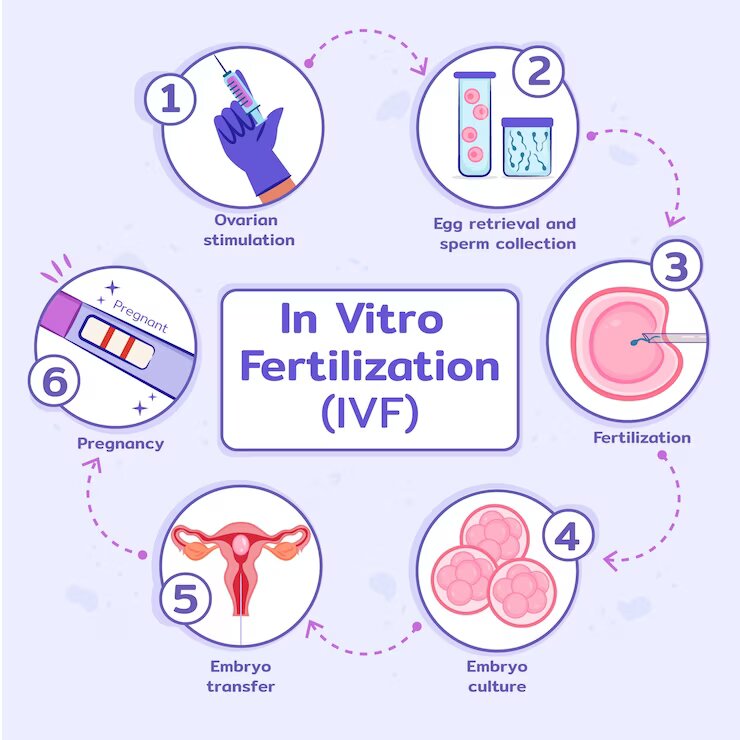
    You will first take a medication that causes many of your eggs to mature to the point at which they are prepared for fertilization. The doctor will then take the eggs from your body and combine them with sperm in a lab to help the sperm fertilize the eggs. Afterward, they will implant one or more fertilized embryos into your uterus. A pregnancy will occur if even one of the embryos can successfully attach to the uterine lining.

    What is IVF?

    In Vitro Fertilization (IVF) is a multi-stage process that frequently takes many months to complete. Although it may succeed on the first try, most people need more than one round of IVF to become pregnant. There is no question that executing the process of IVF treatment will increase your chances of getting pregnant. If you have fertility problems, there is no guarantee that it will be because every person’s body is different, and IVF will not always work.

    What Precisely Happens Throughout the In Vitro Fertilization Procedure?

    Every IVF cycle a patient undergoes corresponds to one menstrual cycle, and IVF is a procedure.

    Blood Test:

    The fertility clinic will do a blood test to determine your reproductive status on the first day of your menstrual cycle.

    Hormonal Stimulation:

    Depending on which day of the cycle you are currently in, your hormone stimulation therapy will start on either day 2 or 3 of your menstrual cycle. You will start taking medications to stimulate your follicles so they can generate more eggs.

    Accelerator Shot:

    You will administer an injection to yourself that contains hormones that will cause your ovary to mature and release an egg when your eggs have reached a specified size.

    Egg Recovery:

    In the 34 to 36 hours following the trigger injection, your eggs will be harvested (collected). Your fertility doctor may use a tiny needle to puncture the vaginal wall and access the follicles to collect eggs.

    Semen Sample:

    If you plan to use your partner’s fresh sperm, they will give you a sample of their sample on the day of collecting eggs. If there is some issue, sperm can be removed from the testicles directly using a surgical procedure. You could also make use of frozen donor sperm.

    Fertilization:

    Viable sperm and eggs are combined during fertilization and left to mature in a warm environment overnight on a plate. In some cases, this can be required; a single viable sperm is injected into an already mature egg via an intracytoplasmic sperm injection, or ICSI, a medical procedure. This might be helpful when the sperm’s general quality is low.

    Transfer of Embryos:

    Your fertility doctor will implant an embryo in your uterus three to five days after removing the eggs from your ovaries. Most frequently, the operation includes transferring one embryo. However, it occasionally involves more. Sometimes, your fertility doctor may decide to postpone the embryo transfer. High-quality embryos not selected for transfer may be saved and used in the future, but this will depend on the particulars of your case.

    A Pregnancy Test:

    After the embryo transfer, you will need to wait two weeks before you may test to see if you are pregnant. It is advised to have a test done at a fertility clinic or through your health care physician because a blood test is more accurate than a home pregnancy test.

    What Benefits can In-Vitro Fertilization (IVF) Provide?

    A therapy option for infertility and a few genetic diseases is In Vitro Fertilization (IVF).

    Additionally, it might be helpful to LGBTIAQ+ community members who want to start a family and single people who already want to start a family.

    You or your partner may think about utilizing In Vitro Fertilization (IVF) in a variety of situations, including the ones listed below:

    Infertility can be brought on by a low sperm count, issues with ovulation brought on by conditions like polycystic ovarian syndrome, and issues with the fallopian tubes.

    You should consider adopting if either of you has undergone sterilization owing to endometriosis problems or a desire to prevent your children from inheriting genetic illnesses.

    Certain individuals may choose the use of donor sperm or donor eggs. For example, suppose a couple is highly likely to pass on a serious genetic disorder to their children. In that case, their best IVF doctor may advise using donor sperm or eggs throughout the reproductive process.

    Some cancer patients elect to have their healthy sperm or eggs frozen in liquid nitrogen before starting cancer treatment, which might negatively impact a patient’s fertility. These eggs or sperm can be thawed and used in an In Vitro Fertilization procedure after the cancer therapy is complete.

    IVF is a method of starting a family that single persons can use and those who identify as LGBTIQA+ (sexually and gender diverse).

    To What Extent is In Vitro Fertilization (IVF) Successful:

    Your chances of having a successful IVF treatment depend on various variables. Important factors to consider include your age, the age of your donor or spouse, and the underlying medical problem that prohibits you from becoming a parent. It would help if you talked to your primary care physician or a fertility clinic about your chances of having a healthy pregnancy and delivery.

    Your chances are quite high if you are less than 35 years old. The likelihood of success at 44 is about one in one hundred.

    While some women need up to five cycles of treatment to succeed, others are infertile at all times.

    How Long will it take for IVF to be Successful?

    The IVF treatment process takes time. As soon as you consider it, discuss it with your primary care physician. so they can send you to an IVF clinic or a fertility specialist.

    You and your spouse must undergo several medical examinations and tests, including ultrasounds, sperm analysis, and blood samples, before starting any therapy. Even after the In Vitro Fertilization treatment has started, several steps still call for travel to clinics and laboratories.

    If the first cycle is productive, you will be close to accomplishing your objectives. However, if it doesn’t, you could decide to try again with one or more additional cycles. You could be advised to wait a little while between cycles. So talk to your fertility specialist about your options and what will work best for you in your particular circumstance.

    Preparation for In-vitro Fertilization

    Before starting the IVF process, women will first have their ovarian reserve evaluated. An analysis of a blood sample is performed to determine the amount of follicle-stimulating hormone present (FSH). The results of this test will give your doctor information on the size and quality of your eggs.

    Your gynecologist will also look inside your uterus. This might necessitate using an ultrasound, which creates an image of your uterus using high-frequency sound waves. Your doctor might also see inside your uterus with a scope inserted through your vagina. These tests can show the state of your uterus and assist the doctor in determining the best method to implant the embryos.

    Sperm tests will be required for the men. Your sperm sample, which will be examined in a lab to determine its quantity, size, and form, must be provided to accomplish this. It is important to perform an operation known as intracytoplasmic sperm injection (ICSI) if the sperm are damaged or otherwise deficient. During the ICSI procedure, sperm is directly injected into the egg by a technician. During the entire In Vitro Fertilization (IVF) procedure, ICSI may be used.

    The decision to use In Vitro Fertilization is very personal (IVF). There is a lot of information that needs to be taken into account.

    • Do you have any suggestions for any unusable embryos?
    • What number of embryos do you want the receiver to receive? There is a higher likelihood of having multiple children during pregnancy the more embryos are transferred. Most medical professionals will only transfer a maximum of two embryos.
    • How do you feel about having twins, triplets, or even higher-order multiples if you become pregnant?
    • Using a surrogate mother or using donated sperm, eggs, or embryos raises moral and ethical questions.
      What are the physical, mental, and emotional burdens of In Vitro Fertilization?

    Conclusion

    In this article, you read about what is ivf treatment. Undoubtedly, IVF treatment has helped many people seek a child’s blessing. Always speak to one of the renowned specialists so that you are always taken care of by an expert. Ask questions and try to know the procedure earlier to make up your mind. Think positive, and speak to the patients who are blessed with children and have been through a similar journey as yours!

  • Decoding The IVF Process: A Guide To The Steps Involved

    Decoding The IVF Process: A Guide To The Steps Involved

    The journey of starting a family can be a long and winding road. For some couples, the path to parenthood may involve the use of assisted reproductive technology like in vitro fertilization (IVF) and iui. In vitro fertilization (IVF) is a medical procedure in which a woman’s eggs are fertilized with a man’s sperm in a laboratory setting. IVF treatment is a complex process that requires the coordination of several steps to achieve success. In this guide, we will take a closer look at what is ivf, and steps involved in IVF treatment, and what people can expect during each stage of the process.

    A Step-by-Step Guide to IVF Process


    ivf process

    1. Ovarian Stimulation 

    Ovarian stimulation is a crucial part of the IVF cycle, as it increases the number of eggs that can be retrieved for fertilization. The goal of ovarian stimulation is to mature multiple eggs in the ovaries at the same time, increasing the success rate of fertilization and pregnancy. The most common hormones used for ovarian stimulation are gonadotropins, which are administered through subcutaneous IVF injection.

    These medications work by stimulating the pituitary gland to release follicle-stimulating hormone (FSH) and luteinizing hormone (LH), which then stimulate the growth of the follicles in the ovaries. The most common gonadotropins are FSH-based medications such as Gonal-f, Follistim, and Menopur.

    The ovarian stimulation protocol will vary depending on the mother’s situation, such as her age, the underlying cause of infertility, and her response to the medication. Typically, the stimulation begins on day 2 or 3 of the menstrual cycle and lasts for about 8-14 days. The patient will be closely monitored by a fertility specialist through blood tests and ultrasound scans to check the growth and maturity of the follicles, and the dosage of the fertility drugs will be adjusted as needed.

    The monitoring is important because if the ovaries overreact to the medicines and produce too many follicles, it can lead to a condition called ovarian hyperstimulation syndrome (OHSS), which can cause symptoms such as abdominal pain, nausea, headaches, stress, bloating, and in severe cases, fluid accumulation in the lungs and abdomen.

    Once the follicles have reached maturity, the patient will be given a trigger shot of human chorionic gonadotropin (hCG) to mature the eggs. The egg retrieval procedure is typically scheduled 36-38 hours after the trigger shot. It’s worth mentioning that some infertility clinics use a milder ovarian stimulation protocol called minimal stimulation IVF (Mini-IVF) or natural cycle IVF. This approach uses fewer medications and lower dosages, and it aims to retrieve one or two eggs with minimal stimulation.

    2. Egg Retrieval

    Egg retrieval is done through a procedure called transvaginal ultrasound aspiration, which is performed under conscious sedation. A thin ultrasound probe is inserted into the vagina and used to visualize the ovaries and the follicles containing the eggs. A needle attached to a suction device is then inserted through the vagina and guided to the ovary, where the eggs are collected. The procedure usually takes about 20-30 minutes and is generally well-tolerated.

    During the procedure, the patient will be monitored by the doctor for any signs of discomfort or complications, such as bleeding or infection. The collected eggs are then transferred to a laboratory for fertilization. It’s important to note that the number of eggs collected can vary depending on the patient’s age, the underlying cause of infertility, structure, and the response to the ovarian stimulation medication. However, in general, the more eggs collected, the higher the chance of fertilization and pregnancy.

    3. Sperm Collection

    The sperm collection is usually done in a private room in the clinic or lab, where the men will be asked to provide a semen sample by masturbating into a sterile container. The sperm collection in the process of the treatment cycle takes about 15-30 minutes, and the sample is then immediately taken to the team for processing.

    The laboratory will process the semen sample to separate the sperm from the semen, and then prepare the sperm for fertilization. This process, called sperm washing or sperm preparation, removes any debris or inactive sperm, leaving the healthy, motile sperm that will be used for fertilization. Sperm washing includes different techniques such as density gradient centrifugation, swim-up, and Percoll. Depending on the sperm quality and quantity, the embryologist will choose the most appropriate method.

    Sperm quality and quantity can vary depending on factors such as the male partners’ age, overall health, and any underlying medical conditions. If there are issues with sperm quality or quantity, a technique called intracytoplasmic sperm injection (ICSI) may be used, in which a single sperm is directly injected into an egg.

    4. Fertilization

    There are two main methods of fertilization: intrauterine insemination and intracytoplasmic sperm injection (ICSI).

    In insemination, the sperm and eggs are combined in a petri dish and allowed to fertilize naturally. The sperm will naturally migrate toward the egg, and if the sperm successfully penetrates the egg, fertilization will occur. Insemination is typically used when the sperm quality is good and the expected fertilization rate is high.

    On the other hand, ICSI is a more complex technique in which a single sperm is directly injected into an egg using a small glass needle. ICSI is typically used when there are issues with sperm quality or quantity, or if previous IVF attempts have failed.

    After fertilization, the resulting embryos will be observed for signs of normal development, such as the formation of the blastomeres and the formation of the inner cell mass. The embryologist will also grade the embryos based on their appearance and the likelihood of them leading to a successful pregnancy. The embryos will then be kept in a culture medium and will be observed for 2-6 days to check their development.

    5. Embryo Transfer

    The embryos are carefully selected based on their development and quality before being transferred into the woman’s uterus. The transfer itself is a relatively simple procedure that is typically performed in a clinic or hospital. The woman will lie down on an examination table and a thin, flexible catheter is inserted through the cervix and into the uterus. The embryos are then gently pushed through the catheter and into the uterus.

    The procedure usually takes only a few minutes and the woman can go home shortly after. It is usually painless, but some mild cramping or discomfort may be experienced. It’s important to note that after the transfer, the woman should avoid some activities for a few days, and also avoid intercourse for about a week.

    6. Luteal Phase Support

    Luteal phase Support is a treatment that is given to women undergoing IVF treatments to support the development of the uterus lining after the embryo transfer. It is used to supplement the hormones that are naturally produced by the body during this phase to ensure that the uterus is properly prepared for the implanted embryo.

    Progesterone is the main hormone used for luteal phase support, which is usually given as an injection for infertility treatment. It can be started after the embryo transfer and continued until the pregnancy test which is usually 2 weeks after the transfer.

    7. Pregnancy Test

    A pregnancy test is done 14 days after the embryo transfer to check if the treatment has been successful. The most common type of pregnancy test is a blood test, which measures the levels of a hormone called human chorionic gonadotropin (hCG) in the woman’s blood. This hormone is produced by the placenta shortly after the embryo implants in the uterus. The blood test is more sensitive than a urine test and can detect lower levels of hCG, making it more accurate in detecting early pregnancies.

    Conclusion

    The procedure of IVF pregnancy can be a rollercoaster of emotions and risks, from the excitement of the ovarian stimulation to the anticipation of the pregnancy test. It’s important to remember that while fertility treatments are not a guarantee of pregnancy, it is a powerful technology that can increase the chances of couples achieving their dream of starting a family. It gives hope to couples. The process may be long and challenging, but the result of holding a newborn baby in your arms makes it all worth it. So talk to your partner, decide to choose the best fertility clinic, and take doctors’ advice.

    Frequently Asked Questions:

    How Long Does the IVF Process Take?

    Normally, the entire IVF process can take  3-6 months, although some patients may require additional time in IVF progress.

    How Much Does the IVF Process Cost?

    Depending on the particular circumstances of each patient, the cost of in vitro fertilization (IVF) can vary significantly.

    How Many Cycles of IVF Will I Need?

    The number of IVF cycles depends on a variety of factors, including age, medical history, and the cause of infertility.