Blog

  • Black Stool in Pregnancy After IVF: Causes & Treatment

    Black Stool in Pregnancy After IVF: Causes & Treatment

    Experiencing black color stool during pregnancy after IVF can be concerning for expectant mothers who have worked so hard to achieve their pregnancy. While this symptom may seem alarming, it’s often a harmless side effect of prenatal vitamins or iron supplements. However, understanding the causes and knowing when to seek medical attention is crucial for your peace of mind and your baby’s health.

    At Ritu IVF, we understand that pregnancy after IVF treatment comes with heightened awareness and concern about every bodily change. This comprehensive guide will help you understand everything about black stool during pregnancy, including its causes, treatment options, and warning signs that require immediate medical attention.

    Need an Appointment?

    CLICK HERE

    What Does Black Stool During Pregnancy Mean?

    Black stool, also known as melena when it’s tarry and sticky, refers to bowel movements that appear dark brown to black in color. The medical term for this condition is “black color stool during pregnancy,” and it can occur at any stage of your pregnancy journey, including after successful IVF treatment.

    Normal vs. Concerning Black Stool:

    • Normal: Caused by iron supplements, certain foods, or medications
    • Concerning: Accompanied by other symptoms like dizziness, weakness, or abdominal pain

    According to gastroenterology research, approximately 40-60% of pregnant women taking iron supplements experience darker stools, making it one of the most common pregnancy-related digestive changes.

    Common Causes of Black Color Stool During Pregnancy After IVF
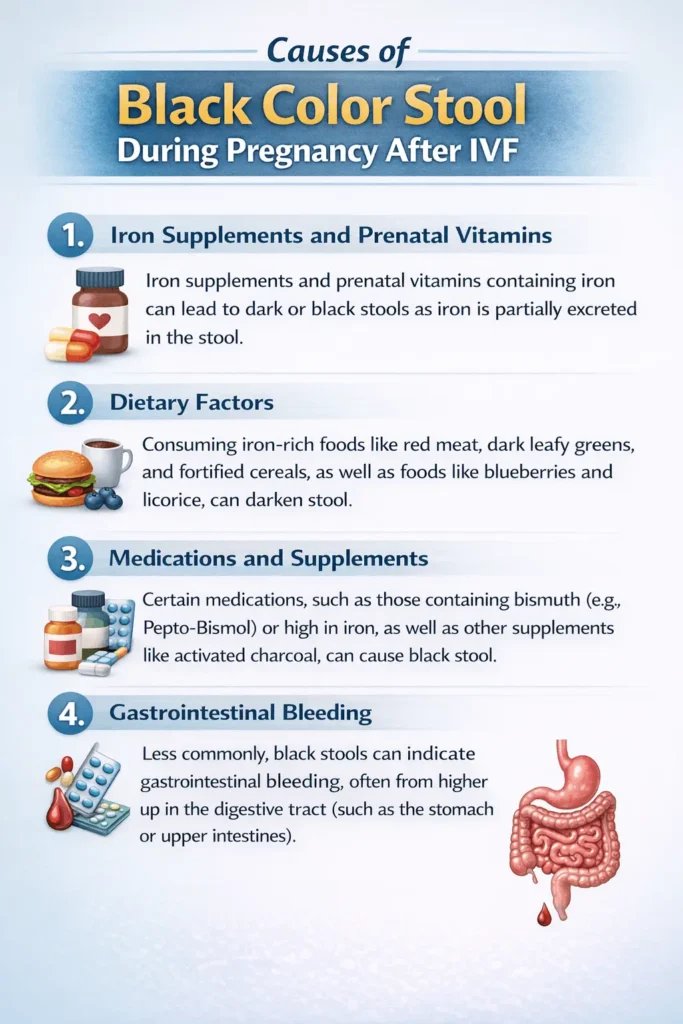
    causes of blackstool

    1. Iron Supplements and Prenatal Vitamins

    The most common cause of black stool during pregnancy is iron supplementation. After IVF treatment, doctors typically prescribe:

    • Prenatal vitamins containing 27-30 mg of iron
    • Additional iron supplements if you’re anemic (60-120 mg daily)
    • Progesterone support medications that may affect digestion

    When your body doesn’t absorb all the iron from supplements, the excess iron oxidizes in your digestive tract, turning your stool dark green, brown, or black. This is completely normal and harmless.

    Why IVF Patients Are More Prone:

    • Higher doses of hormonal medications affect digestion
    • Increased stress can impact gut health
    • More frequent vitamin supplementation post-IVF
    • Bed rest recommendations may slow digestion

    2. Dietary Factors

    Certain foods can naturally darken your stool during pregnancy:

    Common Culprits:

    • Dark leafy greens: Spinach, kale, collard greens
    • Blueberries and blackberries: High in dark pigments
    • Black licorice: Contains compounds that darken stool
    • Dark chocolate: Especially in large quantities
    • Beetroot: Can cause dark reddish-black stool
    • Blood pudding or liver: High in iron content

    If you’ve consumed these foods within 24-48 hours, they could be the reason for your black colour stool during pregnancy.

    3. Medications and Supplements

    Beyond iron, several medications prescribed during IVF and pregnancy can cause black stool:

    Common Medications:

    • Bismuth subsalicylate (Pepto-Bismol)
    • Activated charcoal supplements
    • Some antibiotics (prescribed for IVF-related infections)
    • Progesterone supplements (can slow digestion)
    • Antacids containing iron

    Always inform your fertility specialist about all medications you’re taking to rule out interactions.

    4. Gastrointestinal Bleeding (Requires Medical Attention)

    While less common, black stool during pregnancy second trimester or third trimester could indicate upper gastrointestinal bleeding from:

    • Gastric ulcers: Increased stress during pregnancy
    • Esophageal varices: Rare but serious
    • Gastritis: Inflammation of stomach lining
    • Mallory-Weiss tears: From severe morning sickness

    Red Flag Symptoms:

    • Tarry, sticky, foul-smelling black stool
    • Accompanied by dizziness or fainting
    • Severe abdominal pain or cramping
    • Vomiting blood or coffee-ground material
    • Rapid heartbeat or shortness of breath

    If you experience these symptoms with your black stool during pregnancy third trimester, contact Ritu IVF or your healthcare provider immediately.

    Need an Appointment?

    CLICK HERE

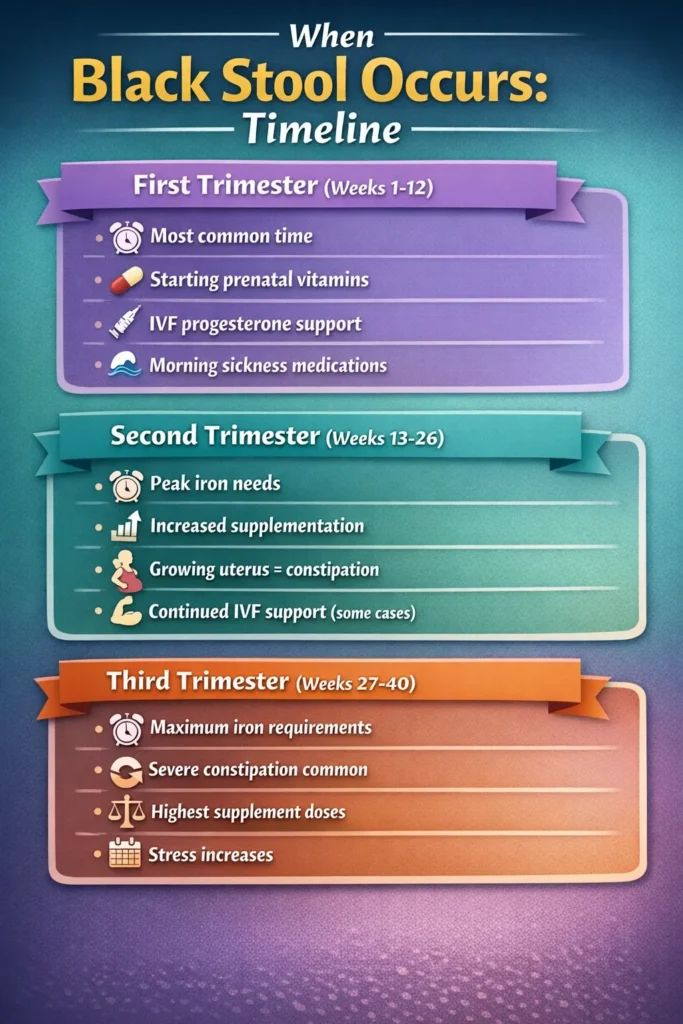
    Black Stool During Different Pregnancy Stages After IVF
    Black Stool During Different Pregnancy Stages After IVF

    First Trimester (Weeks 1-12)

    Black stool during pregnancy in the first trimester is usually related to:

    • Starting prenatal vitamins immediately after IVF confirmation
    • Progesterone supplementation affecting digestion
    • Morning sickness medications containing bismuth
    • Hormonal changes slowing bowel movements

    What to Expect: After IVF success, your doctor will prescribe comprehensive prenatal care including high-dose supplements, making dark stool very common in early pregnancy.

    Second Trimester (Weeks 13-26)

    Black stool during pregnancy second trimester often occurs due to:

    • Continued iron supplementation for anemia prevention
    • Increased nutritional requirements
    • Constipation from growing uterus pressure
    • Dietary changes for fetal development

    IVF-Specific Considerations: Many IVF patients continue progesterone support into the second trimester, which can further slow digestion and contribute to darker stool color.

    Third Trimester (Weeks 27-40)

    Black stool during pregnancy third trimester may be caused by:

    • Maximum iron requirements (27-30 mg daily)
    • Severe constipation from uterine pressure
    • Hemorrhoids causing minor bleeding mixed with iron
    • Increased stress as delivery approaches

    When to Worry: In the third trimester, black stool accompanied by severe pain, bleeding, or contractions requires immediate medical evaluation at Ritu IVF or your nearest hospital.

    Is Black Color Stool During Pregnancy After IVF Dangerous?

    In most cases, black color stool during pregnancy after IVF is not dangerous when caused by:

    ✅ Iron supplements or prenatal vitamins
    ✅ Dietary factors like dark leafy vegetables
    ✅ Harmless medications like bismuth

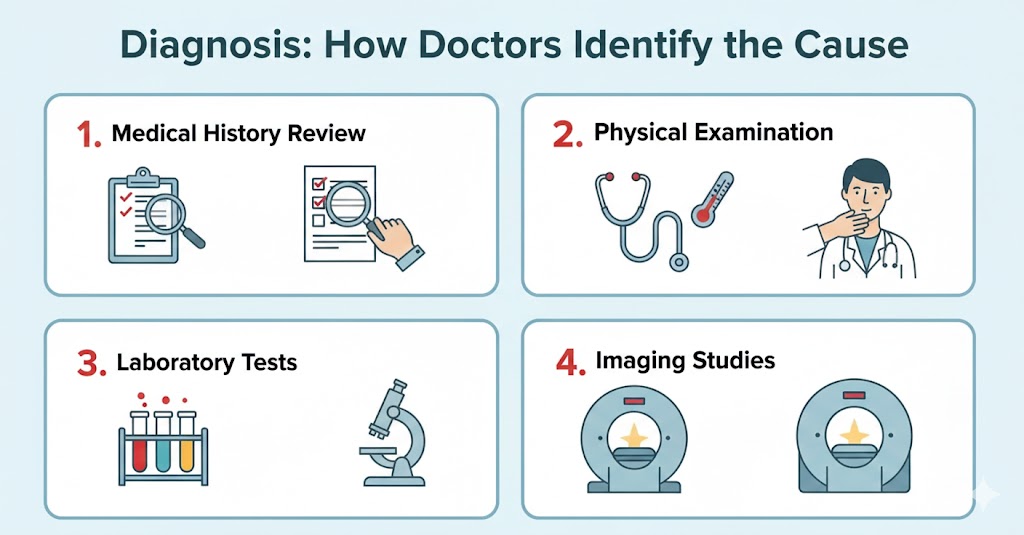
    Diagnosis: How Doctors Identify the Cause
    Diagnosis: How Doctors Identify the Cause

    When you visit Ritu IVF with concerns about black stool during pregnancy, your doctor will conduct:

    1. Medical History Review

    • Medications and supplements you’re taking
    • Dietary habits and recent food intake
    • IVF treatment protocol and medications
    • Previous digestive issues or ulcers

    2. Physical Examination

    • Abdominal palpation for tenderness
    • Blood pressure and heart rate check
    • Skin color assessment for anemia
    • Digital rectal exam if necessary

    3. Laboratory Tests

    • Complete Blood Count (CBC): Check for anemia
    • Stool Analysis: Detect hidden blood (occult blood test)
    • Iron Levels: Assess absorption and deficiency
    • Liver Function Tests: Rule out liver issues

    4. Imaging Studies (If Required)

    • Upper Endoscopy: Examine stomach and esophagus
    • Ultrasound: Safe during pregnancy to check organs
    • MRI: If serious complications suspected

    At Ritu IVF, we prioritize safe, pregnancy-appropriate diagnostic methods to ensure accurate diagnosis without risking your baby’s health.

    Need an Appointment?

    CLICK HERE

    Treatment Options for Black Stool During Pregnancy

    For Iron-Related Black Stool (Most Common)

    1. Adjust Iron Supplementation:

    • Switch to lower-dose iron supplements (consult your doctor first)
    • Take iron with vitamin C for better absorption
    • Try slow-release iron formulations that are gentler
    • Consider liquid iron supplements if pills cause issues

    2. Dietary Modifications:

    • Increase fiber intake (25-30 grams daily)
    • Drink 8-10 glasses of water daily
    • Eat prunes or figs for natural stool softening
    • Include probiotics for gut health

    3. Timing Adjustments:

    • Take iron supplements with meals to reduce side effects
    • Avoid taking iron with calcium or dairy products
    • Split doses throughout the day for better absorption

    Prevention Tips for Black Stool During Pregnancy After IVF

    Proactive Measures:

    1. Optimize Iron Intake:

    • Take iron supplements every other day instead of daily (if approved by doctor)
    • Choose chelated iron formulations for better absorption
    • Monitor your iron levels regularly with blood tests
    • Don’t exceed recommended dosage without medical advice

    2. Support Digestive Health:

    • Establish regular meal times to train your digestive system
    • Chew food thoroughly to aid digestion
    • Practice mindful eating without distractions
    • Avoid lying down immediately after meals

    3. Regular Monitoring:

    • Keep a stool diary noting color, consistency, and associated symptoms
    • Schedule regular prenatal checkups at Ritu IVF
    • Report any concerning changes immediately
    • Track your iron supplement intake and food diary

    4. Stress Management:

    • Practice prenatal meditation (10-15 minutes daily)
    • Join IVF pregnancy support groups for emotional support
    • Consider professional counseling if anxiety persists
    • Engage in gentle exercises approved by your doctor

    Need an Appointment?

    CLICK HERE

    FAQs About Black Stool During Pregnancy After IVF

    1. Is black color stool during pregnancy after IVF harmful to my baby?

    No, when caused by iron supplements or dietary factors, black color stool during pregnancy after IVF is not harmful to your baby. The darkened stool is simply unabsorbed iron passing through your digestive system. However, if caused by internal bleeding, immediate medical attention is necessary to protect both mother and baby.

    2. How long does black stool last during pregnancy?

    Black stool during pregnancy typically lasts as long as you continue taking iron supplements. Most women experience dark stools throughout their pregnancy if they’re on consistent iron supplementation. The stool usually returns to normal color within 2-3 days after stopping iron supplements.

    3. Can I stop taking iron supplements if I have black stool?

    Never stop your prescribed supplements without consulting your doctor at Ritu IVF. Iron is crucial for preventing anemia during pregnancy, which can affect both maternal and fetal health. Your doctor may adjust the dosage or switch formulations, but discontinuation requires medical supervision.

    4. Is black stool during pregnancy second trimester more dangerous?

    Black stool during pregnancy second trimester is not inherently more dangerous than other trimesters. However, the second trimester is when iron requirements increase significantly, making supplement-related black stool more common. Always report persistent symptoms to your healthcare provider regardless of trimester.

    5. What’s the difference between normal black stool and melena?

    Normal black stool from iron supplements is:

    • Moderately dark (brown-black)
    • Formed and consistent
    • No unusual odor
    • No accompanying symptoms

    Melena (concerning) is:

    • Very dark, tarry, sticky
    • Extremely foul-smelling
    • Often accompanied by weakness, dizziness
    • May indicate upper GI bleeding

    7. Are there iron supplements that don’t cause black stool?

    While most iron supplements cause some stool darkening, you can try:

    • Ferrous bisglycinate: Gentler, better absorbed
    • Liquid iron formulations: May cause less staining
    • Lower-dose daily supplements: Reduce side effects
    • Food-based iron sources: Complement supplements

    Discuss alternatives with your Ritu IVF doctor before making changes.


    8. Can stress from IVF treatment cause black stool?

    Yes, indirectly. Stress can cause:

    • Gastritis or ulcers: Leading to GI bleeding
    • Changes in digestion: Affecting stool color
    • Altered eating patterns: Impacting gut health
    • Medication side effects: From stress-related treatments

    Managing stress through counseling, meditation, and support groups is essential during IVF pregnancy.


    9. What foods should I avoid if I have black stool during pregnancy?

    Avoid or limit:

    • High-iron foods combined with supplements: Can worsen dark stool
    • Dark-colored foods: Make monitoring difficult (blueberries, licorice)
    • Spicy or acidic foods: Can irritate digestive tract
    • Processed foods: May worsen constipation
    • Caffeinated beverages: Dehydrating effect

    Focus on balanced, fiber-rich meals with adequate hydration.

  • आईवीएफ और सामान्य गर्भावस्था में अंतर 2026

    आईवीएफ और सामान्य गर्भावस्था में अंतर 2026

    माता-पिता बनना जीवन के सबसे सुखद अनुभवों में से एक है। लेकिन हर कपल के लिए यह सफर एक जैसा नहीं होता। जहाँ कुछ लोग प्राकृतिक रूप से आसानी से गर्भधारण (Conceive) कर लेते हैं, वहीं कई जोड़ों को चिकित्सीय सहायता की आवश्यकता होती है। आज के चिकित्सा युग में IVF (In Vitro Fertilization) बांझपन (Infertility) से जूझ रहे लोगों के लिए एक वरदान बन चुका है।

    अक्सर क्लिनिक में हमारे पास कपल्स आते हैं जो पूछते हैं— “क्या IVF प्रेगनेंसी नॉर्मल प्रेगनेंसी जितनी सुरक्षित है?” या “क्या IVF से होने वाला बच्चा प्राकृतिक बच्चे जैसा ही होगा?” इस ब्लॉग में हम इन सभी शंकाओं को गहराई से दूर करेंगे।

    Need an Appointment?

    CLICK HERE

    गर्भधारण की प्रक्रिया: प्राकृतिक बनाम लैब

    नॉर्मल प्रेगनेंसी और IVF में सबसे बड़ा अंतर गर्भधारण की शुरुआत का है।

    • नॉर्मल प्रेगनेंसी: प्राकृतिक प्रक्रिया में, ओव्यूलेशन के दौरान महिला के अंडाशय से एक अंडा निकलता है और फैलोपियन ट्यूब में जाता है। संभोग के बाद, स्पर्म ट्यूब तक पहुँचता है और अंडे को फर्टिलाइज़ करता है। यह सब कुछ शरीर के भीतर होता है।

    • IVF प्रेगनेंसी: इसमें प्रक्रिया शरीर के बाहर शुरू होती है। डॉक्टर महिला के अंडाशय से अंडे निकालते हैं और उन्हें लैब में पार्टनर के स्पर्म के साथ फर्टिलाइज करते हैं। जब भ्रूण (Embryo) बन जाता है, तो उसे गर्भाशय में ट्रांसफर किया जाता है। Ritu IVF में हम अत्याधुनिक तकनीक के साथ IVF उपचार प्रदान करते हैं।

    तुलना तालिका: मुख्य अंतर

    विशेषता (Features)नॉर्मल प्रेगनेंसी (Normal)IVF प्रेगनेंसी (IVF)
    निषेचन (Fertilization)शरीर के अंदर (Fallopian Tube)शरीर के बाहर (Embryology Lab)
    गर्भधारण का समयअनिश्चित (सटीक तारीख पता नहीं होती)निश्चित (Embryo Transfer की तारीख)
    हार्मोनल सपोर्टप्राकृतिक (शरीर खुद बनाता है)बाहरी (इंजेक्शन और टैबलेट के रूप में)
    निगरानी (Monitoring)सामान्य (महीने में एक बार)गहन (शुरुआत में बार-बार चेकअप)
    सफलता की संभावनाप्रति चक्र 15-20%प्रति चक्र 50-70% (उम्र के अनुसार)

    आधुनिक तकनीकों का उपयोग

    IVF प्रक्रिया के दौरान डॉक्टर स्थिति के अनुसार अलग-अलग तकनीकों का चुनाव करते हैं:

    • ICSI (Intracytoplasmic Sperm Injection): जब पुरुष इनफर्टिलिटी या लो स्पर्म काउंट की समस्या होती है, तब ICSI उपचार एक क्रांतिकारी तकनीक साबित होती है। इसमें एक स्वस्थ स्पर्म को सीधे अंडे में इंजेक्ट किया जाता है।

    • ब्लास्टोसिस्ट कल्चर: इसमें भ्रूण को लैब में 5 दिनों तक विकसित किया जाता है, जिससे इम्प्लांटेशन की सफलता की दर काफी बढ़ जाती है।

    उम्र का प्रभाव (The Role of Age)

    उम्र अंडे की गुणवत्ता और गर्भाशय की क्षमता को प्रभावित करती है। नीचे दी गई तालिका से समझें कि उम्र के साथ सफलता की संभावना कैसे बदलती है:

    महिला की आयु (Age)प्राकृतिक गर्भाधान की संभावनाIVF सफलता की औसत दर
    20 – 30 वर्षबहुत अधिक (25% प्रति माह)65% – 75%
    31 – 35 वर्षमध्यम (15-20% प्रति माह)50% – 60%
    36 – 40 वर्षकम (5-10% प्रति माह)35% – 45%
    40 वर्ष से अधिकबहुत कम (1-3% प्रति माह)15% – 25%

    Need an Appointment?

    CLICK HERE

    क्या IVF और नॉर्मल बच्चे अलग होते हैं?

    यह समाज में फैला सबसे बड़ा भ्रम है कि IVF से पैदा हुए बच्चे “अलग” होते हैं।

    1. जेनेटिक्स: बच्चा माता-पिता के ही डीएनए से बनता है, इसलिए वह पूरी तरह सामान्य होता है।

    2. स्वास्थ्य और बुद्धि: शोधों से साबित हो चुका है कि IVF से जन्मे बच्चों का शारीरिक और मानसिक विकास सामान्य बच्चों जैसा ही होता है।

    3. मिथक: लोग सोचते हैं कि IVF बेबी ‘कमजोर’ होते हैं, जबकि सच्चाई यह है कि वे भी उतने ही मजबूत और स्वस्थ होते हैं।

    सफलता दर: एक महत्वपूर्ण पहलू

    प्राकृतिक रूप से गर्भधारण करने की संभावना हर महीने सीमित होती है। इसके विपरीत, आधुनिक चिकित्सा पद्धतियों और विशेषज्ञता की वजह से IVF सफलता दर आज काफी बेहतर और भरोसेमंद हो चुकी है।

    डिलीवरी प्रक्रिया: नॉर्मल या सिजेरियन?

    बहुत से लोग मानते हैं कि IVF का मतलब अनिवार्य रूप से सिजेरियन (C-Section) है।

    • तथ्य: यदि माँ का स्वास्थ्य अच्छा है और बच्चे की स्थिति सही है, तो IVF के बाद भी नॉर्मल डिलीवरी पूरी तरह संभव है। सिजेरियन का फैसला केवल तब लिया जाता है जब कोई मेडिकल इमरजेंसी हो।

    IVF के लिए सही डाइट और लाइफस्टाइल

    सफलता के लिए माँ का स्वस्थ होना बहुत जरूरी है।

    क्या करें (Do’s) ✅क्या न करें (Don’ts) ❌
    फोलिक एसिड और प्रोटीन युक्त भोजन लें।भारी वजन उठाना या कठिन व्यायाम करना।
    दिन में 3-4 लीटर पानी पिएं।अत्यधिक कैफीन (कॉफी/चाय) का सेवन।
    7-8 घंटे की गहरी नींद लें।धूम्रपान या शराब का सेवन।
    तनाव कम करने के लिए योग और ध्यान करें।कच्चा पपीता, अनानास या प्रोसेस्ड शुगर।

    मिथक बनाम सच्चाई (Expert Corner)

    • मिथक: IVF के लिए 9 महीने बेड रेस्ट चाहिए।

    • सच्चाई: बेड रेस्ट की जरूरत नहीं होती, आप हल्की सैर और अपना ऑफिस का काम कर सकती हैं।

    • मिथक: IVF से हमेशा जुड़वां बच्चे होते हैं।

    • सच्चाई: यदि केवल एक भ्रूण (Single Embryo) ट्रांसफर किया जाए, तो एक ही बच्चा होता है।

    Need an Appointment?

    CLICK HERE

    अक्सर पूछे जाने वाले सवाल (FAQs)

    Q1. क्या IVF प्रक्रिया बहुत दर्दनाक है?

    अंडे निकालने की प्रक्रिया बेहोशी (Anesthesia) में की जाती है, इसलिए दर्द महसूस नहीं होता।

    Q2. क्या IVF बच्चे आगे चलकर खुद माता-पिता बन सकते हैं? हाँ, बिल्कुल। IVF से जन्मे बच्चे बड़े होकर सामान्य रूप से माता-पिता बनने में सक्षम होते हैं।

    Q3. IVF में कितना समय लगता है?
    एक पूरी साइकिल में इंजेक्शन से लेकर एम्ब्रियो ट्रांसफर तक लगभग 4-6 सप्ताह का समय लगता है।

    निष्कर्ष

    अंत में, IVF और नॉर्मल प्रेगनेंसी में अंतर केवल सफर की शुरुआत का है। ममता, प्यार और बच्चे की मुस्कान दोनों में एक समान है। यदि आप भी अपने परिवार को पूरा करने का सपना देख रहे हैं, तो Ritu IVF आपकी हर कदम पर मदद के लिए तैयार है।

    आज ही अपना परामर्श बुक करें और खुशियों की ओर पहला कदम बढ़ाएं!

  • ICSI Success Rate: Ways of Improving the Success Rate of ICSI Treatment

    ICSI Success Rate: Ways of Improving the Success Rate of ICSI Treatment

    Assisted reproductive technology offers hope to infertile couples worldwide. Intracytoplasmic sperm injection (ICSI) is one of the most promising ART treatments, particularly when male infertility prevents conception. While fertility experts frequently discuss this groundbreaking procedure, most couples want to understand the ICSI success rate before proceeding with treatment.

    How successful is ICSI treatment, and what factors affect its outcomes? How can you increase your chances of success? This article answers these questions to help you determine if ICSI is the right choice for your fertility journey.

    Key Takeaways

    • ICSI fertilization rates range from 70-85%, but live birth rates vary significantly by age
    • Women under 35: 40-50% live birth rate per cycle
    • Women 35-39: 30-35% live birth rate per cycle
    • Women 40+: 15-20% live birth rate per cycle
    • Egg quality, sperm health, lifestyle, and clinic expertise all impact outcomes
    • Most couples require 2-3 cycles to achieve pregnancy

    Factors That Influence ICSI Treatment Success Rates

    Factors That Influence ICSI Treatment Success Rates

    Understanding the success rate of any ICSI treatment is crucial for couples and individuals navigating the effectiveness of advanced fertility treatments. Despite the tailored approach that intracytoplasmic sperm injection offers to fertility challenges, The procedure’s efficacy depends on several factors like maternal age, sperm quality, etc. Let us discuss these factors individually to help you gain valuable insights.

    1. Sperm quality

    The quality of the sperm is one of the main factors determining the outcome of the ICSI procedure. Sperm quality can encompass various parameters like DNA integrity, motility, and morphology. These are all critical determinants of the success of fertilization.  Thus, using high-quality sperm after the meticulous evaluation is mandatory to optimize ICSI fertility success rates.

    2. Egg quality

    In the ICSI process, egg quality is of equal significance. The egg quality is superior in younger women. Naturally, the ICSI fertilization success rates are higher in women in their late 20s and early 30s. Age is not the only thing that affects egg quality. Poor egg quality can also be linked to fertility issues, diet, and overall health. The good news is that medical interventions can enhance egg quality.

    3. Maternal age

    A pivotal factor that can directly impact the ICSI success rate by age is maternal age. Research has revealed that as women age, the success rates for ICSI and other ARTs keeps decreasing. As mentioned already, people under 30 have a higher success rate than 35+ women. Knowing these age-related limitations is essential.

    4. Fertility issues

    Besides sperm quality, egg quality, and age, underlying fertility complications profoundly influence the ICSI success rate. Some such issues are polycystic ovarian syndrome, endometriosis, severe male infertility, and unexplained infertility. In such cases, doctors first address the underlying issues and then begin in vitro fertilization or ICSI treatment.

    5. Uterine environment

    Did you know that the uterine lining’s receptivity can stand in the way of embryo implantation? From hormone levels to endometrial thickness – everything should be favorable to facilitate implantation.

    6. Ovarian reserve

    The ovarian reserve comprises the quality as well as quantity of a person’s eggs and this too will play a big role in your ICSI success rate. If the ovarian reserve of a woman is gradually diminishing, it is bound to lower the success rate. There are multiple tests to assess the ovarian reserve before the commencement of the ICSI procedure. Then treatment strategies can be tailored accordingly for ovarian stimulation.

    7. Lifestyle factors

    Smoking, diet, body weight, and alcohol consumption can be the reason behind ICSI failure. So, the moment you plan your pregnancy, you should adopt a healthy lifestyle to naturally improve outcomes. This will also ensure that you have a blissful pregnancy and a smooth delivery.

    8. Fertility Clinic

    You should take your time to shortlist the top fertility clinics in your neighborhood. A well-known fertility center will have experienced doctors and advanced technologies. These vastly contribute to a high success rate.

    Understanding ICSI Success Rates

    What Do ICSI Success Rates Really Mean?

    When discussing ICSI success rates, it’s essential to understand three different metrics:

    1. Fertilization Rate (70-85%): The percentage of eggs successfully fertilized after sperm injection. ICSI typically achieves fertilization in 70-85% of mature eggs.

    2. Pregnancy Rate (35-45% per cycle): The percentage of cycles resulting in a confirmed pregnancy. This varies significantly based on age and other factors.

    3. Live Birth Rate (30-40% per cycle overall): The most important metric—the percentage of cycles resulting in a healthy baby. This is what matters most to couples.

    Important: These rates are per cycle. Many couples require multiple cycles to achieve a successful pregnancy.

    Revised ICSI Success Rate Section

    ICSI Success Rates by Age

    Success rates vary dramatically based on maternal age:

    Under 30 years

    • Fertilization rate: 80-85%
    • Pregnancy rate per cycle: 45-50%
    • Live birth rate per cycle: 40-50%

    30-34 years

    • Fertilization rate: 75-80%
    • Pregnancy rate per cycle: 40-45%
    • Live birth rate per cycle: 35-40%

    35-39 years

    • Fertilization rate: 70-75%
    • Pregnancy rate per cycle: 30-35%
    • Live birth rate per cycle: 25-30%

    40-42 years

    • Fertilization rate: 65-70%
    • Pregnancy rate per cycle: 20-25%
    • Live birth rate per cycle: 15-20%

    43+ years

    • Fertilization rate: 60-65%
    • Pregnancy rate per cycle: 10-15%
    • Live birth rate per cycle: 5-10%

    Note: These are average rates. Individual results depend on specific fertility factors and clinic expertise.

    Optimizing Your ICSI Outcomes: Evidence-Based Strategies

    1. Nutritional Support (3-6 months before treatment)

    • For egg quality: Eat antioxidant-rich foods like berries, leafy greens, nuts, and fatty fish (salmon, sardines)
    • For sperm quality: Include zinc-rich foods (oysters, pumpkin seeds), vitamin C, and folate
    • Key nutrients: Folate, vitamin D, omega-3 fatty acids, CoQ10
    • Foods to emphasize: Eggs, whole grains, legumes, avocados, colorful vegetables, and fruits

    2. Achieve Optimal Body Weight

    • Maintain BMI between 18.5-24.9 for best outcomes
    • Both underweight and overweight status can reduce success rates by 20-30%
    • Exercise moderately: 30 minutes daily of walking, yoga, or swimming
    • Avoid excessive high-intensity workouts during treatment

    3. Eliminate Harmful Substances

    • Quit smoking: Smoking reduces ICSI success by up to 50%
    • Limit alcohol: Even moderate consumption can decrease success rates
    • Reduce caffeine: Keep intake below 200mg daily (1-2 cups of coffee)
    • Avoid recreational drugs: These significantly impair egg and sperm quality

    4. Stress Management

    • Practice relaxation techniques: meditation, deep breathing, or acupuncture
    • Consider counseling or support groups for emotional support
    • Get 7-8 hours of quality sleep nightly
    • Maintain work-life balance during treatment

    5. Medical Optimization

    • Supplement wisely: Take prenatal vitamins with folic acid (400-800 mcg), vitamin D (1000-2000 IU), and CoQ10 (200-600 mg) after consulting your doctor
    • Treat underlying conditions: Address thyroid issues, PCOS, endometriosis before starting ICSI
    • Timing matters: Follow your clinic’s protocol precisely for medications and procedures

    6. Choose the Right Clinic

    • Research clinics with ICSI success rates above national averages
    • Look for experienced embryologists (critical for ICSI technique)
    • Verify the lab uses advanced technologies (time-lapse imaging, laser-assisted hatching)
    • Read patient reviews and ask about individualized treatment protocols

    7. Partner Preparation

    • For men: Avoid hot tubs, saunas, and tight underwear for 3 months before treatment
    • Reduce oxidative stress: Both partners should minimize exposure to toxins, chemicals, and heavy metals
    • Time intercourse strategically: Follow your clinic’s guidance on abstinence periods

    Conclusion

    In the end, remember that a comprehensive understanding is essential for you and your partner before you embark on your icsi fertility treatment procedure. This way, you will not just be making informed decisions but also be participating actively in the entire process. A personalized approach and the guidance of an accomplished fertility specialist will maximize the chances of success and help you achieve parenthood safely and with confidence.

    Frequently Asked Questions (FAQ)

    1. What is the difference between IVF and ICSI?

    In conventional IVF, sperm and eggs are mixed together in a dish, allowing fertilization to occur naturally. ICSI involves directly injecting a single sperm into each egg using a microscopic needle. ICSI is specifically designed for severe male infertility or when previous IVF attempts resulted in poor fertilization. While IVF requires thousands of sperm, ICSI needs only one sperm per egg.

    2. What is the ICSI success rate for the first attempt?

    First-time ICSI success rates vary by age: 40-50% live birth rate for women under 35, 30-35% for ages 35-39, and 15-20% for women over 40. These figures represent live birth rates per cycle, not just pregnancy rates. Most couples achieve pregnancy within 2-3 cycles. Remember that fertilization rates (70-85%) are higher than live birth rates because not all fertilized embryos successfully implant and develop.

    3. How much does ICSI cost in India?

    ICSI costs typically range from ₹1,80,000 to ₹3,50,000 per cycle, depending on the clinic, location, and required medications. This includes ovarian stimulation, egg retrieval, ICSI procedure, embryo transfer, and initial monitoring. Medications add an additional ₹40,000-₹80,000. Frozen embryo transfers cost ₹30,000-₹60,000. Tier-1 cities generally have higher costs than tier-2 and tier-3 cities.

    4. How long does the entire ICSI process take?

    From starting medications to embryo transfer: approximately 4-6 weeks. Including pre-treatment testing, preparation, and lifestyle modifications: 2-3 months total. The pregnancy test occurs 14 days after embryo transfer. Here’s the breakdown:

    • Pre-treatment preparation: 1-3 months
    • Ovarian stimulation: 8-14 days
    • Egg retrieval to transfer: 3-5 days
    • Two-week wait: 14 days

    5. Can ICSI cause birth defects or complications?

    Large international studies show ICSI children have similar birth defect rates (2-3%) as naturally conceived children. There’s a slightly increased risk of minor sex chromosome abnormalities, which is why genetic counseling is recommended for some cases. The procedure itself is safe when performed by experienced embryologists, with egg damage occurring in only 1-2% of cases. Thousands of healthy babies are born through ICSI every year worldwide.

    6. How can I increase my chances of ICSI success?

    To improve ICSI outcomes:

    • Nutrition: Take CoQ10 (300-600mg daily), prenatal vitamins, vitamin D, and eat antioxidant-rich foods
    • Lifestyle: Maintain healthy BMI (18.5-24.9), exercise moderately, get 7-8 hours sleep
    • Avoid: Smoking (reduces success by 50%), alcohol, excessive caffeine (>200mg/day)
    • Timing: Start improvements 3 months before treatment
    • Clinic selection: Choose experienced fertility centers with high success rates
    • Stress management: Practice relaxation techniques, consider counseling

    Start these changes at least 3 months before your ICSI cycle for maximum benefit.

  • IVF के दौरान तनाव और डिप्रेशन कैसे कंट्रोल करें? | Expert Tips

    IVF के दौरान तनाव और डिप्रेशन कैसे कंट्रोल करें? | Expert Tips

    जब आप और आपका साथी माता-पिता बनने का सपना देख रहे होते हैं, तो IVF (इन विट्रो फर्टिलाइजेशन) का सफर न सिर्फ शारीरिक बल्कि भावनात्मक रूप से भी चुनौतीपूर्ण हो सकता है। हार्मोनल इंजेक्शन, लगातार डॉक्टर की विजिट, फाइनेंशियल प्रेशर और सबसे बड़ी बात – सफलता का अनिश्चित परिणाम, ये सब मिलकर IVF के दौरान तनाव और डिप्रेशन का कारण बन सकते हैं।

    लेकिन अच्छी खबर यह है कि सही जानकारी, सपोर्ट सिस्टम और स्ट्रेस मैनेजमेंट तकनीकों की मदद से आप इस चुनौतीपूर्ण समय को आसान बना सकते हैं। Ritu IVF के एक्सपर्ट्स के अनुसार, मानसिक स्वास्थ्य का ध्यान रखना IVF की सफलता में महत्वपूर्ण भूमिका निभाता है। इस गाइड में हम आपको बताएंगे कि कैसे आप IVF ट्रीटमेंट के दौरान अपनी मानसिक सेहत को मजबूत रख सकते हैं।

    Need an Appointment?

    CLICK HERE

    IVF के दौरान तनाव और डिप्रेशन क्यों होता है?

    IVF का सफर शुरू करने से पहले यह समझना जरूरी है कि इस दौरान तनाव क्यों महसूस होता है:

    1. हार्मोनल बदलाव

    IVF ट्रीटमेंट के दौरान दी जाने वाली दवाइयां और हार्मोनल इंजेक्शन शरीर में हार्मोन के स्तर को प्रभावित करते हैं। ये हार्मोनल बदलाव मूड स्विंग, चिड़चिड़ापन और भावनात्मक असंतुलन का कारण बन सकते हैं।

    2. अनिश्चितता और आशा-निराशा का चक्र

    हर IVF साइकिल के साथ एक नई उम्मीद जन्म लेती है, लेकिन सफलता की कोई गारंटी नहीं होती। यह लगातार आशा और निराशा के बीच झूलने वाली भावना IVF में डिप्रेशन का एक प्रमुख कारण है।

    3. शारीरिक असुविधा

    इंजेक्शन, अल्ट्रासाउंड स्कैन, एग रिट्रीवल प्रोसीजर और एम्ब्रियो ट्रांसफर जैसी प्रक्रियाएं शारीरिक तौर पर थकाऊ हो सकती हैं। यह शारीरिक तनाव मानसिक स्वास्थ्य को भी प्रभावित करता है।

    4. आर्थिक दबाव

    IVF ट्रीटमेंट की लागत काफी अधिक हो सकती है, खासकर अगर एक से अधिक साइकिल की जरूरत पड़े। यह फाइनेंशियल स्ट्रेस तनाव को और बढ़ा देता है।

    5. सामाजिक दबाव

    परिवार और समाज से “गुड न्यूज़” के लगातार सवाल और अपेक्षाएं भावनात्मक बोझ को बढ़ा सकती हैं।

    6. रिश्तों पर प्रभाव

    IVF का सफर कपल के रिश्ते पर भी दबाव डाल सकता है। अलग-अलग तरीके से तनाव को हैंडल करना और कम्युनिकेशन की कमी समस्याएं पैदा कर सकती है।

    रिसर्च के अनुसार, लगभग 40-50% महिलाएं जो IVF ट्रीटमेंट करवा रही हैं, उन्हें किसी न किसी स्तर पर तनाव या डिप्रेशन का अनुभव होता है। यह बिलकुल सामान्य है और आप अकेली नहीं हैं।

    Need an Appointment?

    CLICK HERE

    IVF के दौरान तनाव के लक्षण पहचानें

    अपनी मेंटल हेल्थ का ध्यान रखने के लिए सबसे पहले यह जानना जरूरी है कि आप तनाव या डिप्रेशन में हैं या नहीं:

    शारीरिक लक्षण:

    • लगातार सिरदर्द या माइग्रेन
    • नींद न आना या बहुत ज्यादा सोना
    • भूख में बदलाव (बहुत कम या बहुत ज्यादा खाना)
    • थकान और कमजोरी
    • पेट में दर्द या पाचन संबंधी समस्याएं

    भावनात्मक लक्षण:

    • लगातार उदासी या खालीपन महसूस होना
    • चिड़चिड़ापन और गुस्सा
    • रोने का मन करना
    • किसी भी चीज में मन न लगना
    • आत्मविश्वास की कमी
    • अपराध बोध या खुद को दोष देना

    व्यवहारिक बदलाव:

    • सोशल एक्टिविटीज से दूर रहना
    • परिवार और दोस्तों से बात करने का मन न करना
    • कॉन्सन्ट्रेशन की समस्या
    • निर्णय लेने में कठिनाई

    अगर आप इनमें से कई लक्षण लगातार 2 हफ्ते से ज्यादा महसूस कर रही हैं, तो यह प्रोफेशनल हेल्प लेने का समय है।

    IVF के दौरान तनाव कम करने के 10 प्रभावी उपाय

    1. माइंडफुलनेस और मेडिटेशन की शक्ति

    ध्यान (मेडिटेशन) और माइंडफुलनेस तकनीकें IVF के दौरान तनाव को कम करने में बेहद प्रभावी हैं। रोजाना सिर्फ 10-15 मिनट का ध्यान आपके मन को शांत कर सकता है।

    कैसे शुरू करें:

    • सुबह उठकर 5 मिनट शांत बैठें और अपनी सांसों पर ध्यान दें
    • गाइडेड मेडिटेशन ऐप्स जैसे Headspace, Calm या Insight Timer का उपयोग करें
    • बॉडी स्कैन मेडिटेशन करें – शरीर के हर हिस्से पर ध्यान केंद्रित करें
    • माइंडफुल ईटिंग प्रैक्टिस करें – खाना खाते समय उसके टेस्ट और टेक्सचर पर फोकस करें

    Ritu IVF टिप: रोजाना मेडिटेशन से कॉर्टिसोल (स्ट्रेस हार्मोन) का स्तर कम होता है, जो IVF की सफलता दर को बढ़ाने में मदद कर सकता है।

    2. योग और हल्की एक्सरसाइज

    योग न सिर्फ शारीरिक बल्कि मानसिक स्वास्थ्य के लिए भी फायदेमंद है। IVF के दौरान हल्के योगासन तनाव को कम करने में मदद करते हैं।

    IVF के दौरान सुरक्षित योगासन:

    • बालासन (Child’s Pose): तनाव और चिंता कम करता है
    • सुखासन (Easy Pose): मन को शांत रखता है
    • विपरीत करणी (Legs Up the Wall): रक्त संचार में सुधार
    • शवासन (Corpse Pose): गहरी रिलैक्सेशन
    • भ्रामरी प्राणायाम (Bee Breath): तनाव कम करने वाली सांस की तकनीक

    ध्यान रखें:

    • डॉक्टर की सलाह के बिना कोई भी तीव्र या उलटी पोजीशन वाले आसन न करें
    • एग रिट्रीवल और एम्ब्रियो ट्रांसफर के बाद भारी एक्सरसाइज से बचें
    • फर्टिलिटी योग के लिए प्रशिक्षित इंस्ट्रक्टर से मार्गदर्शन लें

    वॉकिंग: रोजाना 20-30 मिनट की हल्की वॉक भी मूड को बेहतर बनाती है और एंडोर्फिन (हैप्पी हार्मोन) रिलीज करती है।

    3. पोषण और सही डाइट का महत्व

    आपका खाना सिर्फ शारीरिक स्वास्थ्य को ही नहीं, बल्कि मानसिक स्वास्थ्य को भी प्रभावित करता है। IVF में डिप्रेशन को कंट्रोल करने के लिए सही न्यूट्रिशन बेहद जरूरी है।

    मूड बूस्टिंग फूड्स:

    • ओमेगा-3 फैटी एसिड: अखरोट, बादाम, अलसी के बीज, मछली (सैल्मन, मैकेरल)
    • फोलिक एसिड: पालक, ब्रोकली, संतरा, दाल
    • विटामिन B12: अंडे, दही, फोर्टिफाइड अनाज
    • मैग्नीशियम: केला, डार्क चॉकलेट, काजू, तिल
    • प्रोटीन: दाल, सोयाबीन, पनीर, अंडे, चिकन

    बचने योग्य चीजें:

    • कैफीन की अधिक मात्रा (दिन में 1-2 कप से ज्यादा चाय या कॉफी नहीं)
    • प्रोसेस्ड और जंक फूड
    • अत्यधिक चीनी
    • अल्कोहल और स्मोकिंग

    हाइड्रेशन: रोजाना 8-10 गिलास पानी पिएं। डिहाइड्रेशन थकान और चिड़चिड़ापन बढ़ा सकता है।

    4. अच्छी नींद की आदतें विकसित करें

    नींद की कमी तनाव और डिप्रेशन को बढ़ाती है। IVF के दौरान हार्मोनल बदलाव नींद को प्रभावित कर सकते हैं, इसलिए स्लीप हाइजीन पर ध्यान देना जरूरी है।

    बेहतर नींद के लिए टिप्स:

    • हर दिन एक निश्चित समय पर सोएं और उठें
    • सोने से 1 घंटे पहले मोबाइल, टीवी और लैपटॉप बंद कर दें
    • बेडरूम को आरामदायक, अंधेरा और शांत रखें
    • सोने से पहले गर्म पानी से नहाएं या गर्म दूध पिएं
    • कैमोमाइल या लैवेंडर टी का सेवन करें
    • अगर दिन में झपकी लेती हैं तो 20-30 मिनट से ज्यादा नहीं

    अगर नींद नहीं आ रही है:

    • बिस्तर में लेटकर फोन न देखें
    • किताब पढ़ें या सॉफ्ट म्यूजिक सुनें
    • डीप ब्रीदिंग एक्सरसाइज करें
    • अगर समस्या बनी रहे तो डॉक्टर से बात करें

    5. पार्टनर और फैमिली सपोर्ट

    IVF का सफर दोनों पार्टनर्स का होता है। IVF के दौरान तनाव को कम करने में पार्टनर का सपोर्ट सबसे महत्वपूर्ण है।

    पार्टनर कैसे सपोर्ट करें:

    • खुलकर बात करें: अपनी भावनाएं, डर और चिंताएं एक-दूसरे से शेयर करें
    • साथ में अपॉइंटमेंट जाएं: अकेलापन महसूस न होने दें
    • छोटी-छोटी खुशियां मनाएं: हर माइलस्टोन (पहला इंजेक्शन, एग रिट्रीवल, ट्रांसफर) को सेलिब्रेट करें
    • हाउसहोल्ड कामों में मदद करें: महिला पार्टनर का बोझ कम करें
    • एक साथ रिलैक्सेशन एक्टिविटी करें: मूवी देखना, वॉक पर जाना, मसाज

    फैमिली सपोर्ट:

    • परिवार के सदस्यों को अपनी स्थिति के बारे में बताएं (अगर आप चाहें तो)
    • उन्हें समझाएं कि कैसे वे आपकी मदद कर सकते हैं
    • अनचाहे सवालों और सलाह से बचाव के लिए सीमाएं तय करें
    • सकारात्मक और सपोर्टिव लोगों के साथ समय बिताएं

    6. प्रोफेशनल काउंसलिंग और थेरेपी

    कभी-कभी खुद से या परिवार की मदद से तनाव को संभालना मुश्किल हो जाता है। ऐसे में प्रोफेशनल हेल्प लेना बिलकुल सही कदम है।

    थेरेपी के प्रकार:

    1. Cognitive Behavioral Therapy (CBT):

    • नेगेटिव थॉट्स को पहचानना और उन्हें बदलना सिखाती है
    • तनाव को मैनेज करने की रणनीतियां विकसित करती है
    • IVF से जुड़ी चिंताओं को कम करने में बेहद प्रभावी

    2. Couples Counseling:

    • दोनों पार्टनर्स को साथ में काउंसलिंग
    • कम्युनिकेशन और समझ को बेहतर बनाती है
    • रिश्ते में आई तनाव को दूर करती है

    3. Support Groups:

    • IVF करवा रही अन्य महिलाओं से जुड़ें
    • अपने अनुभव शेयर करें और दूसरों से सीखें
    • अकेलेपन की भावना कम होती है

    Ritu IVF में हम:

    • अनुभवी साइकोलॉजिस्ट और काउंसलर उपलब्ध हैं
    • IVF पेशेंट्स के लिए स्पेशल सपोर्ट ग्रुप सेशन
    • मानसिक स्वास्थ्य को फिजिकल ट्रीटमेंट जितना ही महत्व देते हैं

    कब काउंसलर से मिलें:

    • अगर तनाव या उदासी 2 हफ्ते से ज्यादा रहे
    • आत्महत्या के विचार आएं (तुरंत मदद लें)
    • रोजमर्रा की गतिविधियां करना मुश्किल हो जाए
    • नींद, भूख में गंभीर बदलाव हो
    • रिश्तों में गंभीर समस्याएं आएं

    7. सोशल मीडिया और तुलना से दूरी

    सोशल मीडिया पर दूसरों की प्रेग्नेंसी एनाउंसमेंट्स और बेबी पिक्चर्स देखना IVF में डिप्रेशन को बढ़ा सकता है।

    डिजिटल डिटॉक्स टिप्स:

    • सोशल मीडिया का उपयोग सीमित करें (दिन में 30 मिनट से कम)
    • प्रेग्नेंसी से जुड़े अकाउंट्स को अनफॉलो या म्यूट करें (अस्थायी रूप से)
    • IVF जर्नी पर पॉजिटिव सपोर्ट ग्रुप फॉलो करें
    • अपनी प्रगति को दूसरों से न कंपेयर करें – हर किसी की यात्रा अलग होती है

    याद रखें: सोशल मीडिया पर लोग अपनी बेस्ट मोमेंट्स दिखाते हैं, पूरी सच्चाई नहीं।

    8. हॉबीज और क्रिएटिव एक्टिविटी

    अपने पसंदीदा काम करने से मन विचलित होता है और खुशी मिलती है।

    ट्राई करें:

    • आर्ट और क्राफ्ट: पेंटिंग, ड्रॉइंग, रंगोली, मेहंदी
    • म्यूजिक: अपने पसंदीदा गाने सुनें या कोई इंस्ट्रूमेंट बजाना सीखें
    • रीडिंग: अच्छी किताबें या पत्रिकाएं पढ़ें (IVF से अलग टॉपिक्स)
    • गार्डनिंग: पौधों की देखभाल तनाव कम करती है
    • कुकिंग: नई हेल्दी रेसिपी ट्राई करें
    • जर्नलिंग: अपने विचार और भावनाएं लिखें

    9. नेचर थेरेपी और आउटडोर एक्टिविटी

    प्रकृति के बीच समय बिताना मानसिक स्वास्थ्य के लिए बेहद फायदेमंद है।

    कैसे करें:

    • सुबह या शाम पार्क में टहलें
    • गार्डन में बैठें और पक्षियों की आवाज सुनें
    • वीकेंड पर नेचर स्पॉट या पहाड़ों की यात्रा करें
    • घर में खिड़की के पास बैठें और धूप लें (विटामिन D)
    • घर में ज्यादा से ज्यादा प्लांट्स रखें

    रिसर्च: 20 मिनट प्रकृति में बिताने से कॉर्टिसोल लेवल काफी कम हो जाता है।

    10. पॉजिटिव अफर्मेशन और आभार (Gratitude)

    पॉजिटिव थिंकिंग और आभार की भावना मानसिक स्वास्थ्य को मजबूत बनाती है।

    डेली अफर्मेशन:

    • “मेरा शरीर मजबूत है और सही समय पर सब होगा”
    • “मैं इस यात्रा में अकेली नहीं हूं”
    • “मैं अपनी बेस्ट कोशिश कर रही हूं और यही काफी है”
    • “मैं शांत, आशावान और धैर्यवान हूं”

    ग्रेटिट्यूड जर्नल:

    • रोजाना 3 चीजें लिखें जिनके लिए आप आभारी हैं
    • छोटी-छोटी खुशियों पर फोकस करें
    • अपनी स्ट्रेंथ और अचीवमेंट्स को याद रखें

    IVF सफलता के लिए मानसिक स्वास्थ्य क्यों जरूरी है?

    रिसर्च से पता चलता है कि मानसिक तनाव IVF की सफलता दर को प्रभावित कर सकता है:

    1. हार्मोनल बैलेंस: क्रोनिक स्ट्रेस कॉर्टिसोल लेवल बढ़ाता है, जो रिप्रोडक्टिव हार्मोन को प्रभावित करता है
    2. इम्यून सिस्टम: तनाव इम्यूनिटी को कमजोर करता है, जो एम्ब्रियो इम्प्लांटेशन में बाधा डाल सकता है
    3. ब्लड फ्लो: स्ट्रेस यूटेरिन ब्लड फ्लो को कम कर सकता है
    4. ट्रीटमेंट एडहियरेंस: अच्छी मेंटल हेल्थ से आप डॉक्टर की सलाह और दवाओं को बेहतर तरीके से फॉलो कर पाते हैं


    Ritu IVF का होलिस्टिक अप्रोच: हम सिर्फ फिजिकल ट्रीटमेंट ही नहीं, बल्कि आपकी इमोशनल और मेंटल वेल-बीइंग का भी ध्यान रखते हैं। हमारी टीम में एक्सपर्ट काउंसलर्स, न्यूट्रिशनिस्ट और सपोर्ट स्टाफ शामिल हैं जो आपकी पूरी यात्रा में साथ रहते हैं।

    पार्टनर के लिए गाइड: कैसे करें सपोर्ट?

    IVF का सफर सिर्फ महिला का नहीं, बल्कि कपल का होता है। पार्टनर के लिए यहां कुछ खास टिप्स हैं:

    भावनात्मक सपोर्ट:

    • सुनें बिना सलाह दिए: कई बार उन्हें सिर्फ सुनने वाला चाहिए, सलाह देने वाला नहीं
    • वैलिडेट करें उनकी फीलिंग्स: “तुम्हें ऐसा लगना गलत है” कहने की बजाय “मैं समझ सकता/सकती हूं” कहें
    • फिजिकल अफेक्शन: हग, हाथ पकड़ना, साथ बैठना – ये छोटी चीजें बहुत मायने रखती हैं

    प्रैक्टिकल सपोर्ट:

    • इंजेक्शन देने में मदद करें
    • अपॉइंटमेंट्स में साथ जाएं
    • घर के काम में हाथ बटाएं
    • हेल्दी मील्स की तैयारी में मदद करें

    अपना भी ध्यान रखें:

    • आपको भी तनाव महसूस हो सकता है – यह नॉर्मल है
    • अपने दोस्तों से बात करें या काउंसलर से मिलें
    • अपनी हॉबीज के लिए समय निकालें
    • फिट और हेल्दी रहें

    कब लें इमरजेंसी हेल्प?

    कुछ स्थितियों में तुरंत प्रोफेशनल मदद लेना जरूरी है:

    ⚠️ अगर आप महसूस करें:

    • आत्महत्या के विचार या खुद को नुकसान पहुंचाने के विचार
    • पूरी तरह से आशा खो चुकी हैं
    • रोजमर्रा के काम बिलकुल नहीं कर पा रही हैं
    • गंभीर पैनिक अटैक हो रहे हैं
    • हफ्तों से कमरे से बाहर नहीं निकली हैं

    तुरंत संपर्क करें:

    • अपने IVF डॉक्टर या Ritu IVF टीम
    • मेंटल हेल्थ हेल्पलाइन: KIRAN (1800-599-0019)
    • नजदीकी हॉस्पिटल की इमरजेंसी
    • किसी भरोसेमंद फैमिली मेंबर या दोस्त को


    Need an Appointment?

    CLICK HERE

    IVF के दौरान तनाव से जुड़े अक्सर पूछे जाने वाले सवाल (FAQ)

    1. क्या IVF के दौरान तनाव होना नॉर्मल है?

    बिलकुल। लगभग 40-50% महिलाओं को IVF के दौरान तनाव या एंग्जायटी का अनुभव होता है। यह हार्मोनल बदलाव, अनिश्चितता और भावनात्मक रोलरकोस्टर के कारण होता है। यह बिलकुल सामान्य है और आप अकेली नहीं हैं।

    2. क्या तनाव IVF की सफलता दर को प्रभावित करता है?

    शोध से पता चलता है कि क्रोनिक, गंभीर तनाव IVF के परिणामों को प्रभावित कर सकता है। तनाव हार्मोनल बैलेंस, ब्लड फ्लो और इम्यून फंक्शन को प्रभावित करता है। हालांकि, माइल्ड टू मॉडरेट स्ट्रेस जो मैनेज किया जा रहा है, चिंता की बात नहीं है। इसलिए स्ट्रेस मैनेजमेंट तकनीकें अपनाना फायदेमंद है।

    3. IVF के दौरान कौन से योगासन सुरक्षित हैं?

    हल्के और रिस्टोरेटिव योगासन जैसे बालासन, सुखासन, विपरीत करणी और शवासन सुरक्षित हैं। हालांकि, तीव्र, उलटी पोजीशन और पेट पर दबाव डालने वाले आसन से बचें। खासकर एग रिट्रीवल और एम्ब्रियो ट्रांसफर के बाद। हमेशा अपने डॉक्टर से पूछें और फर्टिलिटी योग एक्सपर्ट से ही सीखें।

    4. क्या IVF के दौरान एंटीडिप्रेसेंट ले सकते हैं?

    अगर आपको गंभीर डिप्रेशन या एंग्जायटी है, तो दवाई जरूरी हो सकती है। कुछ एंटीडिप्रेसेंट IVF के दौरान सुरक्षित मानी जाती हैं। लेकिन यह फैसला आपके साइकियाट्रिस्ट और फर्टिलिटी डॉक्टर के परामर्श से ही लिया जाना चाहिए। कभी भी खुद से दवाई शुरू या बंद न करें।

    5. पार्टनर को IVF स्ट्रेस कैसे समझाएं?

    खुलकर और ईमानदारी से बात करें। बताएं कि आप कैसा महसूस कर रही हैं, आपको क्या डर लग रहा है और आपको किस तरह की मदद चाहिए। “I feel” स्टेटमेंट्स का उपयोग करें, जैसे “मुझे लग रहा है कि…” ब्लेम करने से बचें। कपल्स काउंसलिंग भी बहुत मददगार हो सकती है।

    6. IVF फेल होने पर डिप्रेशन से कैसे बचें?

    IVF फेलियर से गहरा दुख होना स्वाभाविक है। इसे प्रोसेस करने के लिए समय लें। खुद को दोष न दें। काउंसलर से बात करें, सपोर्ट ग्रुप ज्वाइन करें। अपने पार्टनर और करीबी लोगों से सपोर्ट लें। छोटे-छोटे गोल्स सेट करें और सेल्फ-केयर पर फोकस करें। याद रखें, एक असफल साइकिल का मतलब यह नहीं कि आगे सफलता नहीं मिलेगी।

    7. कितनी बार काउंसलर से मिलना चाहिए?

    यह आपकी जरूरत पर निर्भर करता है। अगर आप गंभीर तनाव या डिप्रेशन में हैं, तो हफ्ते में एक बार सेशन फायदेमंद हो सकता है। माइल्ड स्ट्रेस के लिए महीने में 1-2 सेशन भी काफी हो सकते हैं। Ritu IVF में आपकी स्थिति के अनुसार काउंसलर एक प्लान तैयार करते हैं।

    8. क्या मेडिटेशन वाकई मदद करता है?

    हां, वैज्ञानिक रिसर्च से पता चलता है कि नियमित मेडिटेशन स्ट्रेस हार्मोन (कॉर्टिसोल) को कम करता है, ब्लड प्रेशर नियंत्रित करता है और मूड को बेहतर बनाता है। रोजाना 10-15 मिनट का मेडिटेशन भी फर्क ला सकता है। Ritu IVF में हम गाइडेड मेडिटेशन सेशन भी प्रोवाइड करते हैं।

    9. दोस्तों और परिवार से IVF के बारे में कैसे बात करें?

    यह पूरी तरह से आपका फैसला है कि आप किसे बताना चाहती हैं। अगर बताती हैं, तो क्लियर बाउंड्रीज सेट करें – जैसे “मैं अपडेट दूंगी जब कुछ नया होगा, कृपया बार-बार न पूछें।” अगर कोई अनचाही सलाह दे, तो विनम्रता से मना करें: “मैं समझती हूं आप मेरी भलाई चाहते हैं, लेकिन मेरे डॉक्टर की सलाह ही मैं फॉलो कर रही हूं।”

    10. IVF के बाद भी डिप्रेशन हो सकता है क्या?

    हां, IVF सफल होने के बाद भी कुछ महिलाओं को पोस्टपार्टम डिप्रेशन या एंग्जायटी हो सकती है। लंबे समय तक इंतजार, हार्मोनल बदलाव और नई जिम्मेदारियों का दबाव इसमें योगदान कर सकता है। अगर प्रेग्नेंसी या बच्चे के जन्म के बाद आप उदास, चिड़चिड़ी या ओवरव्हेल्म्ड महसूस कर रही हैं, तो तुरंत अपने डॉक्टर से बात करें।

    11. क्या सोशल मीडिया छोड़ना जरूरी है?

    जरूरी नहीं, लेकिन अगर सोशल मीडिया पर प्रेग्नेंसी एनाउंसमेंट्स और बेबी पोस्ट्स देखकर आपको दुख या जलन होती है, तो ब्रेक लेना फायदेमंद हो सकता है। आप टेम्पररी म्यूट या अनफॉलो भी कर सकती हैं। इंस्टीड, पॉजिटिव IVF सपोर्ट कम्युनिटीज फॉलो करें।

    12. वर्क-लाइफ बैलेंस कैसे मैनेज करें IVF के दौरान?

    अपने एम्प्लॉयर से बात करें अगर आप कम्फर्टेबल हैं। मेडिकल लीव या फ्लेक्सिबल वर्किंग आवर्स रिक्वेस्ट करें। प्रायोरिटी सेट करें – हर काम परफेक्ट होना जरूरी नहीं। डेलीगेट करें जहां संभव हो। और याद रखें, आपकी हेल्थ और भावनात्मक सेहत सबसे पहले आती है।

    13. दूसरी IVF साइकिल के लिए मानसिक रूप से कैसे तैयार हों?

    पहली साइकिल से सीखें – क्या अच्छा लगा, क्या मुश्किल था। अपने डॉक्टर से बात करके प्लान में जरूरी बदलाव करें। खुद को रिकवर करने का समय दें (फिजिकली और इमोशनली)। सपोर्ट सिस्टम को स्ट्रांग करें। और एक नया, पॉजिटिव माइंडसेट के साथ शुरू करें – हर साइकिल एक नई शुरुआत है।

    14. क्या अकेले IVF करवाना ज्यादा तनावपूर्ण होता है?

    सिंगल वुमन या सिंगल बाय चॉइस मदर्स के लिए IVF का सफर अलग चुनौतियां ला सकता है, लेकिन असंभव नहीं है। एक स्ट्रांग सपोर्ट सिस्टम बनाएं – दोस्त, परिवार, सपोर्ट ग्रुप। Ritu IVF में हम सभी प्रकार के पेशेंट्स को समान केयर और सपोर्ट प्रोवाइड करते हैं। आप अकेली नहीं हैं।

    15. IVF यात्रा में सबसे बड़ा सबक क्या है?

    धैर्य, आत्म-करुणा (self-compassion) और लचीलापन (resilience)। यह यात्रा सीधी नहीं है। उतार-चढ़ाव आएंगे। लेकिन अपने आप पर दयालु बनें, खुद को दोष न दें, और याद रखें – आप जो भी महसूस कर रही हैं वह वैलिड है। आपकी ताकत आपको इस सफर में आगे ले जाएगी।

  • IVF के बाद Pregnancy Diet Guide 2026 – पूरी जानकारी

    IVF के बाद Pregnancy Diet Guide 2026 – पूरी जानकारी

    IVF (In Vitro Fertilization) एक जटिल और भावनात्मक यात्रा है। जब IVF सफल होता है और गर्भावस्था confirm हो जाती है, तो खुशी के साथ-साथ कई सवाल भी मन में आते हैं। सबसे महत्वपूर्ण सवाल होता है – “IVF के बाद pregnancy में क्या खाना चाहिए?”

    IVF के बाद की गर्भावस्था में सही आहार न केवल माँ के स्वास्थ्य के लिए जरूरी है, बल्कि बच्चे के सही विकास के लिए भी अत्यंत महत्वपूर्ण है। Ritu IVF Center Jaipur के विशेषज्ञ डॉक्टरों के अनुसार, IVF pregnancy में पोषण पर विशेष ध्यान देना आवश्यक है।

    इस comprehensive blog में हम जानेंगे:

    • IVF के बाद पहले trimester में क्या खाएं
    • कौन से nutrients सबसे जरूरी हैं
    • किन चीजों से बचना चाहिए
    • Day-wise diet plan
    • Common mistakes और उनसे कैसे बचें

    Need an Appointment?

    CLICK HERE

    IVF के बाद Diet क्यों है खास?

    IVF के बाद की pregnancy में विशेष देखभाल की जरूरत होती है क्योंकि:

    1. Hormonal Medications का प्रभाव

    IVF treatment के दौरान दी गई hormonal medications शरीर में changes लाती हैं। सही diet से इन changes को balance किया जा सकता है।

    2. Implantation को Support करना

    Embryo transfer के बाद पहले कुछ हफ्ते बेहद crucial होते हैं। सही nutrition से implantation मजबूत होता है।

    3. Multiple Pregnancy की Possibility

    IVF में twins या multiple pregnancy की संभावना अधिक होती है, जिसमें extra nutrition की जरूरत होती है।

    4. Pregnancy Complications से बचाव

    IVF pregnancy में gestational diabetes, high blood pressure जैसी complications का risk थोड़ा अधिक हो सकता है। Balanced diet से इन risks को कम किया जा सकता है।

    Ritu IVF के experienced doctors हर patient को personalized diet plan देते हैं जो उनकी individual needs के according होता है।

    महत्वपूर्ण Nutrients जो IVF Pregnancy में जरूरी हैं

    1. Folic Acid (फोलिक एसिड) – सबसे जरूरी

    क्यों जरूरी है:

    • Neural tube defects (brain और spinal cord की problems) से बचाव
    • Baby के मस्तिष्क और रीढ़ की हड्डी का proper development
    • DNA synthesis में मदद

    कितना चाहिए:

    • 400-800 mcg रोजाना (डॉक्टर की सलाह से)

    कहाँ मिलता है:

    • हरी पत्तेदार सब्जियाँ (पालक, मेथी, ब्रोकली)
    • दालें (मूंग, मसूर, चना)
    • संतरा और नींबू
    • अंडे
    • Fortified cereals

    Expert Tip: IVF treatment शुरू होने से पहले ही folic acid supplement लेना शुरू कर देना चाहिए।

    2. Protein (प्रोटीन) – Building Blocks

    क्यों जरूरी है:

    • Baby के tissues और organs का निर्माण
    • Placenta की growth
    • माँ के शरीर में blood supply बढ़ाने के लिए
    • Hormones और enzymes बनाने में मदद

    कितना चाहिए:

    • 75-100 grams प्रतिदिन (IVF pregnancy में थोड़ा अधिक)

    कहाँ मिलता है:

    • दालें (सभी प्रकार की)
    • पनीर और dairy products
    • अंडे (well-cooked)
    • चिकन (properly cooked)
    • मछली (mercury-free types)
    • सोयाबीन और tofu
    • दूध और दही
    • Nuts और seeds

    Diet में कैसे शामिल करें:

    • सुबह: 2 अंडे या दाल चीला
    • दोपहर: दाल + चावल/रोटी
    • शाम: दूध या paneer
    • रात: हल्की दाल या soup

    3. Iron (आयरन) – खून की कमी से बचाव

    क्यों जरूरी है:

    • Hemoglobin बनाने में मदद
    • Baby को oxygen supply
    • Fatigue और weakness से बचाव
    • Premature delivery के risk को कम करना

    कितना चाहिए:

    • 27 mg प्रतिदिन

    कहाँ मिलता है:

    • हरी पत्तेदार सब्जियाँ
    • चुकंदर
    • खजूर और किशमिश
    • अनार
    • गुड़
    • Fortified cereals
    • बीन्स और दालें

    Absorption बढ़ाने के लिए:

    • Vitamin C युक्त चीजें साथ लें (नींबू, आंवला, संतरा)
    • चाय-कॉफी खाने के तुरंत बाद न पिएं (iron absorption कम होता है)

    4. Calcium (कैल्शियम) – हड्डियों की मजबूती

    क्यों जरूरी है:

    • Baby की हड्डियों और दांतों का विकास
    • Heart, muscles और nerves का proper function
    • Blood clotting
    • माँ की bone health maintain करना

    कितना चाहिए:

    • 1000-1300 mg प्रतिदिन

    कहाँ मिलता है:

    • दूध (2-3 गिलास)
    • दही और छाछ
    • पनीर
    • रागी (finger millet)
    • तिल के बीज
    • बादाम
    • हरी सब्जियाँ

    5. Omega-3 Fatty Acids – Brain Development

    क्यों जरूरी है:

    • Baby के brain और eye development
    • Premature birth के risk को कम करना
    • Anti-inflammatory properties
    • Mood को better बनाना

    कहाँ मिलता है:

    • अखरोट (walnuts)
    • Flax seeds (अलसी के बीज)
    • Chia seeds
    • मछली (सीमित मात्रा में, doctor से पूछकर)
    • Omega-3 supplements (डॉक्टर की सलाह से)

    6. Vitamin D – Sunshine Vitamin

    क्यों जरूरी है:

    • Calcium absorption
    • Immune system को strong बनाना
    • Baby की bone development
    • Gestational diabetes के risk को कम करना

    कितना चाहिए:

    • 600-800 IU प्रतिदिन

    कहाँ मिलता है:

    • सूरज की रोशनी (सुबह 15-20 मिनट)
    • Fortified milk
    • अंडे की जर्दी
    • मशरूम
    • Supplements (जरूरत अनुसार)

    7. Vitamin B12 – Energy और Cell Formation

    क्यों जरूरी है:

    • Red blood cells बनाने में
    • Neural tube defects से बचाव
    • Energy production
    • Nervous system की health

    कहाँ मिलता है:

    • Dairy products
    • अंडे
    • Fortified cereals
    • Nutritional yeast
    • Supplements (vegetarians के लिए जरूरी)

    8. Fiber (फाइबर) – Digestion के लिए

    क्यों जरूरी है:

    • Constipation से बचाव (IVF pregnancy में common problem)
    • Blood sugar control
    • Healthy weight management
    • Digestion improve करना

    कहाँ मिलता है:

    • साबुत अनाज (whole grains)
    • Oats
    • फल (सेब, नाशपाती, अमरूद)
    • सब्जियाँ
    • Beans और lentils

    Need an Appointment?

    CLICK HERE

    IVF के बाद First Trimester में क्या खाएं (Week by Week Guide)

    Week 1-2: Embryo Transfer के तुरंत बाद

    Focus: Implantation को support करना

    क्या खाएं:

    • सुबह खाली पेट: गुनगुना नींबू पानी या 4-5 भीगे हुए बादाम
    • Breakfast:
      • Oats porridge with nuts
      • दाल चीला with paneer
      • Scrambled eggs (well cooked)
      • Fresh fruit smoothie
    • Mid-morning: फल (केला, सेब, पपीता)
    • Lunch:
      • 2 रोटी या 1 कटोरी चावल
      • Mixed dal
      • कोई भी सब्जी
      • सलाद (धुली हुई)
      • छाछ या दही
    • Evening Snack:
      • एक गिलास दूध with nuts
      • Dates (2-3)
      • Roasted makhana
    • Dinner:
      • हल्की रोटी या दलिया
      • सब्जी या दाल
      • Soup
    • सोने से पहले: Warm milk with a pinch of turmeric

    परहेज करें:

    • बाहर का खाना
    • Heavy और oily food
    • Raw या undercooked food
    • Papaya (पहले trimester में)

    Week 3-4: Pregnancy Confirmation

    Focus: Morning sickness से निपटना और nutrients maintain करना

    क्या खाएं:

    • छोटे-छोटे meals (हर 2-3 घंटे में)
    • Ginger tea (उल्टी से राहत के लिए)
    • Dry fruits और nuts
    • Fresh fruits
    • Light और easy-to-digest food

    Morning Sickness के लिए Tips:

    • सुबह उठते ही कुछ खाएं (crackers या biscuits)
    • खाली पेट न रहें
    • Liquids और solids अलग-अलग समय पर लें
    • Strong smells से बचें
    • Vitamin B6 rich foods (केला, avocado)

    Week 5-8: Critical Development Period

    Focus: Folic acid, protein और iron पर ध्यान

    Sample Day Diet:

    6:00 AM: गुनगुना पानी + soaked almonds (5-6)

    8:00 AM – Breakfast:

    • Vegetable upma with peanuts
    • या Egg white omelette with vegetables
    • या Moong dal chilla with mint chutney
    • Fresh orange juice

    10:30 AM – Mid-Morning:

    • 1 fruit (seasonal)
    • Handful of nuts (walnuts, almonds)

    1:00 PM – Lunch:

    • 2-3 multigrain rotis
    • Dal (mixed दालें)
    • Paneer या chicken curry
    • सब्जी (palak, methi, lauki)
    • Salad
    • Curd

    4:00 PM – Evening Snack:

    • Milk with dates
    • Roasted chana
    • Vegetable soup

    7:00 PM – Light Snack:

    • Green tea with biscuits
    • Fruit

    9:00 PM – Dinner:

    • 2 rotis या 1 bowl rice
    • Dal
    • सब्जी
    • Salad

    11:00 PM – Bedtime:

    • Warm milk with turmeric

    Week 9-12: First Trimester का अंत

    Focus: Weight management और balanced nutrition

    Additional Tips:

    • Protein intake बढ़ाएं (80-100g daily)
    • Iron-rich foods पर focus करें
    • Hydration maintain करें (8-10 glasses water)
    • Regular small meals खाएं

    Need an Appointment?

    CLICK HERE

    Complete Day-wise Diet Chart (IVF Pregnancy के लिए)

    सोमवार

    समयक्या खाएंक्यों जरूरी
    6:30 AMगुनगुना पानी + 5 भीगे हुए बादामMetabolism boost, brain development
    8:30 AMVegetable poha + छाछLight, nutritious, easy to digest
    11:00 AM1 apple + walnuts (3-4)Fiber, omega-3
    1:30 PM2 रोटी + rajma curry + palak paneer + salad + curdComplete protein, iron, calcium
    4:30 PMGinger tea + roasted makhanaDigestion, healthy snack
    7:00 PMFruit salad (banana, pomegranate)Vitamins, energy
    9:00 PM2 rotis + dal + bottle gourd + rice puddingEasy dinner, calcium
    11:00 PMWarm milk + honeyBetter sleep, calcium

    मंगलवार

    समयक्या खाएंक्यों जरूरी
    6:30 AMनींबू पानी + soaked raisins (10)Vitamin C, iron
    8:30 AMMoong dal chilla + green chutneyHigh protein, folic acid
    11:00 AMOrange + almonds (5)Vitamin C, healthy fats
    1:30 PMBrown rice + chole + beetroot salad + curdFiber, protein, iron
    4:30 PMButtermilk + dates (2)Probiotics, iron
    7:00 PMSweet potato chaatComplex carbs, fiber
    9:00 PM2 rotis + methi dal + mixed veg + cucumber raitaFolic acid, complete meal
    11:00 PMSaffron milkCalcium, relaxation

    बुधवार

    समयक्या खाएंक्यों जरूरी
    6:30 AMWarm water + chia seeds (soaked)Omega-3, fiber
    8:30 AMOats porridge + berries + nutsComplete breakfast, antioxidants
    11:00 AMPapaya (if second trimester) या guavaVitamins, digestion
    1:30 PM2 rotis + paneer butter masala + dal + saladCalcium, protein, balanced
    4:30 PMCoconut water + roasted chanaHydration, protein
    7:00 PMVegetable soup + toastLight, nutritious
    9:00 PMQuinoa khichdi + curd + steamed veggiesComplete protein, easy to digest
    11:00 PMTurmeric milkAnti-inflammatory, calcium

    गुरुवार

    समयक्या खाएंक्यों जरूरी
    6:30 AMAmla juice + soaked almondsVitamin C, immunity
    8:30 AMRagi dosa + sambar + coconut chutneyCalcium, protein
    11:00 AMBanana + peanut butterPotassium, healthy fats
    1:30 PM2 rotis + chicken curry + cabbage sabzi + saladLean protein, vitamins
    4:30 PMGreen tea + whole wheat cookiesAntioxidants, fiber
    7:00 PMFruit smoothie (milk + banana + dates)Complete nutrition
    9:00 PM2 rotis + moong dal + pumpkin + curdEasy dinner, vitamin A
    11:00 PMWarm milk + cardamomDigestion, sleep

    शुक्रवार

    समयक्या खाएंक्यों जरूरी
    6:30 AMWarm water + flax seeds (soaked)Omega-3, hormonal balance
    8:30 AMBesan chilla + mint chutney + milkProtein, calcium
    11:00 AMPomegranate + walnutsHemoglobin, brain development
    1:30 PMBrown rice + kidney beans + spinach + saladComplete meal, iron
    4:30 PMButtermilk + fox nutsProbiotics, calcium
    7:00 PMSprouts salad + lemonProtein, vitamin C
    9:00 PM2 rotis + toor dal + ridge gourd + raitaLight, balanced dinner
    11:00 PMDates milk shakeIron, calcium, energy

    शनिवार

    समयक्या खाएंक्यों जरूरी
    6:30 AMHoney water + soaked figs (2)Natural sweetener, fiber
    8:30 AMIdli + sambar + boiled egg whitesLow fat, high protein
    11:00 AMKiwi + cashewsVitamin C, healthy fats
    1:30 PM2 rotis + fish curry + broccoli + salad + curdOmega-3, complete nutrition
    4:30 PMCarrot juice + roasted pumpkin seedsVitamin A, zinc
    7:00 PMCorn salad + roasted chanaFiber, protein
    9:00 PMVegetable pulao + raita + papadComplete meal, easy to digest
    11:00 PMSaffron almond milkPremium nutrition, sleep

    रविवार

    समयक्या खाएंक्यों जरूरी
    6:30 AMLemon water + soaked apricotsVitamin C, iron
    8:30 AMVegetable sandwich + fruit juiceFiber, vitamins
    11:00 AMMixed fruit bowlMultiple vitamins
    1:30 PM2 paratha + chole + paneer + salad + lassiWeekend special, nutritious
    4:30 PMMasala chai + namkeenComfort food (in moderation)
    7:00 PMBaked sweet potato + milkComplex carbs, calcium
    9:00 PM2 rotis + mixed dal + bhindi + rice kheerBalanced, satisfying dinner
    11:00 PMWarm milk with jaggeryIron, better sleep

    किन चीजों से बचना चाहिए (Foods to Avoid)

    पूरी तरह बचें:

    1. कच्चा या अधपका खाना:
      • कच्चे अंडे
      • Rare या medium cooked मीट
      • कच्ची मछली (sushi)
      • अधपके sprouts
      • क्यों: Bacteria और infections का खतरा
    2. High Mercury Fish:
      • Shark
      • Swordfish
      • King mackerel
      • क्यों: Baby के nervous system को नुकसान
    3. Unpasteurized Products:
      • Raw milk
      • Unpasteurized cheese (feta, brie, blue cheese)
      • Raw juice
      • क्यों: Listeria infection का खतरा
    4. शराब:
      • किसी भी प्रकार की alcohol
      • क्यों: Fetal alcohol syndrome, birth defects
    5. Excess Caffeine:
      • 200mg से अधिक caffeine (2 कप coffee)
      • क्यों: Miscarriage risk बढ़ता है
    6. Artificial Sweeteners:
      • Saccharin
      • Excessive aspartame
      • क्यों: Long-term effects unknown
    7. कुछ Herbs:
      • Ajwain (excessive)
      • Methi seeds (excessive)
      • Peppermint (large amounts)
      • क्यों: Uterine contractions stimulate कर सकते हैं

    सीमित मात्रा में खाएं:

    1. Junk Food:
      • Chips, fries
      • Processed snacks
      • सीमा: हफ्ते में एक बार से कम
    2. Sugar:
      • मिठाई, pastries
      • Sugary drinks
      • सीमा: Minimal, doctor’s advice से
    3. Salt:
      • Pickles
      • Papad
      • सीमा: रोजाना 5-6 grams से कम
    4. Street Food:
      • Gol gappe, chaat
      • सीमा: बिल्कुल avoid करें या घर पर बनाकर खाएं

    Common Mistakes जो IVF Pregnancy में होती हैं

    Mistake 1: Overeating या “Eating for Two”

    सच्चाई: Pregnancy में केवल 300-500 extra calories की जरूरत होती है, न कि double food की।

    Solution:

    • Quality पर focus करें, quantity पर नहीं
    • Nutrient-dense foods खाएं
    • Regular portions maintain करें

    Mistake 2: Supplements को Ignore करना

    सच्चाई: केवल food से सभी nutrients पूरे नहीं होते, especially folic acid और iron।

    Solution:

    • Doctor prescribed supplements regular लें
    • खाने के साथ लें (better absorption)
    • Miss न करें

    Mistake 3: Water Intake कम करना

    सच्चाई: Dehydration से constipation, UTI और premature contractions हो सकते हैं।

    Solution:

    • 8-10 glasses पानी पिएं
    • Coconut water, buttermilk भी include करें
    • हर घंटे थोड़ा पानी पिएं

    Mistake 4: Cravings को Ignore या Overindulge करना

    सच्चाई: Cravings normal हैं लेकिन unhealthy choices नहीं होने चाहिए।

    Solution:

    • Healthy alternatives ढूंढें
    • Moderation में fulfill करें
    • Pica (non-food items खाने की इच्छा) को doctor को बताएं

    Mistake 5: Skipping Meals

    सच्चाई: खाली पेट रहने से blood sugar drop होता है और baby को nutrients नहीं मिलते।

    Solution:

    • छोटे-छोटे frequent meals (हर 2-3 घंटे)
    • Healthy snacks हमेशा साथ रखें
    • Bedtime snack जरूर खाएं

    Mistake 6: Only “Desi Totkas” पर भरोसा करना

    सच्चाई: Traditional advice valuable है लेकिन medical advice के साथ combine होनी चाहिए।

    Solution:

    • कोई भी herbal remedy लेने से पहले doctor से पूछें
    • Evidence-based nutrition follow करें
    • Old wives’ tales को blindly follow न करें

    Special Situations में Diet Management

    Gestational Diabetes होने पर:

    Focus:

    • Low glycemic index foods
    • Complex carbohydrates
    • Regular blood sugar monitoring

    क्या खाएं:

    • Whole grains
    • Non-starchy vegetables
    • Lean proteins
    • Limited fruits (doctor’s advice से)

    क्या avoid करें:

    • White rice, maida
    • Sugary foods
    • Fruit juices
    • Processed foods

    Ritu IVF के nutrition experts आपको personalized gestational diabetes diet plan देंगे।

    High Blood Pressure होने पर:

    Focus:

    • Low sodium diet
    • Potassium-rich foods
    • DASH diet principles

    क्या खाएं:

    • Fresh fruits और vegetables
    • Whole grains
    • Low-fat dairy
    • Lean meats

    क्या avoid करें:

    • Excess salt
    • Processed foods
    • Pickles, papad
    • Canned foods

    Multiple Pregnancy (Twins) में:

    Focus:

    • Extra calories (600-900 extra)
    • Increased protein (100-125g)
    • More frequent meals

    Special Tips:

    • Iron और folic acid की extra dose
    • Calcium intake बढ़ाएं
    • Regular monitoring
    • Rest और proper nutrition

    Severe Morning Sickness (Hyperemesis Gravidarum):

    Focus:

    • Keeping food down
    • Hydration
    • Small frequent meals

    क्या खाएं:

    • Ginger tea
    • Dry crackers
    • Cold foods (कम smell)
    • Bland foods

    क्या करें:

    • IV fluids की जरूरत हो सकती है
    • Doctor से immediate contact करें
    • Hospitalization कभी-कभी जरूरी

    Supplements: कौन से और कब?

    Essential Supplements:

    1. Prenatal Multivitamin
      • कब लें: Daily, preferably with breakfast
      • Dose: Doctor prescribed
    2. Folic Acid
      • कब लें: First trimester से शुरू
      • Dose: 400-800 mcg
      • महत्व: Neural tube defects prevention
    3. Iron
      • कब लें: Second trimester से या जरूरत अनुसार
      • Dose: 27-30 mg
      • Tip: Vitamin C के साथ लें (better absorption)
    4. Calcium
      • कब लें: Throughout pregnancy
      • Dose: 1000-1300 mg
      • Tip: Iron से अलग समय पर लें
    5. Vitamin D
      • कब लें: Daily
      • Dose: 600-800 IU या doctor advised
      • महत्व: Bone development, immunity
    6. DHA (Omega-3)
      • कब लें: Second और third trimester
      • Dose: 200-300 mg
      • महत्व: Brain और eye development

    Supplements लेते समय ध्यान दें:

    • खाली पेट न लें (nausea हो सकती है)
    • सही समय पर लें (iron शाम को better absorb होता है)
    • पानी के साथ लें, juice के साथ नहीं
    • Doctor की prescribed dose से ज्यादा न लें
    • Expiry date check करें

    Food Safety Tips (बहुत जरूरी)

    खरीदते समय:

    • Fresh produce चुनें
    • Expiry dates check करें
    • Damaged packaging avoid करें
    • Organic options prefer करें (pesticide-free)

    Store करते समय:

    • Refrigerator temperature 4°C या कम रखें
    • Raw और cooked food अलग रखें
    • Leftovers 2 घंटे के अंदर refrigerate करें
    • 3-4 दिन से ज्यादा पुराना खाना न खाएं

    पकाते समय:

    • हाथ अच्छे से धोएं
    • Fruits और vegetables अच्छे से धोएं
    • मीट को properly cook करें (internal temperature 165°F)
    • अलग cutting boards use करें (veg और non-veg के लिए)

    खाते समय:

    • बाहर का खाना minimize करें
    • Street food avoid करें
    • Restaurant food carefully चुनें
    • हमेशा fresh और hot खाना खाएं

    Hydration: पानी पीने का सही तरीका

    क्यों जरूरी है:

    • Amniotic fluid maintain करने के लिए
    • Nutrients transport करने के लिए
    • Constipation से बचाव
    • Body temperature regulate करने के लिए
    • UTI prevention

    कितना पीना चाहिए:

    • 8-12 glasses (2-3 liters) रोज़ाना
    • Summer में और भी अधिक
    • Exercise के बाद extra

    क्या पी सकते हैं:

    • Plain water (सबसे best)
    • Coconut water (natural electrolytes)
    • Buttermilk (probiotics)
    • Fresh fruit juice (limited)
    • Herbal teas (doctor approved)
    • Lemon water (vitamin C)

    क्या avoid करें:

    • Carbonated drinks
    • Energy drinks
    • Excess caffeine
    • Alcohol (completely)
    • Artificially flavored drinks

    Hydration Tips:

    • सुबह उठते ही 2 glasses पानी पिएं
    • Meals से 30 मिनट पहले पानी पिएं
    • हर घंटे थोड़ा-थोड़ा पिएं
    • Bedtime से 1 घंटे पहले पानी पिएं (रात को बार-बार bathroom न जाना पड़े)

    Weight Management During IVF Pregnancy

    Healthy Weight Gain:

    Normal BMI (18.5-24.9):

    • Total gain: 11-16 kg
    • First trimester: 1-2 kg
    • Second और Third trimester: 0.5 kg/week

    Underweight (BMI < 18.5):

    • Total gain: 13-18 kg
    • Focus: Nutrient-dense foods

    Overweight (BMI 25-29.9):

    • Total gain: 7-11 kg
    • Focus: Controlled portions, healthy choices

    Obese (BMI ≥ 30):

    • Total gain: 5-9 kg
    • Regular monitoring जरूरी

    Weight Management Tips:

    1. Regular Monitoring:
      • हफ्ते में एक बार weight check करें
      • Same time और same scale use करें
      • Doctor को updates दें
    2. Balanced Diet:
      • Crash dieting कभी न करें
      • Nutrient-dense foods focus करें
      • Empty calories avoid करें
    3. Physical Activity:
      • Doctor approved exercises करें
      • Walking (30 minutes daily)
      • Prenatal yoga
      • Swimming (if allowed)
    4. Portion Control:
      • Small plates use करें
      • Mindful eating practice करें
      • Slowly खाएं

    Exercise और Diet का Combination

    Safe Exercises During IVF Pregnancy:

    1. Walking:
      • 20-30 minutes daily
      • Comfortable pace
      • Proper shoes पहनें
    2. Prenatal Yoga:
      • Doctor approved poses
      • Deep breathing
      • Flexibility और strength
    3. Swimming:
      • Low impact exercise
      • Full body workout
      • Doctor की permission से
    4. Pelvic Floor Exercises (Kegels):
      • Labour में help करते हैं
      • Daily practice करें

    Exercise से पहले और बाद में Diet:

    Before Exercise:

    • Light snack (banana, toast)
    • Hydrate well
    • 30 मिनट पहले खाएं

    After Exercise:

    • Protein-rich snack
    • Plenty of water
    • Electrolytes replenish करें

    कब Exercise नहीं करना चाहिए:

    • Bleeding या spotting
    • Severe headache
    • Chest pain
    • Dizziness
    • Contractions
    • Doctor का bed rest advice

    Meal Prep Tips for Busy Moms-to-be

    Weekly Meal Planning:

    1. Sunday को Plan बनाएं:
      • पूरे हफ्ते का menu decide करें
      • Grocery list बनाएं
      • Prep work करें
    2. Batch Cooking:
      • Dal और curries बनाकर freeze करें
      • Rotis बनाकर store करें
      • Pre-cut vegetables रखें
    3. Healthy Snacks Ready रखें:
      • Roasted nuts
      • Cut fruits
      • Boiled eggs
      • Homemade granola bars
    4. One-pot Meals:
      • Khichdi variations
      • Pulao
      • Soup-meals
      • Easier और nutritious

    Time-Saving Kitchen Hacks:

    • Pressure cooker use करें (faster cooking)
    • Mixer-grinder से chutneys बनाएं
    • Meal prep containers use करें
    • Simple recipes choose करें
    • Partner या family की help लें

    Budget-Friendly Nutrition Tips

    महंगे Superfoods की जगह देसी Alternatives:

    1. Quinoa → Daliya (broken wheat)
      • सस्ता और locally available
      • Similar nutrients
    2. Chia Seeds → Sabja (basil seeds)
      • Omega-3 rich
      • Affordable
    3. Avocado → Butter या Ghee (moderation में)
      • Healthy fats
      • Traditional option
    4. Imported Fruits → Seasonal Local Fruits
      • Fresh और nutritious
      • Budget-friendly
    5. Protein Powder → Homemade Sattu
      • Natural protein
      • Very cheap

    Smart Shopping Tips:

    • Seasonal produce खरीदें (सस्ता और fresh)
    • Local bazaar से खरीदें (online से सस्ता)
    • Bulk में pulses खरीदें
    • Frozen vegetables consider करें (nutritious और convenient)
    • Home garden शुरू करें (herbs, easy vegetables)

    Mental Health और Nutrition का Connection

    Food-Mood Connection:

    Mood-Boosting Foods:

    1. Omega-3 Rich:
      • Walnuts, flax seeds
      • Depression और anxiety कम करते हैं
    2. Complex Carbs:
      • Whole grains, oats
      • Serotonin production बढ़ाते हैं
    3. Protein-Rich:
      • Eggs, legumes
      • Stable energy provide करते हैं
    4. Vitamin B-Rich:
      • Green vegetables, bananas
      • Nervous system को support करते हैं
    5. Magnesium-Rich:
      • Nuts, seeds, dark chocolate (limited)
      • Relaxation में help करते हैं

    Stress Management Through Diet:

    • Regular meals (blood sugar stable रहे)
    • Avoid excess caffeine (anxiety बढ़ा सकती है)
    • Herbal teas (chamomile – doctor approved)
    • Adequate hydration
    • Gut-friendly foods (probiotics)

    Need an Appointment?

    CLICK HERE

    Partner’s Role in Pregnancy Nutrition

    पति/Partner कैसे मदद कर सकते हैं:

    1. Meal Planning में Help:
      • साथ में menu decide करें
      • Grocery shopping में जाएं
      • Food preferences discuss करें
    2. Cooking Support:
      • साथ में खाना बनाएं
      • Healthy recipes try करें
      • Kitchen tasks share करें
    3. Emotional Support:
      • Cravings को understand करें
      • Food aversions respect करें
      • Positive atmosphere बनाएं
    4. Healthy Habits Together:
      • साथ में healthy खाएं (motivation बढ़ती है)
      • Junk food घर में न लाएं
      • Active lifestyle promote करें
    5. Doctor Appointments:
      • साथ में जाएं
      • Questions पूछें
      • Diet recommendations note करें

    Frequently Asked Questions (FAQs)

    Q1: IVF pregnancy में diet natural pregnancy से अलग है?

    Answer: बुनियादी nutrition guidelines same हैं, लेकिन IVF pregnancy में:

    • First few weeks में extra care (embryo implantation के लिए)
    • Supplements strictly follow करें
    • Doctor की monitoring more frequent हो सकती है
    • कुछ cases में bed rest के साथ specific diet

    Q2: क्या IVF के बाद immediately से healthy खाना शुरू करना चाहिए?

    Answer: हाँ, embryo transfer के तुरंत बाद से ही:

    • Folic acid शुरू करें (अगर पहले से नहीं ले रहे)
    • Balanced diet maintain करें
    • Hydration पर ध्यान दें
    • Heavy और oily food avoid करें

    Q3: Morning sickness के दौरान कुछ भी नहीं खा पा रही हूँ, क्या करूँ?

    Answer:

    • Small, frequent meals try करें
    • Dry crackers या toast सुबह उठते ही खाएं
    • Ginger tea पिएं
    • Cold foods prefer करें (कम smell)
    • Bland foods choose करें
    • Severe cases में doctor से IV fluids के बारे में बात करें

    Q4: क्या pregnancy में diet changes से baby का gender affect होता है?

    Answer: नहीं, यह एक myth है। Baby का gender:

    • Chromosomes (X और Y) से decide होता है
    • Conception के समय fix हो जाता है
    • Diet से change नहीं होता
    • कोई भी scientific evidence नहीं है

    Q5: Vegetarian हूँ, protein की कमी होगी?

    Answer: नहीं, अगर सही planning हो:

    • Dals और legumes भरपूर खाएं
    • Paneer, tofu include करें
    • Nuts और seeds daily लें
    • Dairy products adequate amount में
    • Vitamin B12 supplement जरूर लें
    • Ritu IVF के nutritionist से vegetarian diet plan लें

    Q6: क्या herbal teas safe हैं?

    Answer:

    • कुछ safe हैं (ginger, peppermint – limited)
    • कुछ avoid करें (sage, parsley in large amounts)
    • हमेशा doctor से confirm करें
    • Caffeine-free options choose करें
    • Moderation जरूरी है

    Q7: Cravings को कैसे handle करें?

    Answer:

    • Moderate amount में fulfill करें
    • Healthy alternatives ढूंढें
    • Emotional eating avoid करें
    • Partner से support लें
    • Pica (non-food cravings) को doctor को बताएं

    Q8: Weight बहुत तेजी से बढ़ रहा है, क्या करूँ?

    Answer:

    • Doctor से consult करें
    • Portion control practice करें
    • Empty calories cut करें
    • Physical activity बढ़ाएं (doctor approved)
    • Regular monitoring करें
    • Crash dieting कभी न करें
  • Best Gynecologist in Jaipur (2026): IVF Specialist & Fertility Treatment

    Best Gynecologist in Jaipur (2026): IVF Specialist & Fertility Treatment

    When you’re seeking fertility treatment in Jaipur, finding a trusted and experienced specialist is crucial. Many women specifically look for the Best Lady Gynecologist in Jaipur who can provide compassionate, expert care in their journey to parenthood.

    At Ritu IVF, you get the best of both worlds — a highly qualified female fertility expert and a state-of-the-art fertility clinic in Jaipur. Led by Dr. Ritu Agarwal, a renowned IVF specialist in Jaipur, Ritu IVF offers advanced reproductive technologies combined with a reassuring, personalized approach to care. With strong clinical expertise and over 13 years of experience in reproductive medicine, Dr. Ritu has helped many couples overcome infertility and move closer to a healthy pregnancy.

    In this article, we’ll explore why Ritu IVF is considered a top choice for fertility treatment, the advanced services and technologies it provides (like IVF, ICSI, laparoscopy, and PCOS treatment), and how its patient-centered care makes a difference for hopeful parents in Jaipur.

    Need an Appointment?

    CLICK HERE

    Why You Need a Top Gynecologist in Jaipur for Fertility Treatment

    Infertility can be a complex medical challenge, often requiring specialized care beyond routine gynecology. A top gynecologist in Jaipur with a focus on fertility (also known as a fertility specialist or reproductive endocrinologist) is trained to diagnose and treat the many causes of infertility in women and men. Choosing a leading specialist is important because fertility issues often involve conditions such as hormonal imbalances, tubal blockages, polycystic ovary syndrome (PCOS), endometriosis, or male-factor infertility. These conditions require comprehensive evaluation and personalized treatment approaches. For example, PCOS is one of the most common causes of female infertility, accounting for a large proportion of ovulation-related problems. Similarly, conditions like endometriosis can significantly impact fertility, but timely diagnosis and modern treatment techniques can improve the chances of conception.

    A best gynecologist in Jaipur who specializes in fertility will not only address the medical aspects but also support you through the emotional journey of treatment. They conduct thorough evaluations, including hormonal assessments, ovarian reserve testing, and ultrasound examinations, to identify the root cause of infertility. Based on these findings, they recommend appropriate interventions ranging from ovulation-inducing medications and fertility-enhancing laparoscopic procedures to advanced assisted reproductive technologies such as IVF. In short, having an experienced fertility-focused gynecologist by your side ensures expert guidance, a customized treatment plan, and the best possible chances of achieving a successful pregnancy—while also providing reassurance and confidence throughout the process.

    Need an Appointment?

    CLICK HERE

    Top 5 Lady Gynecologists in Jaipur 

    Disclaimer (important for patients): “Top” can mean different things for different women—some need an IVF-focused fertility expert, while others need laparoscopic surgery for endometriosis/fibroids, or high-risk pregnancy care. Doctor availability, hospital affiliation, and clinic timings can also change. Always verify the latest details and book after checking credentials and experience.

    1) Dr. Ritu Agarwal (Ritu IVF, Jaipur)

    Best for: Fertility evaluation, IVF planning, complex infertility cases, structured treatment pathways
    Dr. Ritu Agarwal is widely known in Jaipur for dedicated fertility-focused care. Patients commonly consult her for infertility workups, ovarian reserve assessment, ovulation issues (including PCOS), and guided IVF treatment plans.

    What her care is typically suited for

    • Women trying to conceive for 12+ months (or 6+ months if age 35+)

    • PCOS/irregular cycles and ovulation problems

    • Low AMH/low ovarian reserve counseling and next-step planning

    • Tubal factor suspicion, unexplained infertility, or previous failed cycles

    Why many fertility patients prefer a dedicated IVF specialist
    A fertility-only practice often offers end-to-end management—diagnosis, stimulation monitoring, embryo lab coordination, and cycle personalization—under one roof, which can improve coordination and reduce delays.


    2) Dr. Nisha Sharma Mangal (Jaipur)

    Best for: Fertility + laparoscopic gynecology (fertility-preserving surgery)
    Dr. Nisha Sharma Mangal is commonly associated with infertility care along with strong laparoscopic gynecology expertise. This combination matters when infertility is linked to anatomical or surgical conditions.

    Ideal for women who may need surgery before pregnancy

    • Endometriosis suspicion (painful periods, pelvic pain, infertility)

    • Fibroids or ovarian cysts affecting fertility

    • Recurrent implantation failure where uterine/pelvic factors are suspected

    • Tubal issues where diagnostic laparoscopy is recommended

    Why laparoscopy can matter in fertility
    In selected cases, minimally invasive surgery can improve natural conception chances or help optimize outcomes before IUI/IVF—especially when endometriosis, adhesions, or certain fibroids are present.


    3) Dr. Namrata Gupta (Jaipur)

    Best for: High-risk pregnancy + infertility evaluation + uterine/tubal factor management
    Dr. Namrata Gupta is often considered for comprehensive obstetric and gynecologic care, including high-risk pregnancy planning, infertility evaluation, and procedures when needed.

    Often consulted for

    • Women with prior miscarriages or pregnancy complications

    • Suspected uterine factors (polyps, fibroids) needing evaluation

    • Tubal factor assessment and fertility-related planning

    • Pregnancy care where medical conditions require careful monitoring

    Who benefits most
    If you need both fertility work-up and future pregnancy care (especially if you have thyroid issues, diabetes, hypertension, or previous complications), a doctor experienced in high-risk obstetrics can be a strong fit.


    4) Dr. Smita Vaid (Jaipur)

    Best for: Advanced gyne surgery + fertility-related procedures + hospital-based care
    Dr. Smita Vaid is commonly associated with comprehensive gynecology and surgical management in a hospital setting—useful when fertility treatment needs procedural support or more complex medical coordination.

    Common reasons women choose this kind of specialist

    • Recommended hysteroscopy/laparoscopy as part of infertility work-up

    • Fibroids, ovarian cysts, or uterine cavity concerns impacting fertility

    • Need for a hospital environment for procedures and monitoring

    • High-risk scenarios where surgical + medical backup is helpful

    Best suited for
    Women whose infertility evaluation suggests that structural or surgical correction may be needed before moving to IVF.


    5) Dr. Himani Sharma (Jaipur)

    Best for: PCOS/PCOD support, ovulation induction, early-stage infertility care
    Dr. Himani Sharma is commonly consulted for PCOS-related cycle issues, ovulation support, and early infertility evaluation—especially helpful if you are starting your fertility journey and want a step-by-step plan.

    Typically helpful for

    • PCOS/PCOD: irregular periods, acne, weight gain, delayed ovulation

    • Ovulation tracking and ovulation-inducing medications (when appropriate)

    • Initial fertility investigations and guidance before IVF escalation

    • Basic infertility treatment pathways (timed intercourse/IUI level care)

    Good fit if
    You want a practical plan first—cycle regulation, ovulation support, and targeted testing—before deciding on IVF.

    How to Choose the Right Lady Gynecologist in Jaipur for Fertility (Quick Checklist)

    Choose an IVF-focused fertility specialist if:

    • You’re 35+ and trying for 6+ months, or under 35 and trying for 12+ months

    • Your AMH is low, tubes are blocked, or there’s male-factor infertility

    • You’ve had repeated failures or need IVF/ICSI planning

    Choose a laparoscopic gynecology expert if:

    • You have endometriosis symptoms (painful periods, pelvic pain)

    • Fibroids/cysts are present

    • Your doctor suspects uterine or pelvic structural issues

    Choose a high-risk pregnancy + fertility planning doctor if:

    • You have medical conditions (thyroid, diabetes, BP)

    • You’ve had miscarriages or complicated pregnancy history

    • You want one team to plan fertility + pregnancy care

    Ritu IVF – Expert Fertility Care with a Personal Touch

    Ritu IVF is a leading fertility clinic in Jaipur, headed by Dr. Ritu Agarwal, who is widely recognized for her expertise in reproductive medicine. Dr. Ritu is often regarded as one of the best gynecologists in Jaipur for fertility and IVF due to her strong credentials and consistently high success rates. With over 13 years of specialized experience and advanced training in assisted reproductive technologies, she has helped thousands of couples achieve their dream of parenthood. Under her leadership, Ritu IVF has delivered outstanding outcomes, including IVF success rates approaching 90% in favorable cases and successful treatment journeys for over 18,000 couples. These results place Dr. Ritu among the most trusted and effective fertility specialists in Jaipur.

    What truly sets Ritu IVF apart is the blend of medical excellence and compassionate care. Many patients prefer consulting a lady gynecologist for sensitive concerns like infertility, and Dr. Ritu’s empathetic, reassuring approach helps patients feel comfortable and supported throughout their journey. She and her team recognize that no two fertility journeys are the same. Instead of following a one-size-fits-all model, the clinic focuses on individualized treatment protocols tailored to each patient’s medical history, diagnosis, and emotional needs.

    Patients are carefully guided through every stage of treatment, with clear explanations and counseling that empower them to make informed decisions. This patient-first philosophy is one of the main reasons Ritu IVF is highly recommended by couples across Jaipur and nearby regions. The clinic’s comprehensive range of gynecological and infertility services further strengthens its reputation as a trusted destination for fertility care.

    Transparency and ethical practice are central to Ritu IVF’s values. The clinic follows clear, upfront pricing policies with no hidden costs and maintains honest communication about treatment expectations and outcomes. This transparency builds confidence and trust, ensuring patients feel secure throughout the process. Beyond medical treatment, Ritu IVF also emphasizes emotional and psychological support, recognizing that infertility can be an emotionally taxing experience. The caring team provides reassurance, encouragement, and steady guidance, especially for couples who may have faced previous disappointments or failed treatments.

    Need an Appointment?

    CLICK HERE

    Advanced Fertility Treatments and Services at Ritu IVF

    One of the key reasons Ritu IVF is considered a top fertility clinic in Jaipur is its comprehensive range of advanced fertility treatments, all available under one roof. The clinic is equipped to diagnose and manage nearly every cause of infertility using both established and cutting-edge solutions.

    In Vitro Fertilization (IVF)

    IVF is one of the primary treatments offered at Ritu IVF. The clinic provides customized IVF protocols using modern techniques, precise ovarian stimulation, expert embryo culture, and carefully timed embryo transfers. With extensive experience across thousands of IVF cycles, the clinic consistently achieves high success rates, especially in younger women and well-selected cases.

    Intracytoplasmic Sperm Injection (ICSI)

    For couples facing male-factor infertility such as low sperm count or reduced motility, Ritu IVF offers ICSI. This advanced technique involves injecting a single healthy sperm directly into an egg to achieve fertilization. The clinic’s skilled embryologists also perform procedures such as PESA and TESA when required, ensuring that even complex male infertility cases have viable treatment options.

    Intrauterine Insemination (IUI)

    Ritu IVF also offers IUI for patients with mild infertility or specific indications. This minimally invasive procedure involves placing prepared sperm directly into the uterus to improve the chances of conception. Careful monitoring and precise timing help maximize success.

    Fertility-Enhancing Laparoscopic Surgery

    The clinic provides minimally invasive laparoscopic surgeries to diagnose and treat fertility-related conditions such as endometriosis, ovarian cysts, fibroids, pelvic adhesions, and blocked fallopian tubes. These procedures help restore reproductive health, improve natural fertility, and enhance the effectiveness of assisted treatments like IVF.

    PCOS Treatment and Ovulation Induction

    PCOS is a common cause of infertility, and Ritu IVF offers specialized management for women affected by it. Treatment plans may include lifestyle guidance, hormonal regulation, ovulation induction, and, in select cases, laparoscopic ovarian drilling. This balanced and individualized approach helps many women with PCOS conceive successfully.

    Advanced Laboratory Techniques

    Ritu IVF’s in-house embryology laboratory is equipped with state-of-the-art technology for embryo culture, genetic testing, and cryopreservation. Services include embryo and egg freezing, genetic screening before embryo transfer, and advanced embryo handling techniques designed to improve implantation and pregnancy outcomes.

    Donor Programs and Surrogacy

    For patients requiring donor eggs, donor sperm, or surrogacy, Ritu IVF offers ethical, confidential guidance in compliance with Indian regulations. Comprehensive counseling ensures that couples are supported emotionally and medically throughout these sensitive processes.

    Cutting-Edge Technology and Exceptional Success Rates

    Ritu IVF’s consistently high success rates are the result of advanced technology, strict quality control, and a highly experienced medical team. The clinic uses modern laboratory environments, precise embryo culture systems, and innovative techniques such as assisted hatching and advanced embryo monitoring to optimize outcomes.

    A multidisciplinary team approach further strengthens patient care. Alongside Dr. Ritu Agarwal, the clinic includes specialists in embryology, andrology, and male infertility, ensuring that both partners receive thorough evaluation and treatment. This integrated approach allows even complex fertility challenges to be addressed efficiently and comprehensively.

    Ritu IVF also adheres strictly to national regulations and ethical guidelines for assisted reproduction, ensuring patient safety, transparency, and peace of mind throughout treatment.

    Personalized, Compassionate Care in the Heart of Jaipur

    Beyond technology and clinical expertise, Ritu IVF is deeply committed to compassionate, patient-centered care. Infertility affects not only the body but also the mind and emotions, and the clinic creates a supportive environment where patients feel understood and respected. Dr. Ritu’s approachable nature and attentive listening help build strong doctor-patient relationships based on trust and empathy.

    The clinic offers continuous patient support, including guidance during treatment cycles, help with procedures, and prompt responses to concerns. Patients are educated at every stage so they feel confident and involved in their care. Honest communication, realistic optimism, and emotional encouragement define the clinic’s approach.

    Conveniently located in Jaipur, Ritu IVF offers world-class fertility care without the need to travel to larger metro cities. With easy accessibility, timely appointments, and comprehensive services, the clinic welcomes patients from Jaipur and across Rajasthan.

    Need an Appointment?

    CLICK HERE

    In Summary

    Ritu IVF combines advanced reproductive medicine with genuine compassion and ethical care. Led by one of the most respected gynecologists in Jaipur, the clinic offers cutting-edge fertility treatments, personalized protocols, and unwavering emotional support. While the journey to parenthood can be challenging, Ritu IVF stands as a trusted partner—transforming hope into happiness for countless families.

    Frequently Asked Questions


    Q1: Who is the best lady gynecologist in Jaipur for fertility and IVF?

    A: Dr. Ritu Agarwal, the founder of Ritu IVF, is widely regarded as one of the best female gynecologists in Jaipur for infertility and IVF treatments. She is a highly qualified IVF specialist with over 13 years of experience and IVF success rates approaching 90% in favorable cases. Dr. Ritu’s clinical expertise, combined with her compassionate and patient-centered approach, has made her a preferred choice for women seeking fertility treatment in Jaipur. Under her leadership, Ritu IVF has grown into a trusted center for advanced reproductive care, offering personalized treatment plans and consistently strong outcomes.

    Q2: What fertility treatments are offered at Ritu IVF in Jaipur?

    A: Ritu IVF offers a comprehensive range of fertility treatments and reproductive services under one roof, including:

    • IVF (In Vitro Fertilization) with customized protocols

    • ICSI (Intracytoplasmic Sperm Injection) for male-factor infertility

    • IUI (Intrauterine Insemination) for mild or unexplained infertility

    • Fertility-enhancing laparoscopic surgeries for conditions such as endometriosis, ovarian cysts, fibroids, and blocked fallopian tubes

    • Ovulation induction and hormonal treatments for PCOS and ovulation disorders

    • Egg freezing and embryo freezing for fertility preservation

    • Donor egg, donor sperm, and surrogacy programs when required

    This wide range of modern assisted reproductive technologies ensures that patients can receive the most appropriate treatment for their specific fertility challenges without needing to visit multiple centers.

    Q3: What makes Ritu IVF one of the top fertility clinics in Jaipur?

    A: Ritu IVF stands out as one of the leading fertility clinics in Jaipur due to several key factors:

    • Expert Medical Team: Led by Dr. Ritu Agarwal and supported by experienced embryologists and male infertility specialists, the clinic offers deep expertise across all fertility treatments, including IVF, ICSI, and IUI.

    • Advanced Technology: The clinic features a state-of-the-art in-house embryology laboratory equipped with modern reproductive technologies, genetic testing options, and advanced cryopreservation facilities. This ensures high precision, safety, and quality control.

    • High Success Rates: Ritu IVF consistently reports success rates higher than national averages, particularly among younger women, giving patients confidence in the effectiveness of treatment.

    • Personalized Care and Transparency: Each patient receives a customized treatment plan based on detailed evaluation. The clinic maintains transparent communication regarding diagnosis, treatment options, costs, and realistic expectations, with no hidden charges.

    • Compassionate and Holistic Support: Beyond medical care, Ritu IVF provides emotional counseling, continuous patient support, and round-the-clock assistance during treatment cycles, helping patients cope with the emotional aspects of infertility.

    Together, these strengths make Ritu IVF a highly trusted and recommended destination for fertility care in Jaipur, supported by strong patient satisfaction and successful treatment outcomes.

    Q4: When should I consult an IVF specialist in Jaipur?

    You should consider consulting an IVF or fertility specialist if you have been trying to conceive without success for a certain period, depending on your age and medical history:

    • If you are under 35 years old and have been trying to conceive for 12 months with regular, unprotected intercourse but have not achieved pregnancy, it is advisable to seek a fertility evaluation.

    • If you are 35 years or older, fertility evaluation is recommended after 6 months of unsuccessful attempts, as fertility can decline with age.

    • If you are 40 years or above, it is best not to wait. Early consultation is strongly advised because fertility potential can decrease more rapidly in this age group.

    You should also seek fertility consultation earlier than the above timelines if you have any of the following:

    • Irregular or absent menstrual cycles (possible ovulation problems or PCOS)

    • Known conditions such as PCOS, endometriosis, fibroids, or thyroid disorders

    • History of pelvic infections or previous tubal or pelvic surgery

    • Recurrent miscarriages

    • Known male-factor fertility issues, such as low sperm count, poor motility, or sexual dysfunction

    Early evaluation helps identify underlying causes and allows timely treatment, which can significantly improve outcomes.

    Q5: How successful is IVF at Ritu IVF, and what factors influence success?

    IVF success varies from person to person and depends on several medical and biological factors. One of the most important predictors of success is female age, as egg quality and quantity naturally decline over time.

    Other key factors that influence IVF outcomes include:

    • Ovarian reserve, assessed through hormone levels and ultrasound findings

    • Underlying cause of infertility, such as PCOS, endometriosis, tubal blockage, or male-factor infertility

    • Sperm quality, including count, motility, and morphology

    • Embryo quality and the standards of the embryology laboratory

    • Uterine health, including the presence of fibroids, polyps, or endometrial lining issues

    At Ritu IVF in Jaipur, outcomes are strengthened by a combination of advanced fertility treatments and personalized care, including:

    • Use of IVF and ICSI when male-factor infertility is present

    • Careful embryo culture in a specialized, state-of-the-art laboratory

    • Individualized treatment planning based on each patient’s age, diagnosis, and fertility profile

    The most accurate way to understand your chances of success is through a personalized consultation. Your fertility specialist will review your medical history, ultrasound findings, hormone reports, and overall health to provide a realistic and individualized success estimate.

  • Why IVF Fails Multiple Times: Causes, Solutions, and Hope

    Why IVF Fails Multiple Times: Causes, Solutions, and Hope

    Repeated IVF failure is rarely about one single problem—it’s usually a combination of embryo quality, uterine receptivity, and timing factors that can be identified and addressed. The most common cause is chromosomal abnormalities in embryos, affecting up to 75% of embryos in women over 40. True recurrent implantation failure (RIF) is actually rare, occurring in fewer than 2-5% of IVF patients. With proper diagnosis and personalized treatment, the vast majority of couples—over 98% according to 2024 research—will achieve a successful pregnancy when using genetically tested embryos across multiple cycles.

    Understanding why IVF doesn’t work the first, second, or even third time can feel overwhelming. However, modern reproductive medicine has made remarkable progress in identifying the specific causes of implantation failure and developing targeted solutions that significantly improve your chances of success.

    Need an Appointment?

    CLICK HERE

    Embryo Quality Is the Leading Cause of Repeated Failure

    Chromosomal abnormalities remain the primary reason embryos fail to implant or result in early pregnancy loss. Research shows that 60-90% of non-implanting embryos have an abnormal number of chromosomes—a condition called aneuploidy. This isn’t something you can see by looking at an embryo; even embryos that appear perfectly healthy under the microscope may carry genetic errors that prevent successful development.

    Age plays a significant role in embryo quality, though it affects individuals differently. Women under 35 typically have a 20-30% aneuploidy rate, while this increases dramatically to 65-75% by age 40 and exceeds 80% in the mid-40s. Importantly, donor egg success rates of 70-80% regardless of recipient age confirm that egg quality—not uterine age—is the primary determinant of success.

    Beyond chromosomal issues, embryos may arrest during development. Approximately 40% of IVF patients have at least one embryo that stops developing before reaching the blastocyst stage. Groundbreaking 2024 research from Columbia University discovered that most embryo arrests occur due to DNA replication errors during the earliest cell divisions—a finding that may eventually lead to improved IVF protocols.

    Need an Appointment?

    CLICK HERE

    Your Uterus and Endometrium Must Be Optimally Receptive

    Even a chromosomally normal embryo cannot implant successfully unless the uterine environment is properly prepared. Research indicates that inadequate endometrial receptivity accounts for approximately two-thirds of implantation failures. This “window of implantation” typically occurs on days 19-24 of the menstrual cycle, but studies show 20-25% of women with RIF have a displaced window—meaning their uterus becomes receptive earlier or later than standard timing.

    Structural abnormalities significantly impact success rates. Submucosal fibroids distort the uterine cavity and alter the chemical environment needed for implantation. Endometrial polyps, intrauterine adhesions (Asherman syndrome), and uterine septum all interfere with the embryo’s ability to attach and develop. Remarkably, 25-50% of women with recurrent failure have abnormal findings on hysteroscopy, even when other imaging appears normal.

    Chronic endometritis—a persistent low-grade infection of the uterine lining—is found in 7.7% to 66% of RIF patients depending on testing methods. This treatable condition responds well to antibiotics and can significantly improve pregnancy outcomes once resolved.

    Male Factors Often Go Undiagnosed

    While standard semen analysis remains the initial male fertility assessment, it misses a critical factor: sperm DNA fragmentation. Up to 80% of men with normal semen parameters actually have significant DNA damage in their sperm. High fragmentation causes a 2.2-fold increase in miscarriage rates and reduces implantation success substantially.

    Men with a DNA fragmentation index (DFI) above 30% show significantly lower pregnancy rates. The good news is that sperm DNA damage often responds to treatment. Lifestyle changes, antioxidant supplementation, and varicocele repair can reduce fragmentation by 35-40%. In severe cases, using testicular sperm instead of ejaculated sperm for ICSI has shown birth rates of 46.7% versus 26.4%.

    Hormonal and Immunological Factors Require Careful Evaluation

    FactorImpact on IVF Success
    Thyroid dysfunctionTSH ≥4.2 mIU/L linked to lower ongoing pregnancy rates
    Antithyroid antibodiesAssociated with implantation failure even with normal TSH
    Elevated NK cellsMay interfere with embryo acceptance
    Antiphospholipid antibodiesFound in 22% of RIF patients vs 2.5% in successful IVF
    Thrombophilia68.9% of RIF patients have at least one thrombophilic factor

    Thyroid health deserves particular attention. Subclinical hypothyroidism and the presence of thyroid antibodies both correlate with poorer IVF outcomes. Treatment with levothyroxine restores pregnancy rates to levels comparable to women with normal thyroid function.

    The immune system’s role in implantation remains an active area of research. Your body must carefully balance accepting the embryo—which contains foreign paternal DNA—while maintaining protection. When this balance tips toward rejection, implantation may fail. However, most professional societies consider routine immunological testing controversial due to mixed evidence linking these markers to treatment outcomes.

    Need an Appointment?

    CLICK HERE

    Comprehensive Testing Reveals the Path Forward

    After multiple failed cycles, a thorough diagnostic workup can identify addressable causes. The most valuable tests include:

    • PGT-A (Preimplantation Genetic Testing): Identifies chromosomally normal embryos with 69.9% implantation rate per transfer
    • Hysteroscopy: Directly visualizes and treats uterine abnormalities; recommended by guidelines after 3 consecutive failures
    • ERA Test: Determines your personal window of implantation; shows 76.5% pregnancy rate in severe RIF when transfer is personalized
    • Sperm DNA Fragmentation Testing: Identifies male factor issues missed by standard analysis
    • Thrombophilia Panel: Factor V Leiden and MTHFR mutations show significant RIF associations
    • Thyroid Panel with Antibodies: Easily treatable cause of failure

    Treatment options have expanded significantly. Personalized embryo transfer timing based on ERA results, surgical correction of uterine abnormalities, immunotherapy approaches for specific cases, and optimized hormone protocols all contribute to improved outcomes. For couples where egg or sperm quality remains the obstacle, donor gametes offer success rates of 70-80%.

    Cumulative Success Improves Substantially with Persistence

    Perhaps the most encouraging finding from 2024 research is that true unexplained recurrent failure is extremely rare. A landmark study of 123,987 patients found that cumulative live birth rate after five euploid (genetically normal) embryo transfers reaches 98.1%. Even the fourth euploid transfer shows a 40% live birth rate.

    Number of IVF CyclesCumulative Success Rate (Under 40)
    1 cycle32%
    3 cycles50%
    6 cycles68.4%
    8 cyclesUp to 82.4%

    A recent Lugano Consensus Statement from international experts concluded that recurrent implantation failure has been ‘largely overevaluated, overdiagnosed, and overtreated.

    The Emotional Journey Deserves Equal Attention

    Failed IVF cycles carry a profound emotional weight that is often underestimated. Research confirms significantly higher rates of depression and anxiety among IVF patients, with symptoms intensifying after repeated failures. This grief is valid—each failed cycle represents the loss of an envisioned future and invested hopes.

    Many patients wrongly believe they caused the failure through stress or personal inadequacy. This is not true. While maintaining a healthy lifestyle supports fertility, stress alone does not cause IVF failure. The biological factors discussed above—primarily embryo genetics—drive outcomes far more than psychological state.

    Professional support makes a meaningful difference. Consider working with a fertility-specialized therapist, joining support groups like RESOLVE or Fertility Network, and maintaining open communication with your partner. Different grief timelines between partners are normal and navigating them together strengthens the relationship.

    Knowing When to Reassess Your Path

    Deciding whether to continue treatment requires honest conversation with your medical team and yourself. Clinical indicators suggesting it may be time to explore alternatives include success chances below 5%, age over 45 with own eggs, or repeated failures despite high-quality embryos.

    Donor eggs, gestational surrogacy, adoption, and embryo donation all create families with equal love and fulfillment. Reframing these options as expansion rather than defeat helps couples find peace with their path forward. In ten years, resolution comes—whether through IVF success, alternative family building, or choosing to live child-free. The goal is reaching a place of happiness and closure.

    Frequently Asked Questions

    Why did my IVF fail if the embryo looked good? Embryo appearance doesn’t reveal chromosomal health. Even high-grade embryos may carry genetic abnormalities that prevent implantation. PGT-A testing can identify chromosomally normal embryos before transfer.

    How many IVF cycles should I try before giving up? Research shows optimal success occurs over 4-6 cycles for most women. The National Institute of Health reports an average of 3.6 cycles to achieve pregnancy. Cumulative success rates continue improving through 6-8 cycles.

    What is recurrent implantation failure (RIF)? According to 2023 ESHRE guidelines, RIF describes failure to achieve pregnancy when cumulative predicted success exceeds 60%—typically after 2-4 embryo transfers depending on whether embryos were genetically tested.

    Should I change fertility clinics after failed cycles? A second opinion can provide fresh perspective, especially if your current clinic hasn’t identified specific causes. Look for clinics offering comprehensive diagnostic testing and personalized protocols.

    Can stress cause IVF failure? While elevated cortisol may marginally affect outcomes, stress is not a primary cause of IVF failure. Embryo genetics and uterine factors have far greater impact. Don’t blame yourself for your emotional response to treatment.

    What tests should I request after multiple failures? Discuss PGT-A for future embryos, hysteroscopy, ERA testing, sperm DNA fragmentation, thrombophilia panel, and comprehensive hormone evaluation including thyroid antibodies.

    When should I consider donor eggs? If repeated failures point to egg quality as the primary issue—especially with advanced maternal age or poor response to stimulation—donor eggs offer significantly improved success rates regardless of your age.

    Is it normal to feel depressed after failed IVF? Absolutely. Research documents higher depression and anxiety rates in IVF patients, with some experiencing symptoms resembling PTSD. Seek professional support if feelings persist beyond two weeks or interfere with daily functioning.

     
  • नए साल में नया फैसला: क्या अब माता-पिता बनने का सही समय है? | जयपुर IVF

    नए साल में नया फैसला: क्या अब माता-पिता बनने का सही समय है? | जयपुर IVF

    नया साल नई उम्मीदें और फैसले लेकर आता है। अक्सर दंपत्ति खुद से पूछते हैं: क्या अब माता-पिता बनने का सही समय है? नव वर्ष की शुरुआत भविष्य की योजनाओं पर विचार करने का स्वाभाविक अवसर देती है। माता-पिता बनना सिर्फ शारीरिक परिवर्तन नहीं, बल्कि भावनात्मक और सामाजिक ज़िम्मेदारी का मेल है। आइए, भावनाओं और तथ्यों के संतुलन के साथ इस महत्वपूर्ण प्रश्न के विभिन्न पहलुओं को समझें तथा जानें कि जयपुर में IVF सेंटर और अन्य संसाधन आपके इस सफर में कैसे मददगार हो सकते हैं।

    Need an Appointment?

    CLICK HERE

    माता-पिता बनने का सही समय कैसे तय करें?

    माता-पिता बनने का सही समय कैसे तय करें

    प्रत्येक दंपत्ति के लिए “सही समय” की परिभाषा अलग होती है। कोई जोड़ा शादी के तुरंत बाद बच्चा चाहता है, तो कोई कुछ साल रुककर। इस निर्णय में कई कारक भूमिका निभाते हैं, जिन पर विचार करना जरूरी है:

    • शारीरिक स्वास्थ्य व आयु: माँ बनने की जैविक क्षमता उम्र के साथ घटती है। महिलाओं के लिए 20-30 की उम्र आमतौर पर गर्भधारण के लिए उत्तम मानी जाती है, जबकि 35 के बाद चुनौतियाँ बढ़ सकती हैं। पुरुषों की प्रजनन क्षमता भी करीब 40 के बाद कम होने लगती है। अपने स्वास्थ्य की जांच करवाकर यह सुनिश्चित करें कि कोई चिकित्सकीय बाधा तो नहीं है।

    • आर्थिक स्थिरता: बच्चे के पालन-पोषण की ज़िम्मेदारियों के लिए धन की योजना पहले से बनाएं, ताकि आप शिक्षा व स्वास्थ्य जैसी ज़रूरतों को आसानी से पूरा कर सकें।

    • करियर एवं समय: देखें कि आप काम से बच्चे के लिए पर्याप्त समय निकाल सकते हैं या नहीं। करियर और परिवार में संतुलन बनाए रखने की योजना पहले से तैयार रखें।

    • भावनात्मक तैयारी: माता-पिता बनना जीवनभर की ज़िम्मेदारी है। खुद से पूछें कि क्या आप मानसिक रूप से इसके लिए तैयार हैं। यदि मन में किसी प्रकार का डर या संकोच है, तो अपने साथी से खुलकर चर्चा करें।

    ऊपर दिए गए बिंदुओं पर विचार करने से आपको अपने हालात का आकलन करने में आसानी होगी। याद रखें, माता-पिता बनने का कोई परफ़ेक्ट फ़ॉर्मूला नहीं है। सबसे सही समय वही है जब आप शारीरिक, आर्थिक और मानसिक रूप से खुद को तैयार महसूस करें।

    Need an Appointment?

    CLICK HERE

    आयु और प्रजनन क्षमता का महत्व

    उम्र का गर्भधारण पर गहरा प्रभाव पड़ता है। महिलाओं में प्रजनन क्षमता 20वें से 30वें वर्ष के आसपास सबसे अधिक होती है और 35 की उम्र के बाद तेज़ी से घटने लगती है; 40 के बाद प्राकृतिक गर्भधारण की संभावना काफ़ी कम हो जाती है। पुरुषों की प्रजनन क्षमता पर बढ़ती उम्र का असर थोड़ा देर से पड़ता है, लेकिन 40 के बाद शुक्राणुओं की गुणवत्ता घटने से गर्भधारण में कठिनाई आ सकती है। सामान्यतः, परिवार बढ़ाने का निर्णय उम्र को ध्यान में रखकर समय पर कर लेना बेहतर होता है।

    बांझपन का इलाज: जयपुर में उपलब्ध विकल्प

    कई दंपत्तियों को माता-पिता बनने का निर्णय सिर्फ भावनात्मक या आर्थिक तैयारी तक सीमित नहीं होता – बल्कि उन्हें शारीरिक चुनौतियों का भी सामना करना पड़ सकता है। यदि आपने पूरी कोशिश की है फिर भी गर्भधारण नहीं हो पा रहा है, तो निराश न हों। बांझपन आज एक आम समस्या है, और चिकित्सा विज्ञान में इसके कई सफल इलाज उपलब्ध हैं।

    यदि आपने नियमित रूप से कोशिश की है लेकिन गर्भधारण नहीं हुआ (पत्नी की आयु 35 से कम होने पर लगभग एक वर्ष, और 35 से अधिक होने पर छह माह प्रयास), तो फर्टिलिटी विशेषज्ञ से परामर्श करें। जयपुर में उच्च गुणवत्ता वाले फर्टिलिटी क्लिनिक और आईवीएफ सेंटर उपलब्ध हैं, जहाँ ऐसे मामलों में पूर्ण सहायता मिलती है।

    डॉक्टर जांच के बाद समस्या का पता लगाकर IVF जैसे उन्नत उपचार सुझा सकते हैं:

    • आईवीएफ (इन विट्रो फर्टिलाइजेशन) या टेस्ट ट्यूब बेबी: यह आधुनिक तकनीक उन दंपत्तियों के लिए वरदान है जो प्राकृतिक गर्भाधान में असफल रहे हैं। आईवीएफ में अंडाणु और शुक्राणु को शरीर के बाहर लैब में मिलाकर भ्रूण तैयार किया जाता है, फिर उस भ्रूण को माता के गर्भ में स्थापित किया जाता है। जयपुर में आईवीएफ सेंटर अत्याधुनिक प्रयोगशालाओं और विशेषज्ञ डॉक्टरों की टीम के साथ यह सुविधा प्रदान करते हैं।

    बांझपन के इलाज में धैर्य और सकारात्मकता बहुत जरूरी है। हर दंपत्ति की स्थिति अलग होती है, इसलिए किसी और की कहानी से खुद की तुलना न करें। जयपुर में अनुभवी फर्टिलिटी विशेषज्ञ मौजूद हैं जो आपके मामले को समझकर व्यक्तिगत मार्गदर्शन देंगे। याद रखें, मदद मांगने में संकोच न करें – यह आपके सपने को साकार करने की दिशा में उठाया गया साहसी कदम है।

    Need an Appointment?

    CLICK HERE

    भावनात्मक पहलू और पारिवारिक सहयोग

    माता-पिता बनने का फ़ैसला सिर्फ शारीरिक या आर्थिक नहीं होता, उसमें भावनात्मक पक्ष की भी बड़ी भूमिका है। खुशी, उत्साह, घबराहट – ये सब एहसास एक साथ आना स्वाभाविक है। अपने मन की बात एक दूसरे से साझा करें। अगर किसी को डर या संदेह है, तो उसे प्यार और समझ के साथ सुना जाना चाहिए।


    जयपुर में अक्सर दादा-दादी या नाना-नानी बच्चों को पालने में हाथ बँटाते हैं, जिससे बच्चे को परिवार का भरपूर प्यार और देखभाल मिलती है। कामकाजी दंपत्तियों के लिए यह पारिवारिक सहयोग करियर और बच्चे में संतुलन बनाने में सहायक होता है। फिर भी, अगर आप अकेले रहते हैं या नौकरी के कारण परिवार से दूर हैं, तो अभी से एक सपोर्ट सिस्टम तैयार करें – चाहे वह भरोसेमंद आया, दोस्त या कोई डे-केयर व्यवस्था हो।


    शादी के बाद परिवार या समाज की ओर से जल्दी बच्चे के लिए दबाव आना सामान्य है। ऐसे में शांत रहें और याद रखें, फैसला आपका होना चाहिए।

    निष्कर्ष: नए साल में आगे बढ़ें एक नए कदम के साथ

    यदि आपका मन कह रहा है कि परिवार बढ़ाने का समय आ गया है, तो नए साल से बेहतर शुरुआत क्या होगी! यह निर्णय बड़ा जरूर है, लेकिन सही जानकारी और समर्थन से यह यात्रा सुखद बन सकती है। अपने स्वास्थ्य का ध्यान रखें और आवश्यकता पड़े तो जयपुर के फर्टिलिटी विशेषज्ञों से सलाह लेने में संकोच न करें।


    याद रखें, आप अकेले नहीं हैं। आपका परिवार और विशेषज्ञ डॉक्टर मार्गदर्शन के लिए उपलब्ध हैं। आत्मविश्वास रखें कि आप अच्छे माता-पिता बनेंगे। नए साल की शुभकामनाओं के साथ अपने जीवन के इस नए अध्याय की ओर आगे बढ़ें।


    यदि आप अब भी दुविधा में हैं कि क्या यह सही समय है, तो किसी विशेषज्ञ चिकित्सक से परामर्श कर लें। पेशेवर मार्गदर्शन लेने से आपके निर्णय को पुष्टि और मजबूती मिल सकती है।

    Need an Appointment?

    CLICK HERE

    अक्सर पूछे जाने वाले प्रश्न

    • प्रश्न: माता-पिता बनने के लिए आदर्श उम्र क्या मानी जाती है?
      उत्तर: जैविक रूप से महिलाओं के लिए 20-30 वर्ष और पुरुषों के लिए 40 वर्ष से पहले की आयु बेहतर होती है। फिर भी सही समय वही है जब दंपत्ति स्वयं को शारीरिक, आर्थिक और मानसिक रूप से तैयार महसूस करें।

    • प्रश्न: IVF क्या है और इसकी आवश्यकता कब पड़ती है?
      उत्तर: आईवीएफ (इन विट्रो फर्टिलाइजेशन) एक प्रक्रिया है जिसमें महिला के अंडाणु और पुरुष के शुक्राणु को लैब में मिलाकर भ्रूण बनाया जाता है और फिर उसे गर्भाशय में स्थापित किया जाता है; जब प्राकृतिक गर्भाधान संभव नहीं होता तब डॉक्टर इसकी सलाह देते हैं।

    • प्रश्न: क्या IVF सुरक्षित है और इसकी सफलता दर कितनी है?
      उत्तर: आईवीएफ एक स्थापित और सुरक्षित प्रक्रिया है, लेकिन इसमें कुछ जोखिम (जैसे जुड़वां गर्भ) हो सकते हैं। इसकी सफलता दर महिला की आयु और स्वास्थ्य कारणों पर निर्भर करती है – कम उम्र में सफलता की संभावना अधिक रहती है, जबकि ज्यादा उम्र में कम।

    • प्रश्न: क्या जयपुर में उन्नत फर्टिलिटी सुविधाएं उपलब्ध हैं?
      उत्तर: जी हाँ, जयपुर में उन्नत IVF सेंटर और फर्टिलिटी क्लिनिक उपलब्ध हैं, जहाँ अनुभवी चिकित्सक नवीनतम तकनीक के साथ इलाज प्रदान करते हैं।

  • Online IVF Consultation for Jodhpur Patients

    Online IVF Consultation for Jodhpur Patients

    Dreaming of starting a family but worried about finding quality IVF treatment in Jodhpur? You’re not alone. Many couples in Jodhpur face challenges finding experienced IVF specialists and advanced fertility treatments locally.

    At Ritu IVF, we’ve made world-class fertility care accessible to Jodhpur residents through our comprehensive online consultation services and patient-centric care model. Whether you’re just beginning your fertility journey or seeking a second opinion, our expert team is here to guide you every step of the way.

    With over 13+ years of experience and up to 60% success rates, we’ve helped hundreds of couples from Jodhpur and across Rajasthan achieve their dream of parenthood. Our seamless combination of teleconsultation, personalized treatment plans, and convenient travel arrangements makes advanced IVF treatment accessible without compromising on quality or care.

    Need an Appointment?

    CLICK HERE

    Why Jodhpur Couples Choose Ritu IVF for Fertility Treatment​

    1. Free Online IVF Consultation from Home

    No need to travel right away. Our online IVF consultation service for Jodhpur patients allows you to:

    • Connect with fertility specialists via video call

    • Discuss your medical history and concerns privately

    • Get preliminary assessments and recommendations

    • Understand treatment options and success rates

    • Receive cost estimates and payment plans

    • Schedule everything at your convenience

    First consultation is completely FREE for Jodhpur residents.

    2. Experienced Fertility Specialists Serving Rajasthan

    Our team includes:

    • Board-certified reproductive endocrinologists

    • Embryologists with international training

    • IVF coordinators fluent in Hindi and Rajasthani

    • Dedicated patient care managers for Jodhpur patients

    • 24/7 support via phone and WhatsApp

    3. Comprehensive IVF Options for Jodhpur Residents

    We offer complete fertility solutions, including:

    • IVF (In Vitro Fertilization): Standard and advanced protocols

    • ICSI (Intracytoplasmic Sperm Injection): For male infertility

    • IUI (Intrauterine Insemination): Less invasive first-line treatment

    • Egg/Sperm Freezing: Preserve fertility for the future

    • Donor Programs: Egg, sperm, and embryo donation

    • PGT (Preimplantation Genetic Testing): Ensure healthy embryos

    • Fertility Preservation: Options for cancer patients or family planning

    • Surrogacy Services: Complete legal and medical support

    4. Transparent Pricing & Financial Support

    IVF treatment cost in Rajasthan can vary, but at Ritu IVF we believe in complete transparency:

    Treatment TypeCost Range (INR)Success Rate
    Basic IVF Cycle₹1,20,000 – ₹1,50,00045–55%
    IVF with ICSI₹1,40,000 – ₹1,80,00050–60%
    Frozen Embryo Transfer₹40,000 – ₹60,00040–50%
    IUI Treatment₹15,000 – ₹25,00015–20%
    Egg Freezing₹80,000 – ₹1,20,000N/A

    Financial Benefits for Jodhpur Patients:

    • Interest-free EMI options available

    • Special packages for multiple cycles

    • Insurance guidance and claim assistance

    • Transparent billing with no hidden costs

    Need an Appointment?

    CLICK HERE

    How Online IVF Consultation Works for Jodhpur Patients

    Our streamlined process makes IVF treatment simple and stress-free for Jodhpur patients:

    Step 1: Book Your Free Online Consultation

    • Visit rituivf.com or call/WhatsApp our dedicated helpline

    • Choose your preferred date and time slot

    • Receive confirmation with a video call link

    • No charges for the initial consultation

    Step 2: Virtual Consultation with a Fertility Specialist

    During Your 30-Minute Video Consultation:

    • Discuss your fertility concerns and medical history

    • Review any previous test reports or treatments

    • Receive personalized treatment recommendations

    • Ask questions about procedures, success rates, and costs

    • Get clarity on next steps and timelines

    What to Prepare:

    • A list of medications you’re currently taking

    • Any previous fertility test reports (if available)

    • Questions or concerns you want to address

    • Partner’s participation (recommended)

    Step 3: Preliminary Testing & Evaluation

    Based on your consultation, we’ll recommend:

    For Women:

    • Hormonal blood tests (FSH, LH, AMH, TSH, Prolactin)

    • Pelvic ultrasound scan (follicular study)

    • Hysterosalpingography (HSG) if needed

    • General health screening

    For Men:

    • Semen analysis

    • Hormonal profile (if required)

    • Physical examination

    Convenience for Jodhpur Patients: Many tests can be done at diagnostic centers in Jodhpur itself. We’ll coordinate with trusted local labs and receive your reports digitally to save you extra trips.

    Step 4: Personalized Treatment Plan

    After reviewing all reports, we create a tailor-made plan:

    • A customized IVF protocol based on your specific needs

    • A detailed timeline and schedule for treatment

    • A medication regimen with clear instructions

    • Expected outcomes and success probabilities

    • A complete cost breakdown with no surprises

    Step 5: Treatment Phase with Minimal Travel

    Our Smart Treatment Model:

    • Initial monitoring: Done in Jodhpur with our local partner labs

    • Medication phase: 7–10 days of fertility medications with remote monitoring via WhatsApp/calls

    • Critical procedures: 2–4 days at our main facility (for egg retrieval and embryo transfer)

    • Post-transfer care: Return to Jodhpur with remote follow-up and support

    • Pregnancy test: Done locally in Jodhpur, with results shared with our team

    Total time away from Jodhpur: Approximately 4–6 days only (during the critical procedure phase).

    Need an Appointment?

    CLICK HERE

    Why Traveling from Jodhpur for IVF Makes Sense

    Access to Advanced Technology

    Our state-of-the-art facility offers cutting-edge technology that isn’t available everywhere:

    • Japanese-imported IVF laboratory equipment for optimal embryo culture

    • Time-lapse embryo imaging systems to monitor development

    • Laser-assisted hatching technology to improve implantation chances

    • Vitrification (fast-freezing) for high-quality egg and embryo preservation

    • IMSI (Intracytoplasmic Morphologically Selected Sperm Injection) for enhanced sperm selection

    • PGT-A genetic screening to select healthy embryos and prevent genetic issues

    Higher Success Rates

    • Our success rates: 50–60% per IVF cycle (varies by age)

    • Rajasthan average: ~35–40% per cycle

    • We follow international standard protocols for every patient

    • Continuous quality improvement processes to boost outcomes

    Comprehensive Care Under One Roof

    • Fertility specialists, embryologists, and andrologists all in-house

    • An on-site advanced laboratory (no outsourcing of tests or procedures)

    • Counseling and psychological support throughout the journey

    • Nutrition and lifestyle guidance to improve fertility outcomes

    • Legal support for donor and surrogacy cases, ensuring everything is handled ethically and smoothly

    Experience Treating Jodhpur Patients

    We have successfully treated 200+ couples from the Jodhpur region, so we understand your unique needs:

    • Deep understanding of travel constraints and how to minimize trips

    • Flexible scheduling to accommodate working professionals’ timetables

    • Coordination with trusted doctors in Jodhpur for pre- and post-treatment care

    • A strong patient community where you can connect with other couples from Jodhpur for support and advice

    Understanding IVF Success Rates for Different Age Groups

    Age is a major factor in fertility. When considering IVF options for Jodhpur residents, here’s how success rates typically vary by age group:

    Age GroupSuccess Rate per CycleRecommended Approach
    Under 3060–65%Standard IVF/ICSI protocol
    30–3550–55%IVF (often with optional PGT for assurance)
    35–3745–50%IVF with ICSI; consider PGT
    38–4035–40%More aggressive stimulation; PGT recommended
    40–4225–30%Consider IVF with donor eggs if multiple failures
    43+15–20%Donor eggs strongly recommended for higher success

    Note: These success rates are averages. Individual outcomes vary based on factors like ovarian reserve, sperm quality, and overall health history. During your consultation, we’ll evaluate your personal situation to give you a more tailored success probability.

    Need an Appointment?

    CLICK HERE

    Take the First Step Today

    If you’re searching for an IVF specialist serving Jodhpur, your journey to parenthood can begin with a simple conversation. Our team is ready to answer your questions, address your concerns, and create a personalized path forward.

    Book Your Free Online Consultation

     Call/WhatsApp: +91 9057000555

     Email: drrituivf@gmail.com

     Website: www.rituivf.com

     Clinic Location: First Floor, Sunshine Sheodan Heights, Plot No. 15, New Sanganer Rd, Vivek Vihar, Shyam Nagar, Jaipur, Rajasthan 302019, India

    Available Monday – Saturday: 9 AM – 7 PM
    Sunday: By appointment only

    Frequently Asked Questions (FAQ)

    Q1: Do I need to travel to your clinic for the first consultation?

    A: No, absolutely not! We offer free online video consultations specifically for Jodhpur patients. You can have your first meeting with our fertility specialist from the comfort of your home. Only when you’re ready to proceed with treatment will a visit to our clinic be necessary — and even then, just for 4–6 days during the crucial treatment phase.

    Q2: How many times will I need to travel from Jodhpur for IVF treatment?

    A: Typically, you’ll need to travel only once, for about 4–6 days during the critical treatment phase (egg retrieval and embryo transfer). All preliminary consultations, monitoring, and follow-ups are done remotely. We coordinate with partner labs in Jodhpur for your initial testing and ongoing monitoring, so you don’t have to make multiple trips.

    Q3: What is the total cost of IVF treatment for Jodhpur patients?

    A: The IVF treatment cost in Rajasthan at Ritu IVF ranges from ₹1,20,000 to ₹1,80,000 per cycle depending on the protocol (basic IVF or IVF+ICSI). This price includes consultations, standard medications, procedures, and one year of embryo freezing. We offer EMI payment options and special package discounts for Jodhpur residents. (Travel and accommodation costs would be additional, but we help you find affordable options.)

    Q4: Can I get my initial fertility tests done in Jodhpur?

    A: Yes! We have partnerships with reliable diagnostic centers in Jodhpur. You can complete most preliminary tests (blood work, ultrasounds, semen analysis, etc.) locally and share the reports with us digitally. This saves you time, money, and the hassle of traveling just for tests. We’ll guide you on exactly which tests to do and where.

    Q5: What if I have complications during pregnancy after returning to Jodhpur?

    A: We provide comprehensive post-treatment support for all our patients. You’ll have direct access to our doctors via phone and WhatsApp 24/7. We can also coordinate with trusted gynecologists in Jodhpur to assist with your ongoing prenatal care. If any complications or concerns arise, we are just a call away and will guide you on the best course of action immediately.

    Q6: Is an online consultation as effective as an in-person consultation?

    A: Absolutely. For initial assessments and treatment planning, an online video consultation is just as effective as meeting in person. Our fertility specialists can review your medical history, discuss your concerns, and outline a preliminary treatment plan remotely. You’ll only need to visit in person when specific physical examinations or procedures are required. Many patients find it convenient to get answers and a clear plan through online consultations first.

    Q7: Do you provide accommodation near your clinic for Jodhpur patients?

    A: Yes, we do. We know that comfort is important when you’re away from home. We have partnerships with hotels, guesthouses, and serviced apartments near our clinic with rates around ₹1,500–₹3,000 per night. Our patient coordinator will help arrange accommodation that suits your budget and needs. Family members are welcome to accompany you, and we’ll ensure you have a pleasant stay.

    Q8: What is your IVF success rate for patients from Jodhpur?

    A: Our overall IVF success rate is 50–60% per cycle, and this applies to all our patients, including those from Jodhpur. Success rates depend on individual factors like age, egg and sperm quality, and medical history rather than location. During your consultation, after evaluating your specific case, we’ll give you an individualized success estimate. We pride ourselves on transparency, so we’ll give you an honest assessment of what to expect.

    Q9: Can my husband and I attend the consultation together online?

    A: Yes, definitely. In fact, we encourage both partners to be present for the online consultation if possible. Fertility is a journey for you as a couple. Having both of you involved from the first consultation ensures all concerns are addressed and both partners understand the plan moving forward. You can join the video call from the same device or different devices — whatever is convenient.

    Q10: How do I know if IVF is the right option for me?

    A: That’s exactly what our free online consultation is for! Our fertility specialist will review your fertility history, age, test results, and any previous treatments to determine the best path forward. IVF is recommended in many cases, but sometimes simpler treatments like IUI or timed medication may be tried first. We never push unnecessary procedures — if IVF isn’t the right option for you, we will honestly tell you and guide you to alternatives that make sense for your situation.

    Q11: Do you offer EMI or payment plans to make IVF more affordable?

    A: Yes, we understand that fertility treatment is a significant financial investment. To help our patients, we offer:

    • No-cost EMI plans for 3–6 months so you can pay in installments without extra charges

    • Medical loan assistance through partnered banks

    • Flexible payment schedules aligned with your treatment milestones

    • Discounted multi-cycle packages (in case more than one IVF cycle is needed)

    • Insurance claim guidance for any components of treatment that are covered under health insurance

    Q12: Is IVF safe? What are the risks involved?

    A: IVF is generally very safe, especially when performed by experienced specialists like our team. Serious complications are rare (occurring in less than 2% of cases). Some mild, common side effects women might experience during IVF include bloating, mood swings, or mild pelvic discomfort, mainly due to hormonal medications and the egg retrieval procedure. We take every precaution to minimize risks: thorough screening before treatment, personalized medication dosing, and close monitoring. During your consultation, our doctors will explain all potential risks and how we manage them, so you feel confident and informed moving forward.

  • 10 Advantages of IVF Treatment in India for Infertility Patients

    10 Advantages of IVF Treatment in India for Infertility Patients

    In vitro fertilization (IVF) has revolutionized fertility care, offering hope to countless couples struggling to conceive. Infertility is more common than many realize – about 1 in 6 people of reproductive age worldwide experience infertility. For those facing this challenge, IVF treatment provides a proven, medically advanced path to parenthood. Over the past four decades, IVF has helped bring over 10 million babies into the world, making it one of the most successful fertility treatments available.

    Couples in India, including cities like Jaipur, are increasingly turning to IVF as a beacon of hope. IVF is not experimental or new – it’s a trusted procedure with a strong track record, used globally and across India’s top fertility centers. This article outlines the Advantages of IVF Treatment in a clear, concise manner, especially for couples exploring fertility options. We’ll cover the top 10 benefits of IVF, from its high success rates to the flexibility it offers in growing your family. Short paragraphs and bullet points are used for easy reading.

    Need an Appointment?

    CLICK HERE

    Before we dive into details, the table below provides a quick summary of the 10 key advantages of IVF treatment:

    Advantage of IVF Treatment

    Description

    1. Most Effective Fertility Treatment

    IVF offers the highest success rates for pregnancy, giving hope when other methods have failed.

    2. Suitable for Various Infertility Issues

    Helps overcome female and male infertility causes (blocked tubes, low sperm count, etc.).

    3. Family Option for All (Inclusive IVF)

    Enables single women, same-sex couples, and use of surrogates to have children via IVF.

    4. Donor Eggs and Sperm Expand Possibilities

    Donor egg/sperm can be used if needed, allowing conception despite low egg or sperm supply.

    5. Preimplantation Genetic Testing (PGT)

    Embryos can be screened for genetic issues, helping ensure a healthy baby and reducing miscarriage risk.

    6. High IVF Success Rates

    As the top ART method, IVF boasts higher pregnancy rates per cycle than other treatments.

    7. Control Over Timing (Career & Family Planning)

    IVF allows egg/embryo freezing, so you can plan pregnancy at the ideal time without declining fertility.

    8. Use of Frozen Embryos for Future

    Extra embryos from one cycle can be frozen for later use – useful if the first cycle fails or for a second child.

    9. Insight into Fertility Issues

    IVF procedures can sometimes uncover underlying fertility problems, guiding further treatment.

    10. Safe and Proven Track Record

    40+ years of IVF use worldwide with continual advances; a well-studied, generally safe procedure.

    Now, let’s explore each of these IVF advantages in detail and see how they can benefit couples on the path to parenthood.

    1. IVF Offers Hope When Other Methods Fail

    IVF is often recommended when simpler fertility treatments such as medications or IUI do not result in pregnancy. It is especially effective in cases of blocked fallopian tubes, advanced maternal age, severe male infertility, or repeated treatment failure. By fertilizing the egg and sperm in a controlled laboratory environment and transferring the healthiest embryo into the uterus, IVF bypasses many natural barriers to conception.

    For couples who have been trying for years without success, IVF provides a scientifically proven solution backed by expert medical evaluation. Fertility specialists tailor IVF protocols based on individual infertility causes, making it a reliable option even in complex or long-standing cases.

    2. High Success Rates for Conception

    One of the key advantages of IVF treatment is its higher success rate compared to other fertility methods. IVF consistently offers better pregnancy outcomes per cycle, particularly for women under 35, and modern techniques have significantly improved results for older women as well.

    Additionally, IVF success is cumulative—meaning the chances of pregnancy increase over multiple cycles. With advanced laboratory support and experienced fertility specialists, IVF remains the most effective treatment for maximizing the likelihood of conception in couples facing infertility.

    Need an Appointment?

    CLICK HERE

    3. Addresses a Wide Range of Infertility Issues

    IVF is a highly adaptable treatment capable of addressing both female and male infertility causes. This versatility makes it an essential solution for couples facing complex or multiple fertility challenges.

    IVF is commonly recommended for:

    • Tubal factor infertility: When fallopian tubes are blocked or damaged, IVF bypasses the tubes entirely by fertilizing the egg outside the body.

    • Ovulation disorders: Conditions such as PCOS or irregular ovulation can be managed through controlled ovarian stimulation and egg retrieval.

    • Endometriosis: IVF improves the chances of conception by overcoming issues related to egg quality or pelvic adhesions.

    • Male factor infertility: Low sperm count, poor motility, or abnormal sperm structure can be effectively managed using IVF with ICSI (Intracytoplasmic Sperm Injection).

    • Unexplained infertility: IVF often succeeds when no clear cause is identified and can reveal hidden fertilization or embryo development issues.

    By combining advanced laboratory techniques with personalized medical protocols, IVF addresses infertility causes that other treatments cannot. This adaptability makes it a cornerstone of modern fertility care.

    4. Inclusive Family-Building Options

    IVF supports diverse family structures and reproductive needs, extending parenthood opportunities beyond traditional couples. This inclusivity reflects both medical advancement and ethical responsibility.

    IVF enables:

    • Single women to conceive using donor sperm or preserve fertility through egg freezing

    • Same-sex couples to build families using donor gametes, reciprocal IVF, or surrogacy

    • Couples requiring surrogacy due to medical conditions affecting pregnancy

    All IVF-based family-building options are guided by strict ethical standards, medical screening, and legal frameworks to protect intended parents, donors, and surrogates. IVF empowers individuals and couples to pursue parenthood regardless of marital status or biological limitations.

    5. Donor Eggs and Donor Sperm Expand Possibilities

    IVF with donor eggs or sperm provides a highly effective solution when a patient’s own gametes are not viable. This option is particularly beneficial for women with diminished ovarian reserve, premature ovarian failure, or genetic concerns, as well as men with severe sperm-related infertility.

    Using donor eggs significantly improves pregnancy success rates, especially for women over 40. Donor sperm IVF also enables conception for single women, same-sex couples, and men with non-obstructive azoospermia. Fertility specialists carefully screen donors and guide patients through ethical, legal, and medical considerations to ensure safety and transparency.

    Donor-assisted IVF allows many couples to experience pregnancy and childbirth despite biological limitations, transforming previously untreatable infertility cases into successful outcomes.

    Need an Appointment?

    CLICK HERE

    6. Preimplantation Genetic Testing for Healthier Outcomes

    IVF uniquely allows preimplantation genetic testing (PGT), which helps identify chromosomal or genetic abnormalities before pregnancy begins. This advanced screening improves both safety and success rates.

    Key benefits include:

    • Reduced risk of miscarriage

    • Lower likelihood of inherited genetic disorders

    • Higher chances of a healthy, full-term pregnancy

    PGT is especially valuable for couples with recurrent pregnancy loss, advanced maternal age, or known genetic conditions. By selecting genetically healthy embryos, IVF shifts the focus from simply achieving pregnancy to ensuring long-term child health.

    7. Control Over Timing and Family Planning

    IVF provides unmatched flexibility in reproductive planning, allowing individuals and couples to align parenthood with personal, professional, and medical goals.

    Through egg freezing and embryo freezing, fertility can be preserved during peak reproductive years and used later when conditions are more favorable. IVF also allows planned embryo transfers, helping reduce stress and improve treatment outcomes.

    This control over timing is particularly beneficial for women balancing careers, couples undergoing medical treatments, or families planning future siblings.

    8. Frozen Embryos for Future Pregnancies

    One IVF cycle often produces multiple viable embryos, which can be safely frozen for future use. This offers:

    • Higher cumulative pregnancy success

    • Reduced cost and physical burden for future attempts

    • Convenient planning for additional children

    Frozen embryo transfer is a well-established, effective process that supports long-term family planning while minimizing repeated medical procedures.

    9. Valuable Insight into Fertility Health

    Beyond treatment, IVF serves as a diagnostic tool that helps uncover underlying fertility issues. Observing fertilization, embryo development, and implantation responses provides crucial information that routine tests may miss.

    This insight enables fertility specialists to refine treatment strategies, recommend supportive therapies, or guide patients toward donor options when appropriate. Even unsuccessful IVF cycles contribute valuable knowledge that improves future outcomes.

    10. Safe, Proven Treatment with Continuous Improvements

    IVF has been in use for over 40 years, and it has a well-documented record of safety and success. This history and ongoing improvement provide reassurance that IVF is a trustworthy option. Here are some points highlighting the safety and credibility of IVF:

    • Millions of Healthy Babies: Since the first IVF baby in 1978, over 10 million babies have been born via IVF worldwide. These children are as healthy as those conceived naturally. IVF babies have now grown up and even had children of their own, laying to rest many early concerns. Today, around 500,000 IVF babies are born each year globally – a testament to how mainstream and safe the treatment has become.
    • Well-Regulated and Standardized: IVF clinics, especially in countries like India, follow strict protocols. In India, clinics are guided by ICMR and ART guidelines, and globally, organizations like ASRM (American Society for Reproductive Medicine) and HFEA (UK’s regulatory body) ensure practices are evidence-based and safe. Patients undergo thorough screenings and informed consent. All of this means IVF is carried out in a controlled, professional environment focused on minimizing risks.
    • Generally Safe Procedure: While IVF is somewhat invasive (due to egg retrieval) and involves hormonal medications, it is generally very safe for the woman. Serious complications like Ovarian Hyperstimulation Syndrome (OHSS) or procedure-related issues are rare and usually avoidable with modern protocols. According to fertility experts, most people who undergo IVF experience no significant health problems during treatment. Of course, as with any pregnancy, there are risks to monitor (like multiple pregnancy or ectopic pregnancy), but IVF specialists are well-equipped to manage these. The use of single embryo transfer and refined stimulation protocols have made IVF safer than it was in early days.
    • Continuous Technological Advances: IVF today is more successful and safer than it was even a decade ago. Techniques such as ICSI (for male infertility), improved culture media for embryos, time-lapse embryo monitoring, blastocyst-stage transfers, and PGT for genetics have all boosted IVF success rates and safety. Every year, research brings new innovations – for instance, artificial intelligence is being tested to select the best embryos, and scientists are improving ovarian stimulation to be gentler. This means that by the time you pursue IVF, you’re benefiting from the latest and greatest practices that have been refined through research.

    • Authoritative Endorsement: IVF is recommended by doctors worldwide for appropriate cases of infertility. It’s not an experimental or fringe procedure; it’s a standard-of-care treatment when indicated. For example, HFEA states IVF is “one of the most commonly used and successful treatments available” for infertility. Such endorsements from health authorities underline the trustworthiness of IVF as a medical treatment.

    Finally, the trust factor: Choosing IVF means placing your hopes in a well-established medical science. Couples often take comfort in the knowledge that they are doing everything possible, under expert care, with decades of collective experience behind it. In Jaipur and across India, reputable IVF centers like Ritu IVF adhere to high standards of quality and care, further ensuring that patients are in safe hands throughout the process.

    When considering IVF, it’s normal to have concerns about injections, procedures, or side effects. However, the safety record and success of IVF over the years should give confidence. Discuss any worries with your fertility specialist – part of the IVF journey is understanding the process and being supported at every step. With compassion and professionalism, clinics strive to make IVF as comfortable as possible. In short, IVF is a trusted, medically proven treatment that has enabled millions of families to have healthy children, and its advantages continue to grow as science advances.

    Need an Appointment?

    CLICK HERE

    Conclusion

    In conclusion, IVF treatment offers numerous advantages for those struggling to conceive. It stands out as the most effective fertility treatment, capable of addressing varied infertility issues and helping where other methods fail. From utilizing donor eggs or sperm to enabling single parents and same-sex couples to have children, IVF opens doors that were once closed to many. The ability to screen embryos for health, control the timing of pregnancy, and even use frozen embryos later gives couples an unprecedented level of control and optimism in their family-building journey. Crucially, IVF is backed by decades of successful outcomes and medical expertise, making it a trustworthy and safe option for achieving a healthy pregnancy.


    For couples in India – including here in Jaipur – who are exploring fertility options, IVF provides a ray of hope. It’s normal to feel overwhelmed or hesitant, but remember that IVF is a medically proven treatment with high success rates and continually improving techniques. The first step is to consult with an experienced fertility specialist who can evaluate your situation and guide you through the process. They will provide personalized advice, whether it’s trying IVF or perhaps simpler options first, based on what’s best for you.

    At the end of the day, the biggest advantage of IVF is that it can turn the dream of parenthood into reality. If you have been trying to conceive without success, consider reaching out for professional help. Don’t lose hope – with modern IVF treatments and expert care, thousands of couples are overcoming infertility each year and welcoming healthy babies into their families. You could be next.