Blog

  • Decoding The IVF Process: A Guide To The Steps Involved

    Decoding The IVF Process: A Guide To The Steps Involved

    The journey of starting a family can be a long and winding road. For some couples, the path to parenthood may involve the use of assisted reproductive technology like in vitro fertilization (IVF) and iui. In vitro fertilization (IVF) is a medical procedure in which a woman’s eggs are fertilized with a man’s sperm in a laboratory setting. IVF treatment is a complex process that requires the coordination of several steps to achieve success. In this guide, we will take a closer look at what is ivf, and steps involved in IVF treatment, and what people can expect during each stage of the process.

    A Step-by-Step Guide to IVF Process


    ivf process

    1. Ovarian Stimulation 

    Ovarian stimulation is a crucial part of the IVF cycle, as it increases the number of eggs that can be retrieved for fertilization. The goal of ovarian stimulation is to mature multiple eggs in the ovaries at the same time, increasing the success rate of fertilization and pregnancy. The most common hormones used for ovarian stimulation are gonadotropins, which are administered through subcutaneous IVF injection.

    These medications work by stimulating the pituitary gland to release follicle-stimulating hormone (FSH) and luteinizing hormone (LH), which then stimulate the growth of the follicles in the ovaries. The most common gonadotropins are FSH-based medications such as Gonal-f, Follistim, and Menopur.

    The ovarian stimulation protocol will vary depending on the mother’s situation, such as her age, the underlying cause of infertility, and her response to the medication. Typically, the stimulation begins on day 2 or 3 of the menstrual cycle and lasts for about 8-14 days. The patient will be closely monitored by a fertility specialist through blood tests and ultrasound scans to check the growth and maturity of the follicles, and the dosage of the fertility drugs will be adjusted as needed.

    The monitoring is important because if the ovaries overreact to the medicines and produce too many follicles, it can lead to a condition called ovarian hyperstimulation syndrome (OHSS), which can cause symptoms such as abdominal pain, nausea, headaches, stress, bloating, and in severe cases, fluid accumulation in the lungs and abdomen.

    Once the follicles have reached maturity, the patient will be given a trigger shot of human chorionic gonadotropin (hCG) to mature the eggs. The egg retrieval procedure is typically scheduled 36-38 hours after the trigger shot. It’s worth mentioning that some infertility clinics use a milder ovarian stimulation protocol called minimal stimulation IVF (Mini-IVF) or natural cycle IVF. This approach uses fewer medications and lower dosages, and it aims to retrieve one or two eggs with minimal stimulation.

    2. Egg Retrieval

    Egg retrieval is done through a procedure called transvaginal ultrasound aspiration, which is performed under conscious sedation. A thin ultrasound probe is inserted into the vagina and used to visualize the ovaries and the follicles containing the eggs. A needle attached to a suction device is then inserted through the vagina and guided to the ovary, where the eggs are collected. The procedure usually takes about 20-30 minutes and is generally well-tolerated.

    During the procedure, the patient will be monitored by the doctor for any signs of discomfort or complications, such as bleeding or infection. The collected eggs are then transferred to a laboratory for fertilization. It’s important to note that the number of eggs collected can vary depending on the patient’s age, the underlying cause of infertility, structure, and the response to the ovarian stimulation medication. However, in general, the more eggs collected, the higher the chance of fertilization and pregnancy.

    3. Sperm Collection

    The sperm collection is usually done in a private room in the clinic or lab, where the men will be asked to provide a semen sample by masturbating into a sterile container. The sperm collection in the process of the treatment cycle takes about 15-30 minutes, and the sample is then immediately taken to the team for processing.

    The laboratory will process the semen sample to separate the sperm from the semen, and then prepare the sperm for fertilization. This process, called sperm washing or sperm preparation, removes any debris or inactive sperm, leaving the healthy, motile sperm that will be used for fertilization. Sperm washing includes different techniques such as density gradient centrifugation, swim-up, and Percoll. Depending on the sperm quality and quantity, the embryologist will choose the most appropriate method.

    Sperm quality and quantity can vary depending on factors such as the male partners’ age, overall health, and any underlying medical conditions. If there are issues with sperm quality or quantity, a technique called intracytoplasmic sperm injection (ICSI) may be used, in which a single sperm is directly injected into an egg.

    4. Fertilization

    There are two main methods of fertilization: intrauterine insemination and intracytoplasmic sperm injection (ICSI).

    In insemination, the sperm and eggs are combined in a petri dish and allowed to fertilize naturally. The sperm will naturally migrate toward the egg, and if the sperm successfully penetrates the egg, fertilization will occur. Insemination is typically used when the sperm quality is good and the expected fertilization rate is high.

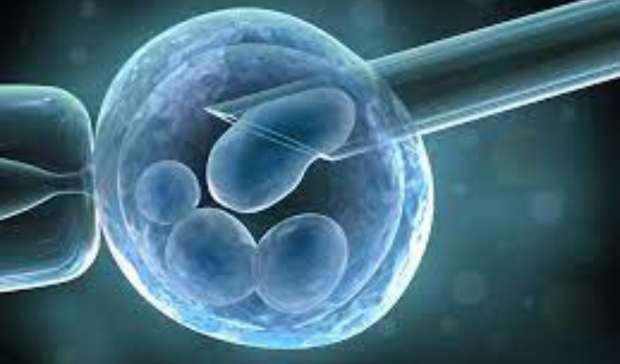
    On the other hand, ICSI is a more complex technique in which a single sperm is directly injected into an egg using a small glass needle. ICSI is typically used when there are issues with sperm quality or quantity, or if previous IVF attempts have failed.

    After fertilization, the resulting embryos will be observed for signs of normal development, such as the formation of the blastomeres and the formation of the inner cell mass. The embryologist will also grade the embryos based on their appearance and the likelihood of them leading to a successful pregnancy. The embryos will then be kept in a culture medium and will be observed for 2-6 days to check their development.

    5. Embryo Transfer

    The embryos are carefully selected based on their development and quality before being transferred into the woman’s uterus. The transfer itself is a relatively simple procedure that is typically performed in a clinic or hospital. The woman will lie down on an examination table and a thin, flexible catheter is inserted through the cervix and into the uterus. The embryos are then gently pushed through the catheter and into the uterus.

    The procedure usually takes only a few minutes and the woman can go home shortly after. It is usually painless, but some mild cramping or discomfort may be experienced. It’s important to note that after the transfer, the woman should avoid some activities for a few days, and also avoid intercourse for about a week.

    6. Luteal Phase Support

    Luteal phase Support is a treatment that is given to women undergoing IVF treatments to support the development of the uterus lining after the embryo transfer. It is used to supplement the hormones that are naturally produced by the body during this phase to ensure that the uterus is properly prepared for the implanted embryo.

    Progesterone is the main hormone used for luteal phase support, which is usually given as an injection for infertility treatment. It can be started after the embryo transfer and continued until the pregnancy test which is usually 2 weeks after the transfer.

    7. Pregnancy Test

    A pregnancy test is done 14 days after the embryo transfer to check if the treatment has been successful. The most common type of pregnancy test is a blood test, which measures the levels of a hormone called human chorionic gonadotropin (hCG) in the woman’s blood. This hormone is produced by the placenta shortly after the embryo implants in the uterus. The blood test is more sensitive than a urine test and can detect lower levels of hCG, making it more accurate in detecting early pregnancies.

    Conclusion

    The procedure of IVF pregnancy can be a rollercoaster of emotions and risks, from the excitement of the ovarian stimulation to the anticipation of the pregnancy test. It’s important to remember that while fertility treatments are not a guarantee of pregnancy, it is a powerful technology that can increase the chances of couples achieving their dream of starting a family. It gives hope to couples. The process may be long and challenging, but the result of holding a newborn baby in your arms makes it all worth it. So talk to your partner, decide to choose the best fertility clinic, and take doctors’ advice.

    Frequently Asked Questions:

    How Long Does the IVF Process Take?

    Normally, the entire IVF process can take  3-6 months, although some patients may require additional time in IVF progress.

    How Much Does the IVF Process Cost?

    Depending on the particular circumstances of each patient, the cost of in vitro fertilization (IVF) can vary significantly.

    How Many Cycles of IVF Will I Need?

    The number of IVF cycles depends on a variety of factors, including age, medical history, and the cause of infertility.


  • Navigating IVF: A Step-by-Step Guide to the Treatment Process

    Navigating IVF: A Step-by-Step Guide to the Treatment Process

    In Vitro Fertilization (IVF) is a form of Assisted Reproductive Technology (ART) that involves fertilizing an egg outside of the body and then transferring the resulting embryo back into the uterus.  IVF is used in situations when other fertility treatments have failed or when a woman has blocked or damaged fallopian tubes. It is a complex process that is typically recommended for couples who have been trying for a baby for a while without success. IVF techniques are also used for those who have been diagnosed with infertility complications, such as blocked fallopian tubes, endometriosis, or male factor infertility.

    The basic IVF treatments involve stimulating the ovaries to produce multiple eggs, retrieving the eggs fertilizing them with sperm in a laboratory, and then transferring the resulting embryos back into the uterus. The process typically takes several weeks and is closely monitored by a fertility specialist.

    The study says that in 2017, over 1.7 million IVF cycles were performed in all countries. The success rate for IVF treatment is approximately 40 percent. In the United States, over 200,000 IVF cycles were performed in 2017.

    What Is IVF Treatment: Understanding the Process

    Ovary Stimulation:

    The first step in the process of IVF treatment is to stimulate the ovaries to produce multiple eggs. This is typically done using fertility medicines such as gonadotropins, which are given by injection. The goal of ovary stimulation is to produce multiple eggs so that there is a greater chance of achieving a pregnancy by women. The stimulation process is closely monitored using ultrasounds and blood tests to track the growth of the eggs and to adjust the dosage of the fertility drugs as needed.

    Egg Retrieval:

    Once the eggs have grown to a suitable size, they are retrieved using a procedure called transvaginal ultrasound aspiration. This procedure is done under sedation and is relatively painless. The eggs are retrieved using a thin needle that is inserted through the vagina and guided by ultrasound. The eggs are then collected and immediately taken to the lab.

    Fertilization:

    In the laboratory, the eggs are fertilized with sperm from men or sperm donors. This can be done in two ways: traditional insemination, in which the sperm are mixed with the eggs in a dish and allowed to fertilize naturally, or Intracytoplasmic Sperm Injection (ICSI), in which the egg is the target of a single sperm injection. The fertilized eggs are then grown in the laboratory for 3-5 days.

    Embryo Development:

    The fertilized eggs are monitored closely in the laboratory and are checked for signs of normal growth and development. On day 3 or 5, the best-looking embryos are chosen for embryo transfers. These are called cleavage-stage embryos. If the clinic has the ability and the patient agrees, some clinics will perform a blastocyst transfer instead of a traditional transfer, which is when the transfer is done on day 5 or 6, when the embryo has developed into a blastocyst.

    Embryo Selection:

    The decision of which embryos to transfer is based on the quality and appearance of the embryos as well as the patient’s wishes and the specialist’s recommendations. The number of embryos that will be transferred can vary depending on factors such as the patient’s age and the number of eggs retrieved. The goal is to achieve the best possible pregnancy outcome while minimizing the risk of multiple pregnancy rates.

    What Is IVF Pregnancy: Preparing For IVF

    Evaluation and Testing:

    Before starting the IVF process, couples will typically undergo a series of tests to evaluate their fertility. These may include blood tests to check hormone levels, such as follicle-stimulating hormone (FSH), luteinizing hormone (LH), and estrogen. Ultrasound exams are also done to check the ovaries and uterus, and semen analysis is performed for the male partner. These tests are done to check for any underlying fertility issues and to determine the best course of infertility treatment.

    Choosing a Fertility Clinic and Specialist:

    Once the couple is ready to move forward with IVF, they will need to choose a fertility clinic and doctor. It’s important to research different clinics and specialists and ask for recommendations from friends or healthcare providers. Patients should look for a clinic that has a good success rate, a high level of parents satisfaction, and a team of experienced specialists.

    Financial Considerations: IVF Treatment Process

    This can be expensive, and the cost can vary depending on the clinic and the patient’s specific circumstances. The cost of IVF can include medications, laboratory fees, and the cost of the procedure itself. It’s important to understand the costs associated with the treatment and to check with the insurance company to see what is covered. Some insurance companies may cover part of the cost of IVF, while others may not cover it at all. Patients can also check if the clinic offers financing options or discounts for multiple cycles.

    Emotional and Psychological Preparation

    IVF can be an emotionally and psychologically demanding process for couples. It’s important for them to have a support system in place, whether it be family, friends, or a therapist. Many clinics also offer support groups for patients going through IVF. People should also prepare themselves for the possibility of not getting pregnant after the first cycle and be ready for the emotional toll it may take.

    The Embryo Transfer

    The embryo transfer is typically done 3-5 days after egg retrieval. The procedure is done on an outpatient basis and usually takes just a few minutes. The patient will be asked to lie down and a speculum is inserted into the vagina to visualize the cervix. Then a thin catheter is inserted through the cervix and guided by ultrasound until it reaches the uterus.

    The embryos are then gently deposited into the uterus through the catheter. The number of embryos transferred can vary depending on the patient’s age, the quality of the embryos, and the clinic’s recommendations. The goal is to achieve the best possible pregnancy outcome while minimizing the risk of multiple pregnancies.

    After the transfer, the woman will typically need to rest for a few days and will be prescribed progesterone to help support the pregnancy. Progesterone is a hormone that helps to prepare the lining of the uterus for implantation and maintain a pregnancy.

    The risks associated with embryo transfer are minimal, but like any medical procedure, there is a small risk of infection or bleeding. There is also a risk of ectopic pregnancy, which is a serious complication where the embryo implants outside the uterus. However, this is rare and can be detected early by monitoring the patient’s hormone levels and performing an ultrasound.

    IVF success rates vary depending on many factors, such as the patient’s age, the cause of infertility, and the number of embryos transferred. However, the general success rate of IVF is around 30% per cycle. The success rate can be higher for younger patients and those with fewer fertility issues. It’s important for patients to understand that IVF is not always successful and that multiple cycles may be necessary.

    After the Procedure

    Follow-up Care and Monitoring:

    After the embryo transfer, the patient will need to come back for follow-up appointments to check hormone levels and to see if the pregnancy is progressing. The patient will have blood tests to check for the pregnancy hormone, human chorionic gonadotropin (hCG), and ultrasound scans to check for the presence of a gestational sac. If the pregnancy test is positive, an ultrasound will be done to confirm the pregnancy and check for the number of gestational sacs and the location of the pregnancy.

    Emotional and Psychological Support:

    IVF can be a stressful and emotional process, and it’s important for patients to have a support system in place. Many patients experience a range of symptoms, such as hope, anxiety, and disappointment, pain, during the IVF process. Patients should have someone to talk to, whether it be a partner, family member, friend, or therapist.

    Next Steps and Potential Additional Treatments:

    If the embryo transfer is successful and the pregnancy is progressing, the patient will continue to be monitored throughout the first trimester. If the embryo transfer is not successful, the patient will need to consider whether they want to try another cycle of IVF or if they want to consider other options such as using a sperm or egg donor, adoption, or surrogacy. In some cases, the couple may also consider using intracytoplasmic sperm injection (ICSI) or preimplantation genetic testing (PGT) to improve their chances of success.

    It’s important for patients to understand that IVF may not be successful the first time and that it can take multiple cycles to achieve a pregnancy. Patients should have realistic expectations and be prepared for the emotional and financial toll that multiple cycles may take. With the right preparation, support, and guidance, many couples are able to achieve their dreams of starting a family through IVF.

    In Conclusion

    In this article, you read about what is ivf. The process of IVF treatment can be compared to a challenging hike, with each step requiring careful planning and execution in order to reach the ultimate destination of starting a family. From ovary stimulation to embryo transfer, each stage is a crucial part of the hike that must be navigated with precision and care. But like any hike, it requires a great deal of preparation and effort. Choosing the best IVF hospital and specialist, understanding the costs and insurance coverage, and emotional and psychological support are all essential components that will help make the hike a success.

    Frequently Asked Questions

    1. What is in vitro fertilization (IVF)?

    In vitro fertilization (IVF) is a fertility treatment that involves retrieving eggs from a woman’s ovaries and fertilizing them with sperm in a laboratory.

    2.  What are the success rates of IVF?

    The success rate of IVF depends on a variety of factors, including the age of the woman, the cause of infertility, sperm quality,  previous miscarriage history, and the quality of the embryo.

    3. What are the chances of twins or triplets babies with IVF treatment?

    The chances of having multiple births with IVF treatment depend on a variety of factors, including the woman’s age, the number of embryos transferred, and the method of IVF treatment used.

    4. How much does IVF cost?

    The cost of IVF can vary significantly from one clinic to another and from one country to another. Choosing the right doctors and treatment options is important.

    5. What are the side effects of IVF treatment?

    The common side effects are physical disorder like headaches, nausea, discomfort, etc.