Category: Health Tips

  • 10 Benefits of Coconut Water During Pregnancy: A Complete Guide

    10 Benefits of Coconut Water During Pregnancy: A Complete Guide

    Pregnancy brings numerous changes to your body, and staying properly hydrated becomes more important than ever. Many expectant mothers ask, “can I drink coconut water while pregnant?” or “is coconut juice good for pregnant women?” The answer is a resounding yes. Coconut water during pregnancy has emerged as a natural, nutrient-rich beverage that offers multiple health benefits for expecting mothers.

    Whether you call it coconut water, coconut juice, or coconut drink, this tropical beverage can be a valuable addition to your prenatal nutrition. This comprehensive guide explores the benefits of coconut water during pregnancy, answers the question “is coconut water safe during pregnancy,” and explains why drinking coconut juice during pregnancy might be one of the best hydration choices you can make for yourself and your baby.

    Your Journey to Motherhood Starts Here

    “With advanced fertility care and personalized support every step of the way.”

    Contact Us

    What Makes Coconut Water Special During Pregnancy?

    Coconut water (also called coconut juice) is the clear liquid found inside young, green coconuts. Unlike coconut milk, which is made from the fruit’s flesh, coconut water is naturally low in calories, fat-free, and packed with essential electrolytes. Many pregnant women wonder, “can I drink coconut water while pregnant?” The answer is yes—this natural coconut drink during pregnancy serves as an excellent hydration solution with numerous added health benefits that support both maternal and fetal health.

    Is Coconut Water Safe During Pregnancy?

    A common question many expectant mothers ask is: “is coconut water safe during pregnancy?” Yes, coconut water is safe during pregnancy and is considered one of the best natural beverages for pregnant women. When you’re wondering “can a pregnant woman drink coconut water,” rest assured that drinking coconut juice during pregnancy is not only safe but actively beneficial for most women.

    Coconut water in pregnancy has been consumed for generations in tropical regions, and modern research supports its safety and nutritional value. The key is choosing pure, unsweetened varieties and consuming moderate amounts as part of a balanced diet. Whether you call it coconut water, coconut juice, or coconut drink, this natural beverage provides essential nutrients without harmful additives when sourced properly.

    10 Proven Benefits of Coconut Water During Pregnancy

    1. Superior Hydration and Electrolyte Balance

    One of the primary benefits of coconut water during pregnancy is its exceptional hydrating properties. Pregnant women need approximately 10-12 cups of fluids daily, and coconut water makes meeting this requirement easier and more enjoyable.

    Coconut water contains five essential electrolytes: potassium, sodium, magnesium, calcium, and phosphorus. These minerals help maintain proper fluid balance, which is crucial during pregnancy when blood volume increases by up to 50%. The natural electrolyte composition closely resembles that of human plasma, making it an ideal rehydration beverage, especially if you’re experiencing morning sickness.

    2. Relieves Morning Sickness and Nausea

    Morning sickness affects up to 80% of pregnant women, particularly during the first trimester. If you’re wondering whether you can drink coconut water when pregnant and experiencing nausea, the answer is yes—coconut juice while pregnant can help alleviate these uncomfortable symptoms in several ways.

    The natural electrolytes in coconut water help replenish minerals lost through vomiting, while its mild, slightly sweet taste is generally well-tolerated even when other foods and drinks are unappealing. The quick absorption rate means you can rehydrate faster after episodes of morning sickness, preventing dehydration that can worsen nausea. Many women find that sipping coconut juice throughout the day helps manage morning sickness better than plain water alone.

    3. Supports Healthy Blood Pressure

    Maintaining healthy blood pressure is crucial during pregnancy, as conditions like preeclampsia can pose serious risks. The benefits of coconut water during pregnancy include natural blood pressure regulation thanks to its high potassium content.

    Potassium helps counteract the effects of sodium and supports proper blood vessel function. One cup of coconut water contains approximately 600mg of potassium, which contributes significantly to the 2,900mg daily requirement for pregnant women. The magnesium present in coconut water also supports cardiovascular health and helps prevent pregnancy-related hypertension.

    4. Prevents Urinary Tract Infections (UTIs)

    Urinary tract infections are more common during pregnancy due to hormonal changes and physical pressure on the urinary tract. Coconut water during pregnancy acts as a natural diuretic, promoting frequent urination that helps flush out bacteria from the urinary system.

    The mild antibacterial properties of coconut water may help prevent bacterial growth in the urinary tract. Additionally, staying well-hydrated with coconut water helps dilute urine, making it less hospitable to harmful bacteria and reducing UTI risk.

    5. Aids Digestion and Prevents Constipation

    Constipation is one of the most common complaints during pregnancy, affecting up to 40% of pregnant women. Among the important benefits of coconut water during pregnancy is its ability to support healthy digestion.

    Coconut water is rich in dietary fiber, which promotes regular bowel movements and prevents constipation. It also helps maintain the proper pH balance in your digestive system, reducing issues like acid reflux and heartburn that commonly occur during pregnancy. The natural enzymes present in coconut water support overall digestive health and nutrient absorption.

    6. Provides Essential Nutrients for Fetal Development

    When asking “is coconut juice good for pregnant women,” the nutritional profile provides a clear answer: yes. The nutritional composition of coconut water makes it an excellent supplement to your pregnancy diet. Beyond electrolytes, coconut water contains vitamins C and B-complex, as well as minerals like zinc, manganese, and iron.

    These nutrients support various aspects of fetal development, including immune system formation, bone development, and red blood cell production. Vitamin C enhances iron absorption, which is particularly important as your iron requirements increase during pregnancy to support increased blood volume and prevent anemia. This makes drinking coconut juice during pregnancy a smart nutritional choice for supporting your baby’s healthy growth.

    7. Reduces Swelling and Edema

    Swelling in the feet, ankles, and hands (edema) affects most pregnant women, especially during the third trimester. The benefits of coconut water during pregnancy include natural reduction of this uncomfortable swelling.

    The high potassium content helps regulate sodium levels in your body, reducing fluid retention. The diuretic properties of coconut water encourage healthy fluid elimination without depleting essential minerals like many pharmaceutical diuretics do. This natural approach to managing edema is gentle on your body and safe for your developing baby.

    8. Boosts Energy Levels Naturally

    Fatigue is extremely common during pregnancy, particularly in the first and third trimesters. Coconut water during pregnancy serves as a natural energy booster without the caffeine or added sugars found in many energy drinks.

    The natural sugars in coconut water provide quick energy, while the electrolytes support proper muscle and nerve function. The B-vitamins present in coconut water also play a crucial role in energy metabolism, helping convert food into usable energy more efficiently. Unlike caffeinated beverages, coconut water provides sustained energy without the crash.

    9. Supports Immune System Function

    Your immune system undergoes changes during pregnancy to protect both you and your baby. The benefits of coconut water during pregnancy extend to immune support through its rich antioxidant content.

    Coconut water contains lauric acid, a medium-chain fatty acid known for its antimicrobial and antiviral properties. The vitamin C and various antioxidants help combat free radicals and support overall immune function. Lauric acid is the same beneficial compound found in breast milk, making coconut water a particularly appropriate choice during pregnancy.

    10. Helps Manage Pregnancy Weight

    Maintaining healthy weight gain during pregnancy is important for both maternal and fetal health. Coconut water during pregnancy can support healthy weight management as part of a balanced diet.

    Low in calories (approximately 45 calories per cup) and naturally sweet, coconut water can satisfy cravings for sugary drinks without the empty calories. It keeps you feeling full longer due to its fiber content and helps maintain proper metabolism through its electrolyte balance. This makes it an excellent alternative to sodas, sweetened juices, and other high-calorie beverages.

    How Much Coconut Water Should You Drink During Pregnancy?

    While coconut water is beneficial, moderation is key. Most healthcare providers recommend consuming 1-2 cups (240-480ml) of coconut water daily during pregnancy. This amount provides beneficial nutrients and hydration without excessive sugar intake.

    Remember that coconut water should complement, not replace, plain water in your diet. Your total fluid intake should be approximately 10-12 cups daily, combining water, coconut water, and other healthy beverages.

    When Is the Best Time to Drink Coconut Water?

    To maximize the benefits of coconut water during pregnancy, consider these optimal times:

    Morning: Drinking coconut water on an empty stomach helps with morning sickness and provides energy for the day ahead.

    After Exercise: If you engage in prenatal exercise, coconut water replenishes electrolytes lost through perspiration.

    Between Meals: Consuming coconut water between meals can help manage appetite and provide steady energy.

    Before Bed: A small amount of coconut water can help prevent nighttime leg cramps, though avoid drinking too much close to bedtime to prevent frequent bathroom trips.

    Choosing the Right Coconut Water

    Not all coconut water products are equal. For maximum benefits of coconut water during pregnancy, follow these selection guidelines:

    Fresh is Best: Fresh coconut water from young, green coconuts offers the highest nutritional value and best taste. Look for coconuts that feel heavy and produce a sloshing sound when shaken.

    Read Labels Carefully: When buying packaged coconut water, choose products with no added sugars, preservatives, or artificial flavors. The ingredient list should contain only coconut water.

    Avoid Concentrates: Select coconut water that hasn’t been made from concentrate, as the concentration process can reduce nutrient content.

    Check Expiration Dates: Always verify freshness dates, and once opened, consume coconut water within 24-48 hours for optimal nutrition and safety.

    Potential Precautions and Considerations

    While the benefits of coconut water during pregnancy are numerous, keep these considerations in mind:

    Gestational Diabetes: If you have gestational diabetes, monitor your coconut water intake due to its natural sugar content. Consult your healthcare provider about appropriate amounts.

    Potassium Levels: Women with kidney problems or those taking potassium-sparing medications should discuss coconut water consumption with their doctor, as excessive potassium can be problematic.

    Allergies: Though rare, coconut allergies do exist. If you’ve never consumed coconut water before pregnancy, start with small amounts to ensure you don’t have an adverse reaction.

    Quality Matters: Only consume coconut water from trusted sources to avoid contamination risks.

    Delicious Ways to Enjoy Coconut Water During Pregnancy

    Make coconut water during pregnancy more enjoyable with these healthy preparation methods:

    Smoothies: Blend coconut water with fresh fruits like mango, banana, or berries for a nutrient-packed smoothie.

    Mocktails: Mix coconut water with fresh lime juice and mint for a refreshing, pregnancy-safe mocktail.

    Frozen Treats: Freeze coconut water with fruit pieces in popsicle molds for a hydrating snack on hot days.

    Infused Water: Add cucumber slices or fresh berries to coconut water for extra flavor and nutrients.

    Chia Pudding Base: Use coconut water instead of milk to make chia seed pudding for a fiber-rich breakfast.

    Frequently Asked Questions 

    Q1. Can I Drink Coconut Water While Pregnant?

    Ans. Yes, you can drink coconut water while pregnant. It is generally considered safe and beneficial for most pregnant women when consumed in moderate amounts (1-2 cups daily). Coconut water provides essential electrolytes, vitamins, and minerals that support both maternal health and fetal development. However, if you have specific health conditions like gestational diabetes or kidney problems, consult your healthcare provider before adding coconut water to your diet.

    Q2. Is Coconut Water Safe During Pregnancy?

    Coconut water is safe during pregnancy for most women when consumed as part of a balanced diet. It is a natural, nutrient-rich beverage with no harmful additives when you choose pure, unsweetened varieties. The electrolytes and minerals in coconut water support hydration and various bodily functions during pregnancy. Always ensure you’re drinking coconut water from reputable sources and check labels to avoid products with added sugars or preservatives.

    Q3. Can a Pregnant Woman Drink Coconut Water Every Day?

    Yes, a pregnant woman can drink coconut water every day in moderation. The recommended amount is 1-2 cups (240-480ml) daily as part of your total fluid intake. Daily consumption can help maintain hydration, provide essential nutrients, and offer the various health benefits discussed in this article. Remember that coconut water should complement, not replace, regular water consumption.

    Q4. Is Coconut Juice Good for Pregnant Women?

    Yes, coconut juice (coconut water) is good for pregnant women. Many people use the terms “coconut juice” and “coconut water” interchangeably to refer to the clear liquid inside young coconuts. This natural drink offers numerous benefits including hydration, electrolyte balance, morning sickness relief, and essential nutrients for fetal development. When drinking coconut juice during pregnancy, choose fresh or pure packaged varieties without added sugars.

    Q5. Can I Drink Coconut Water When Pregnant in the First Trimester?

    Absolutely! You can drink coconut water when pregnant during the first trimester, and it may be particularly helpful during this time. The first trimester is when morning sickness and nausea are most common, and coconut water’s mild taste and electrolyte content can help alleviate these symptoms. It also supports increased hydration needs as your body begins adapting to pregnancy.

    Q6. What’s the Difference Between Coconut Water and Coconut Juice While Pregnant?

    There is no significant difference between coconut water and coconut juice while pregnant—these terms refer to the same natural liquid found inside young, green coconuts. Both provide the same nutritional benefits and hydration. However, be cautious not to confuse these with coconut milk (made from coconut flesh) or sweetened coconut beverages, which have different nutritional profiles.

    Q7. Are There Any Risks to Drinking Coconut Drink During Pregnancy?

    Drinking coconut drink during pregnancy is generally safe, but there are a few considerations. Women with gestational diabetes should monitor intake due to natural sugar content. Those with kidney problems or taking certain medications should consult their doctor about potassium levels. Always choose pure coconut water without additives, and if you’ve never consumed it before, start with small amounts to ensure no allergic reaction.

    Q8. How Much Coconut Water in Pregnancy Is Safe?

    The safe amount of coconut water in pregnancy is typically 1-2 cups (240-480ml) per day. This provides beneficial nutrients and hydration without excessive sugar intake. Your total daily fluid intake should be 10-12 cups, with coconut water being one component alongside regular water and other healthy beverages. Listen to your body and adjust based on your individual needs and your healthcare provider’s recommendations.

    Q9. Can Drinking Coconut Juice During Pregnancy Help With Morning Sickness?

    Yes, drinking coconut juice during pregnancy can help with morning sickness. The natural electrolytes replenish minerals lost through vomiting, while the mild, slightly sweet taste is usually well-tolerated when other foods cause nausea. The quick absorption rate helps prevent dehydration, which can worsen morning sickness symptoms. Many pregnant women find that sipping coconut water throughout the day helps manage nausea.

    Q10. Is Fresh Coconut Water Better Than Packaged for Pregnant Women?

    Fresh coconut water is ideal as it contains the highest nutritional value and no additives. However, high-quality packaged coconut water without added sugars or preservatives is also beneficial and more convenient. When choosing packaged options, look for products that are not from concentrate and have minimal processing. Both fresh and quality-packaged varieties can provide the benefits of coconut water during pregnancy.

    The Bottom Line

    The benefits of coconut water during pregnancy make it an excellent addition to your prenatal nutrition plan. From superior hydration and morning sickness relief to immune support and healthy blood pressure maintenance, this natural beverage offers multiple advantages for expecting mothers.

    Coconut water during pregnancy provides essential electrolytes, vitamins, and minerals that support both maternal health and fetal development. Its natural composition makes it a safe, effective, and delicious way to meet your increased hydration needs while enjoying additional health benefits.

    Remember to choose high-quality coconut water, consume it in moderation as part of a balanced diet, and always consult with your healthcare provider about your individual nutritional needs during pregnancy. With these guidelines in mind, you can confidently incorporate this tropical superfood into your pregnancy wellness routine.

     
  • 10 Best Foods to Increase Sperm Count Naturally in 2026

    10 Best Foods to Increase Sperm Count Naturally in 2026

    In this blog, we share the 10 best foods to increase sperm count naturally in 2026. When it comes to male fertility, diet plays a crucial role in maintaining healthy sperm production, motility, and overall quality. Modern lifestyle habits, environmental exposure, and chronic stress have contributed to a global decline in sperm health, making it more important than ever for men to focus on foods that increase sperm count. A man’s reproductive health, immunity, hormone balance, and energy levels are closely linked to proper nutrition. Foods rich in essential vitamins, minerals, and antioxidants can significantly improve sperm movement, quality, and total count.

    In 2026, more men are choosing a natural and holistic approach to fertility instead of relying solely on supplements or medical treatments. Sperm-boosting foods, such as fruits, nuts, vegetables, and high-quality protein sources, can help enhance fertility naturally. Whether you are planning for parenthood or simply want to improve your reproductive health, adding fertility-supporting superfoods to your daily meals can make a noticeable difference. Let’s explore which foods help produce sperm faster naturally, so you can take confident steps toward better fertility health.

    How Does Food Influence Sperm Health?

    Diet has a big impact on sperm health as the nutrients from your food influence the number, shape, movement, and even fertility of the sperm itself. Eating foods high in antioxidants like vitamin C zinc, vitamin E, selenium, and folate helps fight oxidative stress. 

    Eating fresh fruits, vegetables, lean proteins, whole grains, seeds, and nuts, will give you important vitamins and minerals. These food to increase sperm count and will help to increase sperm count and enhance healthy hormones. Chia seeds, walnuts, and fatty fish, which contain omega-3 fats, promote sperm structure and sperm motility.

    Alternatively, food choices can harm sperm health. Eating a plethora of junk food (processed, refined sugar, alcohol, and trans fat) will increase oxidative stress, lower testosterone, and lessen sperm quality. Caffeine is okay in moderation; however, high intake can hinder male fertility.

    Having a nutritious food to increase sperm count and hydration status can undoubtedly enhance sperm motility, and overall reproductive health. In other words, your food choices can enhance or hinder male fertility health.

    Read Also – Guide to Follicle Size Growth

    Book a Consultation

    10 Best Food to Increase Sperm Count to Consume

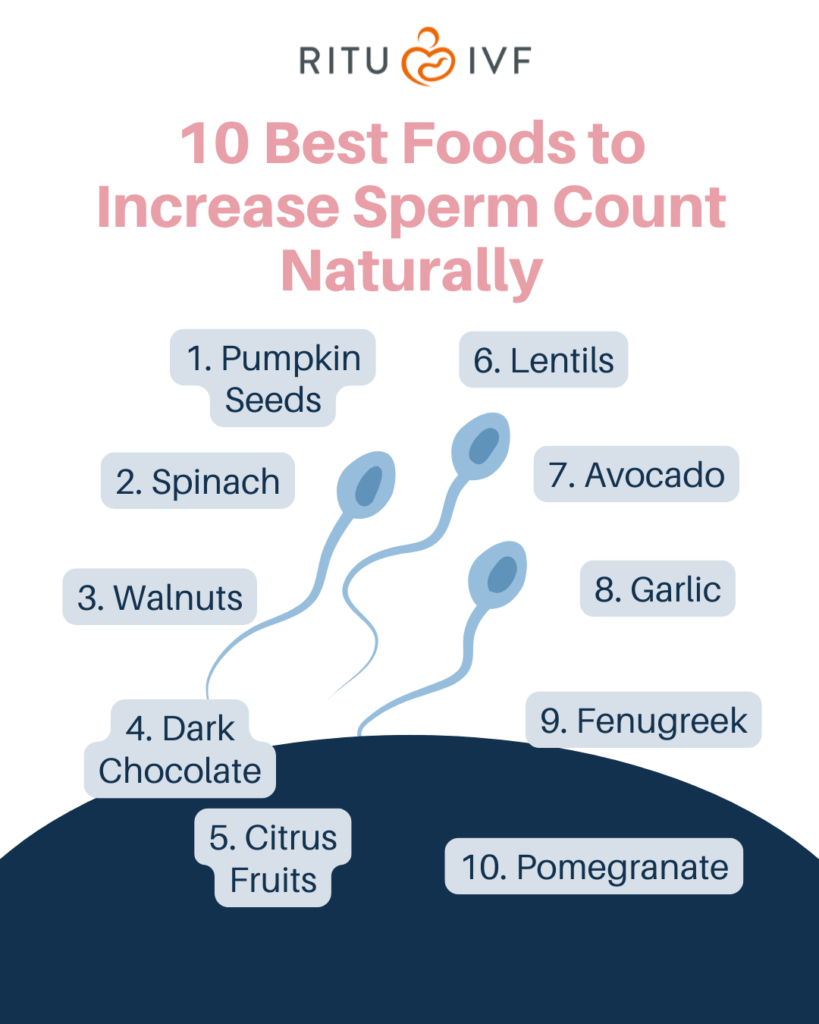
    10 Best Foods to Increase Sperm Count Naturally

    Consuming a healthy diet has a significant impact on male fertility, and certain sperm increase foods are great for improving sperm motility and reproductive health. These types of food are full of minerals, vitamins and antioxidants that will help reduce oxidative stress, promote hormone balance, and produce healthy sperm. Incorporating them into your nutrition could have a huge difference to improving your fertility naturally. 

    1. Pumpkin Seeds

    Pumpkin seeds are healthy and have a positive benefit on the health of males. They are a nutrient-dense tiny seed. Furthermore, pumpkin seeds contain a lot of zinc which is essential in developing sperm and enhancing male fertility. The study on male fertility has shown that low consumption of zinc had a good relationship to improving sperm quality, motility and testosterone levels.

    2. Spinach

    Another sperm increase food (variation) includes Spinach, renowned for impacting men’s fertility positively, for its high concentration of folic acid. Maintaining optimum folic acid levels is critical for males since it helps to preserve sperm morphology and avoid abnormalities. 

    Moreover, inadequate folic acid levels may lead to sperm abnormalities, minimizing the ability to fertilize eggs and increasing the likelihood of birth defects. 

    3. Walnuts

    Walnuts have various health benefits, including improved sperm health. It contains omega-3 fatty acids, which can help sperm move better. Walnuts contain antioxidants, including vitamin E and polyphenols, which protect sperm cells from damage caused by harmful substances in the body. 

    Furthermore, walnuts contain zinc, a crucial component for producing and keeping healthy sperm. Eating walnuts as part of a balanced diet can enhance reproductive health. 

    4. Dark Chocolate

    Dark chocolate, known for its deep and robust flavor, is loved by many as a tasty treat. However, a delectable treat can provide more than just a satisfying taste. Moreover, it is rich in antioxidants and contains L-argentine, the chemical with a connection to improving sperm count and motility

    5. Citrus Fruits

    Having  antioxidants on a regular basis has tremendous health benefits. Citrus fruits contain vitamin C, which can help increase male fertility. However, drinking orange or grapefruit juice, which contains 100% fruit juice, can offer the same benefits as consuming the actual fruit. For people who do not enjoy drinking juice they can add fresh lemon juice to their water for better sperm increase food (variation).

    6. Lentils

    Lentils include high levels of protein, folate, and fibre. At the same time, fibre and folate are vital in maintaining a healthy balance of hormones in the body. Moreover, lentils contain a high level of spermidine, advantageous for male fertilization. 

    7. Avocado

    Avocado is another food to increase sperm count.  It is also a great source of nutrients that are important to maintaining your sperm count and motility because it is rich in vitamin E, zinc and folate. Folate plays a vital role in creating sperm and DNA synthesis, which allows complete cell development. Vitamin E is an antioxidant that protects against reactive oxygen species and contributes to semen quality.

    In addition, if you consume more avocados you’ll receive an adequate amount of zinc, a mineral associated with sperm quality. This dietary change could be a valid approach to help enhance healthy sperm production and naturally boost male fertility. 

    8. Garlic

    Allicin is one of the compounds, garlic is thought to enhance blood courses toward male sexual organs. This may have a good impact on sperm volume and count. Moreover, roasted garlic, food to increase sperm count contains antioxidants that possess the ability to fight against free radicals present in the human body.

    9. Fenugreek

    Fenugreek, commonly referred to as methi in India, is a traditional ingredient that has been leveraged for centuries in Indian households. It is used for distinct flavour and aroma and massive health benefits. It is also known as a food to increase sperm count and ability to increase libido. 

    10. Pomegranate

    Pomegranates contain a range of antioxidants that can be advantageous for your well-being. Drinking pomegranate juice can reduce a harmful substance called malondialdehyde in the blood, and this substance can negatively affect sperm cells. 

    Pomegranate juice provides protection against damage to sperm cells when they are exposed to toxic substances. Still, it increases the chance that sperm cells will arrive at and fertilise an egg – thereby completing the pregnancy journey. 

    Read Also – Whose Sperm Is Used in IVF (In Vitro Fertilization)

    Whats app

    Final Takeaway

    In 2025, eating right can help with male fertility and advancing sperm health. Foods that are loaded with nutrients (like spinach, walnuts, pumpkin seeds and bananas) contain these essential minerals, vitamins and antioxidant properties to promote healthy reproductive processes and allow sperm to protect themselves from injury.  Including those particular foods to increase sperm count in a balanced diet can definitely help improve sperm quality and motility.

    In the end, any changes you make, no matter how few, will lead to improvements in fertility, especially if you include a healthy lifestyle. If your focus is on nutritious foods that support reproductive health, the proactive step you are taking towards conception also happens to improve your overall health! 

    FAQs

    1. Which food enhances sperm quickly?

    Foods rich in zinc, vitamins, and antioxidants, such as pumpkin seeds, eggs, walnuts, and citrus fruits, can promptly boost sperm health and motility. Adding these foods to your diet can improve sperm count and overall fertility health. 

    2. Which fruit is ideal for sperm?

    Bananas are great for keeping sperm healthy, as they are full of vitamin B1, vitamin C, and magnesium which can aid production and motility. Bananas hold an enzyme called “bromelain” that helps with sperm quality. 

    3. How to increase sperm quality?

    You can even improve sperm quality with a healthy lifestyle! You should focus on a nutrient-dense diet, be active and exercise every day, de-stress, quit smoking and drinking alcohol, and try to stay away from excess heat. You can help support sperm health with supplements such as vitamin C, zinc, and CoQ10.

    4. At what age is sperm count highest?

    The sperm of males is typically at its best count and quality from the ages of 20 to 30. After 35, a man’s sperm quality and count can begin to progressively decline as a man ages.